



Thank you for coming back for another week of news that we're going to cover together. Compared to last week's doom and gloom, this week feels more positive, particularly given the recent developments in Europe. But before we dive in, make yourself a hot drink and get cosy. We've got a lot to get through!
Support independent LGBTQ+ journalism from just £1 a month or £12 a year. Every contribution helps to fund the work Scene's team does every day to deliver news and stories by and for LGBTQ+ people.
The World This Week
🇺🇸 Democrats surge in US special elections as Analilia Mejia wins New Jersey seat
Across the Atlantic, progressive Democrat Analilia Mejia won a special election in New Jersey's 11th Congressional District, filling the seat left vacant by Governor Mikie Sherrill. Her victory further narrows House Speaker Mike Johnson's majority to the point where he can now only afford a single Republican defection on any party-line vote, with the partisan breakdown standing at 217 Republicans to 214 Democrats.
Mejia herself is a striking figure. The daughter of a Colombian garment worker and a Dominican laborer, she is a former union organiser who served as national political director for Bernie Sanders in 2020.
But the bigger story here is the trend. Mejia overperformed Kamala Harris's nine-point margin in the district by around 12 points, and other special elections across the country since Trump regained office have seen Democratic overperformances of between 13 and 25 points.
Senate Minority Leader Chuck Schumer had already used the Hungary result to warn Trump directly, writing: "Pay attention, Donald Trump. Wannabe dictators wear out their welcome." The New Jersey result sharpens that message considerably. The midterms are in November. Democrats are energised in a way they have not been in years.
🇭🇺 Péter Magyar defeats Viktor Orbán: what it means for Europe, and what it means for us
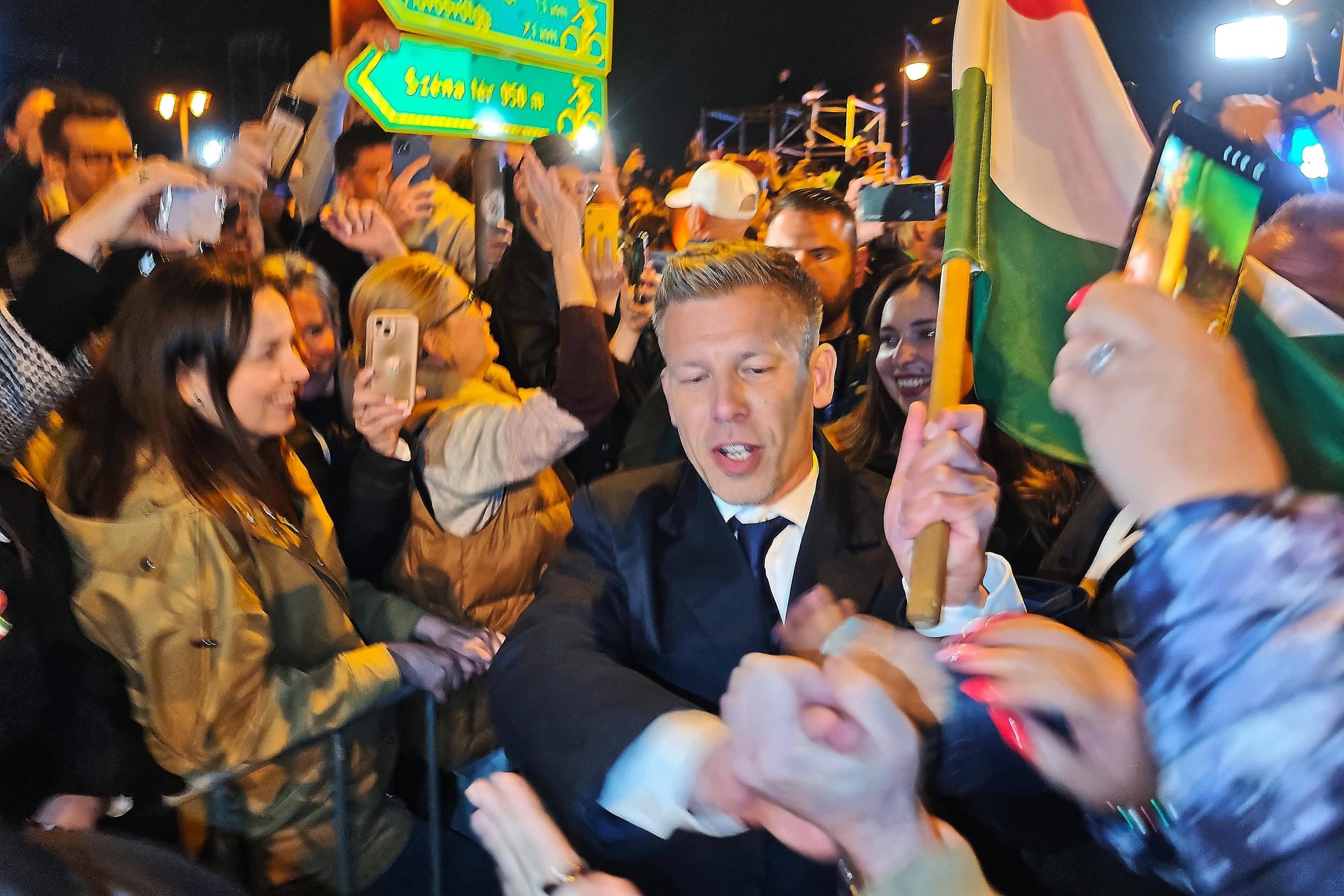
On Sunday 12 April, Hungarian Prime Minister Viktor Orbán conceded defeat in the country's parliamentary election after partial official results showed Péter Magyar's Tisza party winning by a landslide. Magyar's centre-right party secured 138 seats in the 199-seat parliament on 53.6% of the vote, while Orbán's Fidesz took just 55 seats with 37.8%. Voter turnout was 79.5%, the highest since free elections began in 1990, overtaking even the 2002 election that ended Orbán's first term. In Budapest, crowds gathered on the banks of the Danube, singing Queen's "We Are the Champions."
This is genuinely historic. Orbán had led Hungary for 16 years, and his government was widely described as a hybrid regime that blended democracy with authoritarianism, moving away from the rule of law in ways that saw the EU freeze billions of euros in funding for the country.
His departure removes Russia's main ally within the European Union, unblocks the path to a €90 billion EU loan to Ukraine that Orbán had been obstructing, and sends a clear signal that the far-right populist wave in Europe is not inevitable or irreversible.
Magyar himself is a complicated figure. Until 2024, he was a staunch Orbán loyalist, the ex-husband of a former Fidesz justice minister, a diplomat sent to Brussels by the government he would later bring down.
He turned against the system after a scandal in which Hungary's president pardoned a convicted child abuser's accomplice. He accused the government of corruption, leveraged his perspective as a former insider, and built a new political movement from scratch, winning a European Parliament seat in June 2024 before the landslide this week.
What does this mean for LGBTQ+ people in Hungary?
This is the question many in our community are asking, and the honest answer is: it is complicated, and cautious optimism is probably the right register.
In March 2025, Orbán's parliament passed a law banning Pride events, classifying them as assemblies that violated child protection rules by promoting or displaying homosexuality or gender diversity to under-18s. The response was defiant. Budapest Pride went ahead on 28 June 2025 regardless, with up to 200,000 people in attendance, making it Hungary's largest ever Pride and its largest anti-government demonstration in years, with participants arriving from 30 countries. The organisers of a smaller Pride in the city of Pécs were subsequently charged with criminal offences.
Magyar's response to the ban at the time was notably guarded. He refused to take the bait, characterising the ban as a political distraction designed to trap opponents, and highlighting his commitment to the right of assembly without explicitly condemning the ban or aligning with activist demands. He said that if elected, his government would protect the right of assembly. That is meaningful. But it falls well short of a commitment to repeal the law itself, or to advance LGBTQ+ rights more broadly.
Magyar has consistently avoided firm commitments on LGBTQ+ issues. He has voiced general support for equality and personal freedoms but has not endorsed specific reforms such as same-sex marriage or gender recognition changes, which remain constitutionally restricted in Hungary. His campaign deliberately de-emphasised what analysts described as "ideologically divisive issues" to court conservative voters in smaller towns and rural areas where Orbán's anti-LGBTQ+ rhetoric had long held sway.
The picture, then, is this: Orbán weaponised LGBTQ+ people as a political tool for over a decade, using manufactured culture war as cover for corruption and democratic backsliding. There is a high chance that Magyar's victory will remove that weapon from active government use and restore the right to assemble. Budapest Pride 2026 could now go ahead without a ban. But activists have been clear that they will need to keep pressuring Magyar to go further. The removal of an oppressor is the beginning of the work, not the end of it.
For Europe, the implications are significant either way. Orbán's defeat deprives Putin of his main EU ally, opens the way for the Ukraine loan, and is expected to see Hungary realign more closely with Western European allies and the mainstream of the EU. The Hungarian forint surged to a four-year high after Magyar's win. Keir Starmer called it "an historic moment, not only for Hungary, but for European democracy." He is not wrong.

🏴 A brief comment on the manifesto announcements of Scottish Labour
Ahead of the Scottish parliamentary elections in May, Scottish Labour published their manifesto. Since then, details have emerged, prompting a backlash from campaign groups and the SNP against Labour's pledge to exclude trans people from single-sex spaces.
The manifesto states that the party will provide "single-sex spaces based on biological sex in NHS wards, schools, sports facilities, and in everyday life". This is a departure from the Scottish Labour's previous position on trans+ inclusion.
Scene will approach Scottish Labour for comment.
This week on Scene
News
LGBTQ+ change makers make the TIME100 Most Influential People of 2026
TIME magazine published its annual list of the 100 most influential people this week, with LGBTQ+ leaders including Shannon Minter, Alan Cumming and ice hockey star Hilary Knight among those recognised for shaping law, culture and public life at a global level. A moment worth marking.
Charity defends LGBTQ+ asylum seekers after BBC report into alleged fabricated claims
Rainbow Migration responded this week to a BBC undercover investigation reporting that some migrants had been coached to falsely claim they are gay in order to strengthen asylum applications. The charity condemned any such fraud, while warning that the actions of a small number of bad-faith actors must not be used to misrepresent the many people fleeing genuine persecution.
Peter Tatchell condemns fake LGBTQ+ asylum claims
On the same story, Peter Tatchell also issued a statement condemning fraudulent claims, making the same distinction: that abuse of the system must be challenged precisely because it undermines protection for those who genuinely need it.
Jill Biden bids $35,000 for a walk-on role in Heated Rivalry at LGBTQ+ benefit auction
Former First Lady Jill Biden placed a $35,000 bid for a walk-on role in the hit queer hockey drama Heated Rivalry at a high-profile LGBTQ+ benefit auction in New York this week. A lovely story, and a reminder that some people in American public life are actively choosing to show up for this community.
Danny Beard to host National AIDS Trust's Drag Raise
National AIDS Trust has announced that Danny Beard will host its flagship Drag Raise fundraising evening in London on 16 July. A night worth having in the diary.
Navratilova Netflix documentary prompts debate
A tennis commentator publicly criticised Martina Navratilova this week over her anti-trans views, following the announcement of a forthcoming Netflix documentary on her rivalry with Chris Evert. The story sits at the intersection of sporting legacy, media platforms and the ongoing debate about who gets amplified and who gets held to account.
Kent's first LGBTQ+ cricket club officially launches
Invicta Icons, Kent's first-ever LGBTQ+ inclusive cricket club, has officially launched, offering a welcoming space for players of all abilities. Community sports infrastructure like this matters, and this is worth a moment of celebration.
Pride flag restored at New York's Stonewall National Monument
The US government has agreed to restore the Pride flag at the Stonewall National Monument in New York, after it was removed earlier this year as part of a review of displays at federal monuments. The National Park Service confirmed the decision following protests from LGBTQ+ groups and elected officials. A small but symbolically important win at a site that is inseparable from the history of the modern LGBTQ+ rights movement.
HIV charities criticise Nigel Farage over call to ban asylum seekers from NHS HIV treatment
Terrence Higgins Trust and National AIDS Trust both publicly criticised Nigel Farage this week after the Reform UK leader called for asylum seekers with HIV to be banned from receiving NHS treatment. Richard Angell of Terrence Higgins Trust pointed out that Farage made the same claim in 2015 and was wrong then too, noting that withholding HIV treatment from anyone in the UK would lead to more transmissions, not fewer. National AIDS Trust added that there is no evidence of health tourism for HIV treatment. This is dangerous misinformation dressed up as policy and it deserves to be called out.
Australian court allows 'lesbian rights' group to appeal ruling on excluding trans women
An Australian court ruled this week that an anti-discrimination tribunal had made errors in its legal reasoning when it previously prevented the Lesbian Action Group from seeking an exemption to exclude trans women from its public events. The ruling does not give the group permission to exclude trans women, nor does it decide whether such an exemption should be granted. The case now returns to the tribunal for reconsideration. Equality Australia described it as a procedural rather than substantive decision. Worth watching closely as it works through the courts.
Stonewall wins historic change to Crime and Policing Bill on LGBTQ+ hate crime
After years of campaigning, Stonewall secured a significant parliamentary victory this week as the House of Commons approved amendments to the Crime and Policing Bill that will finally treat anti-LGBTQ+ hate crime as an aggravated offence, on the same footing as race and religion-based hate crime. A genuine landmark.
"A year of chaos and harm": Trans+ Solidarity Alliance marks anniversary of anti-trans Supreme Court ruling
Alex Parmar-Yee, director of the Trans+ Solidarity Alliance, issued a powerful statement this week marking the first anniversary of the Supreme Court's ruling on the definition of "woman," describing the past year as one of "chaos and harm" for trans people in the UK. scenemag.co.uk/a-year-of-chaos-and-harm-alex-parmar-yee-director-of-the-trans-solidarity-alliance-marks-one-year-anniversary-of-anti-trans-supreme-court-ruling
Culture
🎤 #DALEYPOP April 2026: Dale's pop culture round-up
Dale Melita's monthly music column is one of the most joyful things we publish, and this month it is particularly full. The Pussycat Dolls are back as a trio with a 53-date world tour, Loreen has finally released her long-awaited album Wildfire (and announced tour dates including the UK), BTS are back with their comeback single Swim filmed in Lisbon, and Anne Hathaway has released Burial, a pop moment co-written with Jack Antonoff and Charli xcx from the upcoming A24 film Mother Mary. If you need a cultural lift after the news, start here.
🎥 REVIEW: Departures (2025)
John Kennedy reviews Departures, the latest from Peccadillo Pictures, in cinemas from 17 April. A non-linear queer romance following a man reliving every wrong decision of a toxic situationship, it draws comparisons to Weekend and God's Own Country in its honesty and emotional precision. John calls it "raw, honest, authentic" and very much worth your time.
Until next Saturday
Thank you for joining me again this Saturday for a news roundup. I hope you have a fantastic weekend if you're not working. If you are, I hope it's not too stressful and you find it easy.
Scene was founded in Brighton in 1993, at a time when news stories about Pride protests were considered radical.
Since then, Scene has remained proudly independent, building a platform for queer voices. Every subscription helps us to report on the stories that matter to LGBTQ+ people across the UK and beyond.
Your support funds our journalists and contributes to Pride Community Foundation’s grant-making and policy work.




Member discussion