![The Saturday Scene: Two-party politics in the UK is dead and gone [Election Special]](/content/images/size/w1920/2026/05/IMG_8219.jpeg)
It is the morning after votes from England's local elections and Scotland and Wales's devolved elections were counted. I will focus solely on this today, because the ripple effects of what happened yesterday will be with us all the way to the next general election in 2029. So, as is our tradition: get comfortable, have a hot drink ready, and let's dive in.
Britain woke up this morning to a new political reality. The two-party system that has had a grip on this country's political landscape for generations has ceased to exist, and it has done so without electoral reform. Whatever your view on proportional representation, even First Past The Post cannot hold back an electorate that has decided it wants something different.
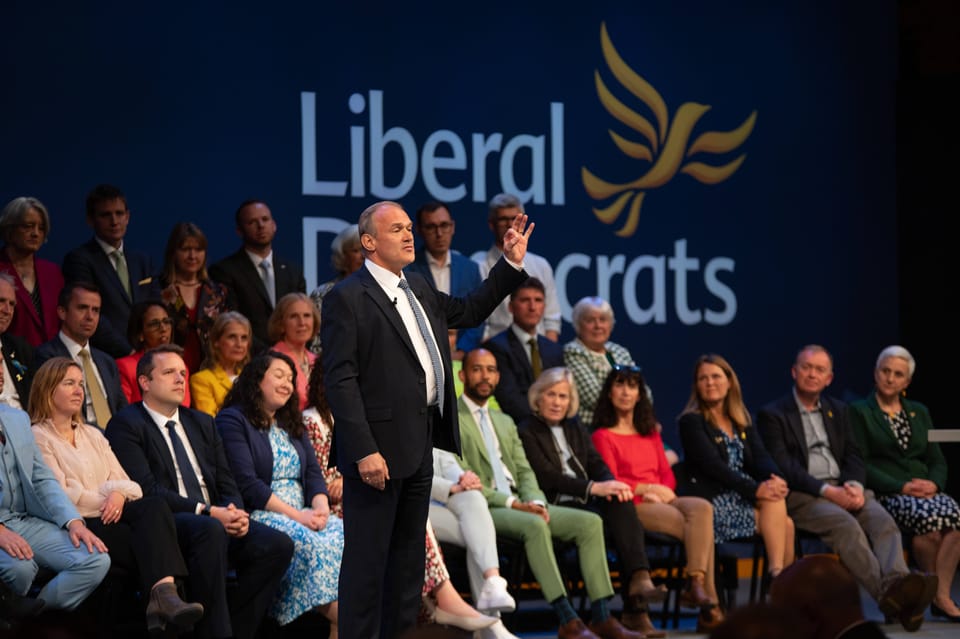
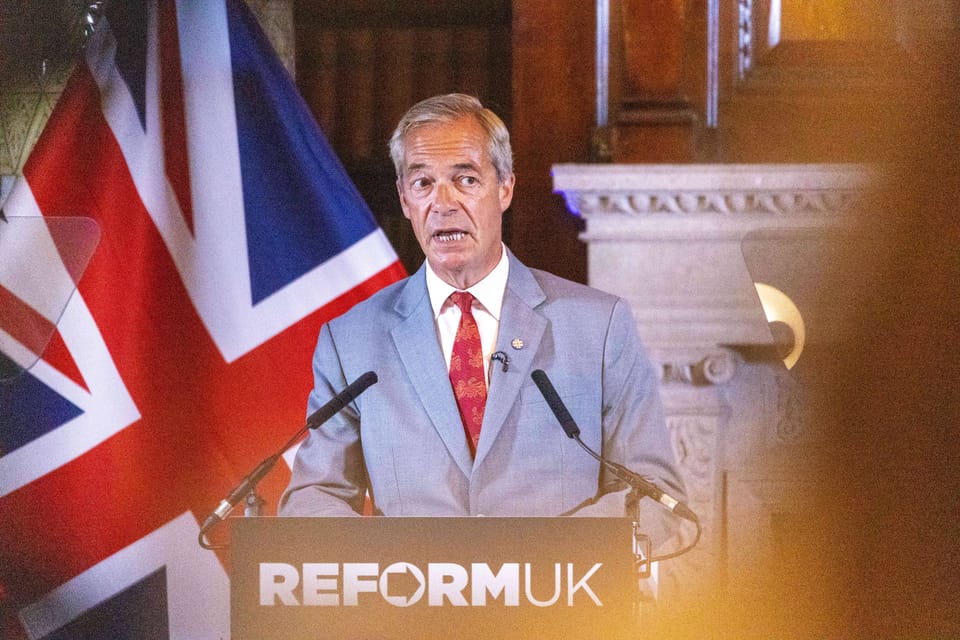
A clear picture emerged almost immediately as votes were counted up and down the country. Reform UK is the standout winner in both the English local elections and the devolved elections. The Greens performed well but did not live up to the considerable expectations placed on them. The Conservatives managed to win back control of Westminster Council but suffered further losses elsewhere. The Liberal Democrats continued their quiet, steady accumulation of seats, growing their influence while remaining almost entirely absent from the national conversation. And Labour suffered the most, losing support and council control in several areas, including Hackney, to both Reform UK and the Green Party.
By the time this edition was written, five councils had yet to declare, but the picture could not be clearer.
In Wales, the results were seismic. Plaid Cymru has ended Labour's almost three-decade grip on the Senedd, winning 43 seats, up 20, to become the strongest party in Wales. Labour collapsed to just 9 seats, down 35. The Conservatives won 7, down 22. Reform UK won 34 seats in Wales, up 34. The Greens and Liberal Democrats each enter the Senedd for the first time, winning 2 and 1 seats respectively. A majority in the Senedd requires 49 seats. Nobody has one.
Taken together, these results invite more than one interpretation, but some things are beyond dispute.
Labour's collapse is total and nationwide. Whether Keir Starmer can survive it is a question that will dominate Westminster for weeks. The answer may depend less on his own resolve than on whether his party decides it has a credible alternative, which at present it does not.
Party loyalty, in some cases the kind that runs through families across generations, is dissolving. Voters are increasingly willing to experiment, to move, to punish. Delivery is demanded and patience is short. The parties that understand this and respond to it will be the ones that survive what comes next.
Scotland and Wales have already moved away from First Past The Post, which is partly why fragmented parliaments there are less surprising. England has resisted electoral reform, but yesterday demonstrated that FPTP can delay and obscure the demand for diverse representation. It cannot stop it. What we are seeing is the system producing outcomes it was designed to prevent.
These results are not an overnight development either. The first visible cracks in the two-party system appeared a decade ago, when the Greens won their first MP in Brighton and the Liberal Democrats rose to the heights that produced Britain's first modern coalition government. We have now arrived, fully and irreversibly, at a world in which coalition-building is not an exception but a requirement.
In Wales, Plaid Cymru needs six more seats to pass legislation and budgets. A coalition with Labour would give them that majority. In Scotland, the SNP has options, including the Greens, the Liberal Democrats, or Labour, though given the continued push for independence, a coalition with the Scottish Greens seems the most likely outcome. Across England, councils that have never had to think about power-sharing are now being forced to do so. West Sussex, Coventry and Birmingham are among those where no single party won enough seats to govern alone.
The difficult truth is that in the short term, policy will suffer. The more time parties spend on internal recrimination and coalition negotiations, the less time they spend on the business of actually governing.
And for our communities, that matters enormously. LGBTQ+ people are navigating a period in which the Equality Act is under sustained pressure, the EHRC has issued guidance that many consider harmful, and the political will to push back is uncertain. One can only hope that this new era of political plurality finds its footing quickly. The communities that need protection cannot afford a prolonged interlude of parties finding themselves.
This week on Scene
From the archive: UK falls to 22nd place in Rainbow Europe Map
Subscribe to continue reading