The Saturday Scene: The EHRC code of practice, the Amnesty report, and a decade of bathroom politics


Britain is sweating under a bank holiday heatwave, and the beaches are bustling with people. Over the next few days, temperatures in many parts of the UK will be higher than in Los Angeles. Now — by which I mean after you have read this newsletter — is the perfect time to go offline and enjoy this brilliant weekend. However, there was a rather worrying development preceding this weekend.
Let me start with something that has been on my mind...
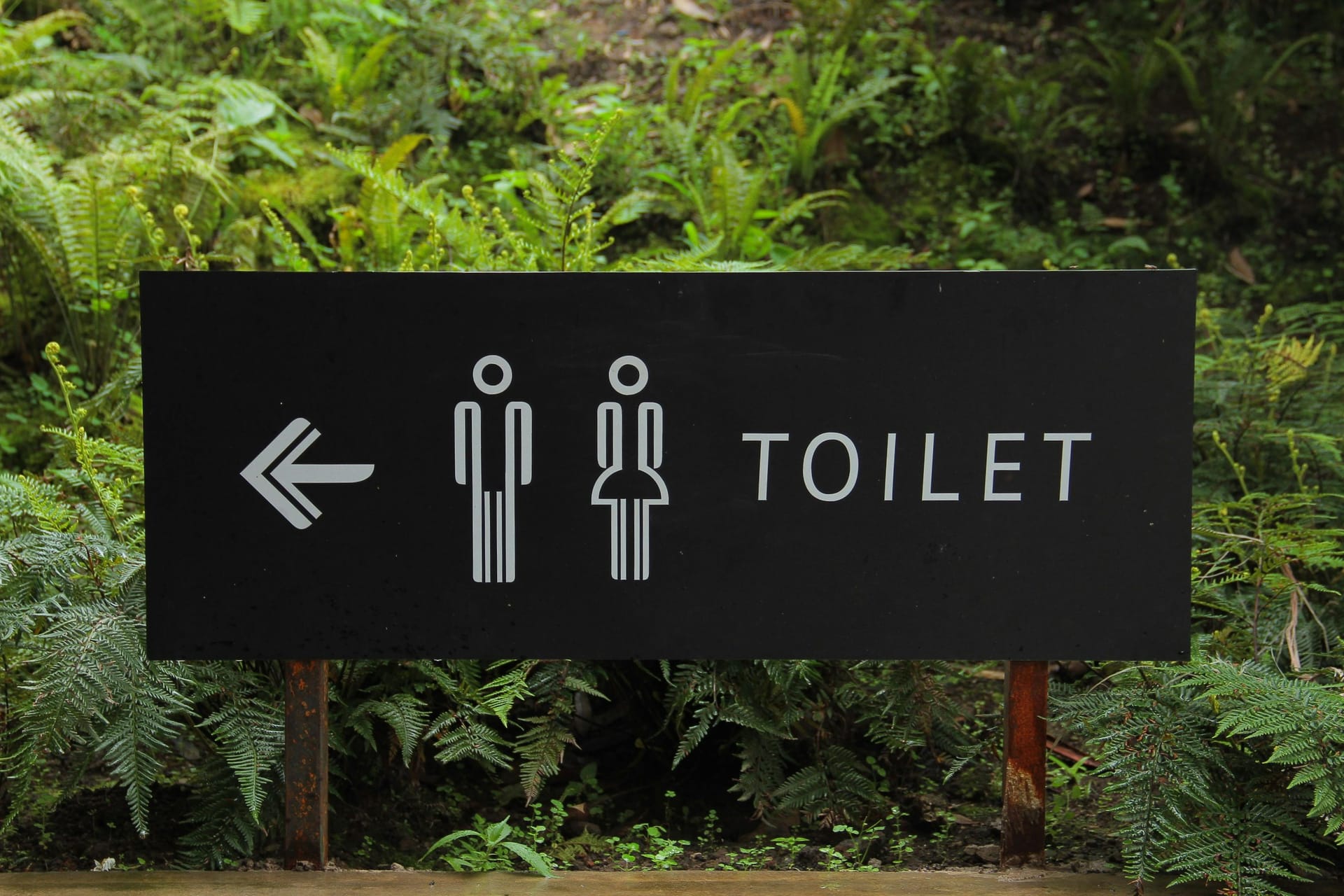
For almost a decade, the country has been consumed, or rather captured, by a debate about toilets. There are campaign groups in Britain that are not interested in making housing more affordable, solving the cost-of-living crisis, or persuading politicians to improve crumbling public services and an overstretched health service. They are hyper-focused on toilets. Specifically, the question of whether trans women should be able to use the women's facilities.
I use public toilets regularly, as most people do. I have bumped into women in the gents on a packed beach when the queue for the ladies was too long and nobody batted an eyelid. The reality of how people actually use these spaces is utterly mundane. The crisis, it turns out, exists almost entirely online, in newspaper columns, and now in government policy. I dare say I see a parallel with migration here.
That gap between the internet and reality is important to discuss. Because this week, the EHRC laid before Parliament a new draft Code of Practice that takes that manufactured crisis and writes it into the formal architecture of how public life in Britain is supposed to work.
What the code actually says
The Code of Practice, published on 21 May, sets out how service providers, businesses, associations and public bodies should implement the Equality Act in light of last year's Supreme Court ruling. Single-sex spaces, from toilets to changing rooms to hospital wards, must now be provided on the basis of what the code calls biological sex, meaning sex assigned at birth. This applies even to trans people who hold a Gender Recognition Certificate that legally changes their sex. Their GRC now confers what the code calls certified sex, which is distinguished from biological sex and cannot be used to access single-sex spaces.
As QueerAF's Jamie Wareham has noted in an analysis well worth reading in full, this could in practice roll back trans inclusion law to where it was before the Gender Recognition Act 2004, the legislation introduced after the European Court of Human Rights ruled the UK had failed to meet its human rights obligations toward trans people.
The recommended solution, in almost every scenario the code sets out, is a third space for trans people. As Jess O'Thomson of the Good Law Project has pointed out, this treats trans people as a third sex, requiring them to use separate facilities and entirely disregarding both the harm this causes and the requirements of human rights law.
There is, however, something important to hold onto in what the code does not say. The most punitive elements that had been leaked to the right-wing press, including suggestions of checking birth certificates, did not make it into the final version. Being trans inclusive remains legal. Organisations can still run inclusive spaces and services. They simply cannot call them single-sex. It means the Women's Institute and organisations like it have a route back to trans inclusion if they choose to take it. The fight now moves to individual organisations and to the courts and Parliament.
The trans men no one mentions
There is something else in this debate that receives almost no attention, and I want to name it directly.
The entire public conversation about trans people in toilets is, in reality, almost exclusively a conversation about trans women. Trans men are effectively invisible in it. But the logic of this code applies to them too. A trans man who has lived as a man for years, who presents entirely as male, who has a beard and a deep voice, is now expected, under this framework, to use the women's facilities. The code acknowledges this creates difficulties and suggests it may be proportionate to deny a trans man access to the women's toilets if his appearance means other users would reasonably object. So he cannot use the women's facilities either. The recommended solution? The third space again.
The erasure of trans men from this conversation is not accidental. It exposes the argument for what it is. This is not, and has never been, primarily about the safety of women's spaces. If it were, the situation of trans men would be front and centre. It is about the visibility and existence of trans women, full stop.
What Amnesty found
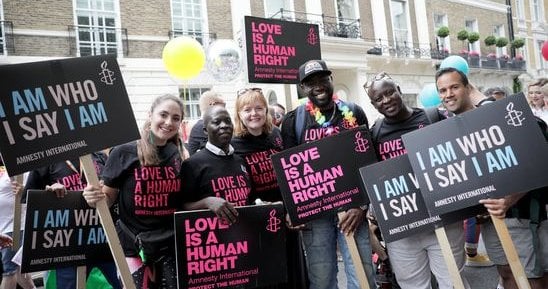
The report linked to further below, published by Amnesty International UK this month, is a fascinating and sad read. Its title, Like a Snowball: the growth and impact of the gender critical movement in the UK, captures precisely how we arrived here.

The findings of the Corpus Linguistics Analysis at its heart are damning. Between January 2020 and April 2025, four major UK newspapers published an average of nine articles per day about trans people. Nine. Per day. For five years. That is 17,000 articles, averaging 264 per month. The analysis confirms what many in our community have felt viscerally: the volume of coverage is entirely disproportionate to the size of the trans population, which represents 0.5% of the people in this country, and bears no relationship to the issues voters actually said they cared about. Trans rights did not feature in the top 16 concerns of voters ahead of the 2024 general election. Yet in the four weeks before that election, sex, gender and sexuality were the most reported culture war issues across the four outlets studied.
The analysis, looking at the names that appear most consistently across the coverage, tells its own story. JK Rowling appears 106 times. Keir Starmer 83. Rishi Sunak 48. Nicola Sturgeon 36. Boris Johnson 35. Brianna Ghey, the 16-year-old trans girl murdered in a park in 2023, appears 16 times. Isla Bryson, a trans woman convicted of sexual offences, appears 8 times. Those are the only two trans people who appear consistently in five years of coverage of issues that directly affect trans lives.
The impact of that sustained, mostly negative coverage is by no means hypothetical. A survey of over 4,000 trans people found that 99% said transphobia in the media had affected their mental health. 87% had heard transphobic statements from politicians in the preceding 12 months. More than 90% believed that media transphobia had worsened their treatment by strangers, family members, friends and colleagues. Nearly 60% felt less hopeful about the future than they had in 2023.
The Amnesty report also documents how this movement's goals converge with those of ultra-conservative Christian groups, including the Alliance Defending Freedom, whose UK spending grew by 258% between 2019 and 2024 and which played a central role in overturning Roe v Wade in the United States. Different starting points, as Amnesty notes, but the same destination: the removal of legal gender recognition, exclusion from public life, and restrictions on gender-affirming healthcare.
Subscribe to continue reading