

What protections does the Conversion Practices Draft Bill offer the LGBTQ+ community?

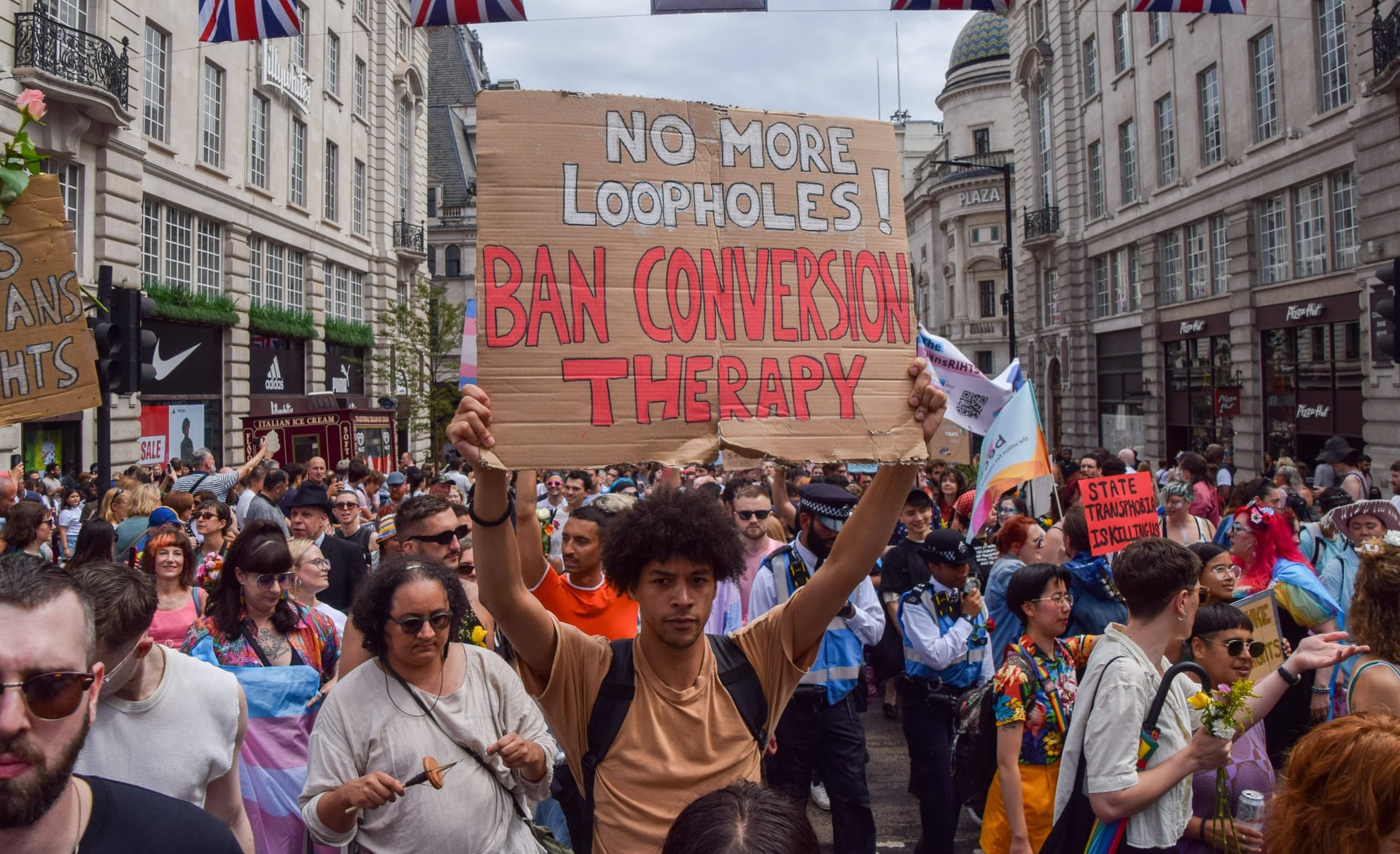
After 8 years of delays and U-turns, the government has finally published a draft conversion practices bill. It has been written in consultation with Galop UK, Ban Conversion Practices Coalition and Stonewall UK, and is a long awaited step towards getting conversion therapy banned in England and Wales.
The 2017 Memorandum of Understanding on Conversion Therapy (a joint document signed by over 25 health, counselling and psychotherapy organisations including NHS England and Wales) makes it clear that conversion therapy in relation to gender identity and sexual orientation is unethical, potentially harmful and is not supported by evidence. The UK government has recognised that "exposure to conversion therapy is statistically associated with poor mental health outcomes including suicidal thoughts and suicide attempts."
Conversion therapy is prevalent in the UK with 1 in 5 LGBTQ+ and 2 in 5 trans people having been subjected to it, according to Galop.
The necessity of this bill is evident. So what does it actually say and does it offer the LGBTQ+ community adequate protections?
1. There is an exception made for 'health care' contexts.
The bill states that conversion therapy is any conduct towards an individual with the intention of causing the individual to have or not have (or believe that they have or do not have) a particular sexual orientation or gender identity. However, according to the bill if the conduct "is carried out in the course of providing health care services" then it "is not a conversion practice" unless the practitioner falls “far below” professional standards. This means that unless you can prove gross negligence, conversion therapy is legitimate in 'health care settings'.
This is despite the fact that the government's National LGBT Survey found that 28.7% of conversion practices carried out on respondents were by a "healthcare provider or medical professional".
The bill defines 'health care services' broadly, such that it covers “people working in all public and private, regulated and non-regulated sectors”. TransActual has raised concerns that this "paves the way for a cottage industry of conversion abusers posing as therapists and healthcare practitioners."
The exception legitimises the movement against 'gender affirming care' in law. Gender affirming care is care that starts with recognition that a patient's gender identity is real and with respect for that identity. The care that follows from this basic start point is underlined by the intention of helping the patient to feel happy, healthy and safe in their gender. Gender affirming care does not rule out an individual exploring their gender identity, however it must be patient driven as opposed to being driven by the medical professional.
In recent years there has been backlash against gender affirming healthcare in the UK, particularly for under 18s. Some medical professionals working in children's services have said on record that they feel they have been pushed out of the NHS due to their gender affirming approach. The gender affirming medical practice of using puberty blockers has been made illegal, and there has been a ban on new prescriptions and referrals for hormones for under 18s.
The alternative to gender affirming care is gender non-affirming care, which does not accept or respect an individual's gender identity. In practice this looks like some kind of 'exploratory therapy', which is another name for conversion therapy and is harmful. The bill legitimises this kind of 'care', with small exceptions for cases where conduct falls “far below” professional standards.
The gross negligence caveat fails to provide any protections for trans people, due to the fact that 'professional standards' is vague, and due to the power of the anti-gender-affirming-care movement. This means that 'what would reasonably be expected of a medical professional' in gender care would be highly contestable in court.
Jo Maugham KC, founder and director of the Good Law Project, has raised concerns that this bill actually damages transgender people's rights as it will make it more difficult for them to sue healthcare professionals if they receive bad or harmful care, as the bill legalises conversion practices in healthcare settings.
2. There is no 'religious freedom' exception.
There is notably no exception made for conduct that takes place as part of religious practice or in a religious setting.
Many religious groups have been expressing opposition to the bill, arguing that "it could criminalise ordinary conversations about faith, sexuality and gender" according to Premier Christian News. It will be interesting to see whether this affects the revision process of the bill.
3. Abusive conversion therapy can be liable to up to 5 years imprisonment.
The bill defines conversion practices (albeit with a questionable healthcare exception), then goes on to provide the conditions under which a conversion practice is 'abusive' which considers whether it involves sexual aspects, violence, controlling behaviour, and use of economic, psychological or emotional pressure.
It then goes on to say that abusive conversion therapy is an offence in England and Wales if it causes serious harm, the penalty for which can be an unlimited fine, up to 5 years imprisonment, or both.
Encouraging or assisting abusive conversion practices abroad is equally liable.
This is a commendable step forward in terms of filling in some gaps in the law. The government has stated that existing laws that cover domestic violence, coercive control and communications offences do not adequately address the unique nature of abusive conversion practices.
Simon Blake, Stonewall CEO, said that "no one should be told they have to change who they are, LGBTQ+ people are not broken or in need of ‘fixing’. At a time when LGBTQ+ rights are under threat and we’re seeing increased hostility towards the LGBTQ+ community, this draft Bill is crucial in creating a safer and more inclusive future for LGBTQ+ people."
The bill also grants the courts the power to issue a 'conversion practice protection order', which can be a broad range of prohibitions, restrictions or requirements to protect an individual from abusive conversion practices.
The bill will now undergo a process of pre-legislative scrutiny which is expected to last around three months. After, this it will need to go through several stages in House of Commons where MPs can propose and vote on amendments, then to the House of Lords before it can become law.
There has been a mixed response from the community, with outrage that the bill includes an exception in medical contexts, meaning that it does not protect transgender people. However, some have argued that the positive aspects of the bill mean that it is important to get it across the line nevertheless.
Scene was founded in Brighton in 1993, at a time when news stories about Pride protests were considered radical.
Since then, Scene has remained proudly independent, building a platform for queer voices. Every subscription helps us to report on the stories that matter to LGBTQ+ people across the UK and beyond.
Your support funds our journalists and contributes to Pride Community Foundation’s grant-making and policy work.





Member discussion