

REVIEW: Blue Film
Blue Film is not quite the sexy and exciting movie its poster suggests or its title promises. It is, however, something bleaker and more disturbing, and that is very much to its makers' credit


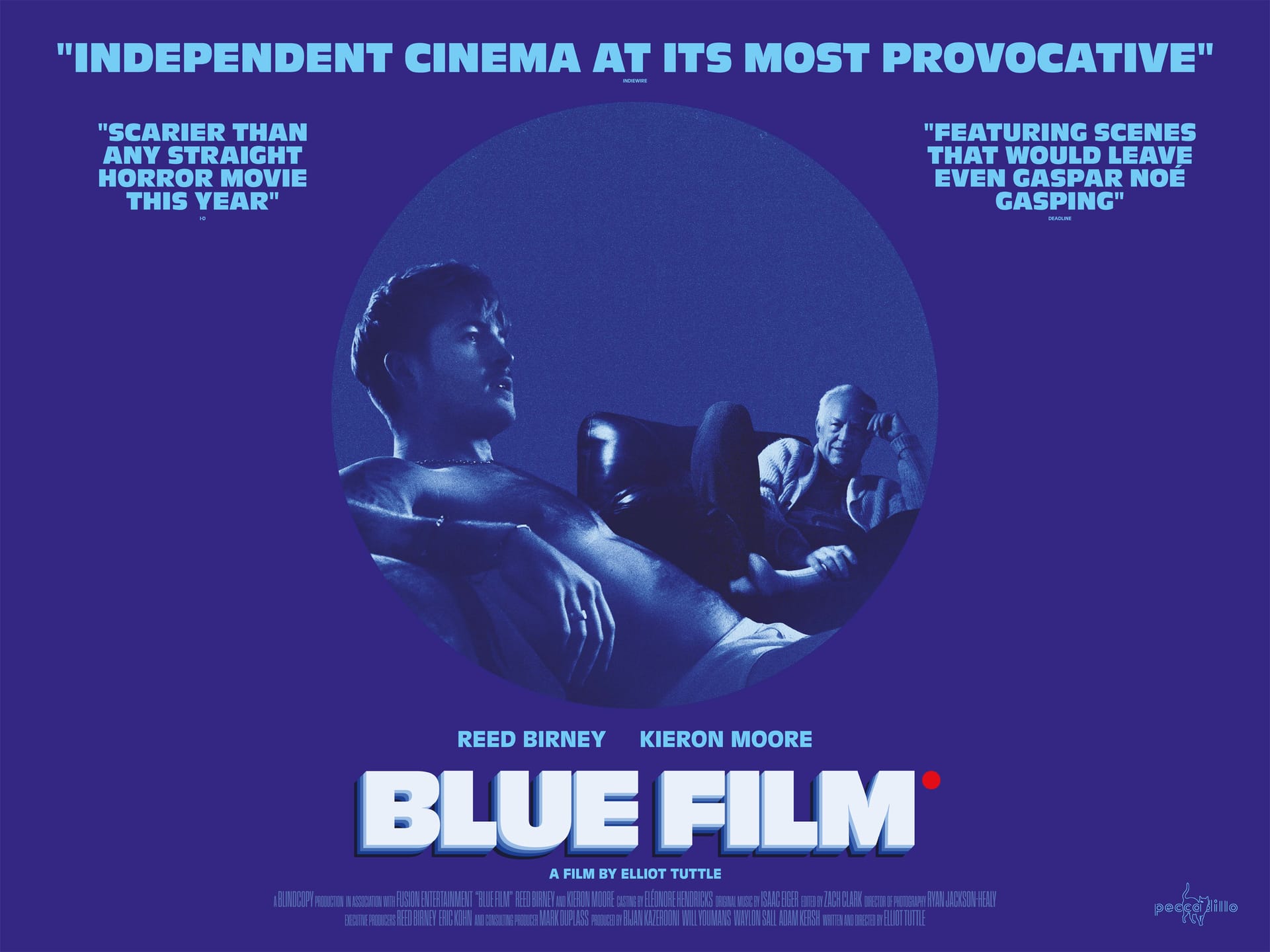
Hello, cinema lovers. Blue Film is not quite the sexy and exciting movie its poster suggests or its title promises. It is, however, something bleaker and more disturbing, and that is very much to its makers' credit. This is a director who doesn't flinch or turn away. Take a walk into the depth of human depravity, presented with a gentle face.
Aaron Eagle (the wonderful Kieron Moore) is a Los Angeles camboy who specialises in brutality, taunting his followers into emptying their wallets for a tantalising glimpse of his body. When a particular fan offers him fifty thousand dollars for a single night together, Aaron takes the deal without hesitation.
The fan turns out to be Hank (Reed Birney), who answers the door in a balaclava with a camcorder running. As the night unravels, Hank reveals he knows Aaron's real name, and Aaron in turn recognises Hank as a man from his past. A man who is a convicted rapist and paedophile. What follows is a long, tense face-off between two men bound by past trauma.
Kieron Moore is truly a standout in this movie. His Aaron is all arrogance and muscles in the opening scenes. He performs toxic masculinity so committedly that it takes a while to notice the character's more vulnerable side. That humanity surfaces in various close-ups of Aaron's face. His physical performance never wavers during the movie's runtime, alternating between humour, disgust and violence.
Birney's character moves the story's plot along, and he does this job admirably, playing a complicated and despicable man. He plays Hank with an eerie stillness and restrained core that slowly progresses into horror as the true monster is revealed. He never becomes a shallow cinematic creep; this is what makes his performance a total home run. You feel almost unclean watching Aaron and Hank talk. This is dark, confrontational cinema at its best or worst. At times this film is nearly unwatchable, but it holds the line, only just.

Director Elliot Tuttle makes a spectacular directing debut here. The entire movie is set as a two-hander in a rental property. The cinematography is really solid; various scenes echo Aaron's webcam world, evoking an almost otherworldly vibe at times. The movie skips along and never really loses momentum. However, later in the movie, the plot seems to repeat its main points.
How does the film handle queer identity? With a careful touch, considering the paedophilic overtones of the movie's plot. Aaron's camboy character is depicted as a queer sex worker without apology or softening for its audience. The sex between the two men is graphic but never over the top, shown to expose a power dynamic rather than be horny or exciting despite Moore's obvious physical beauty.
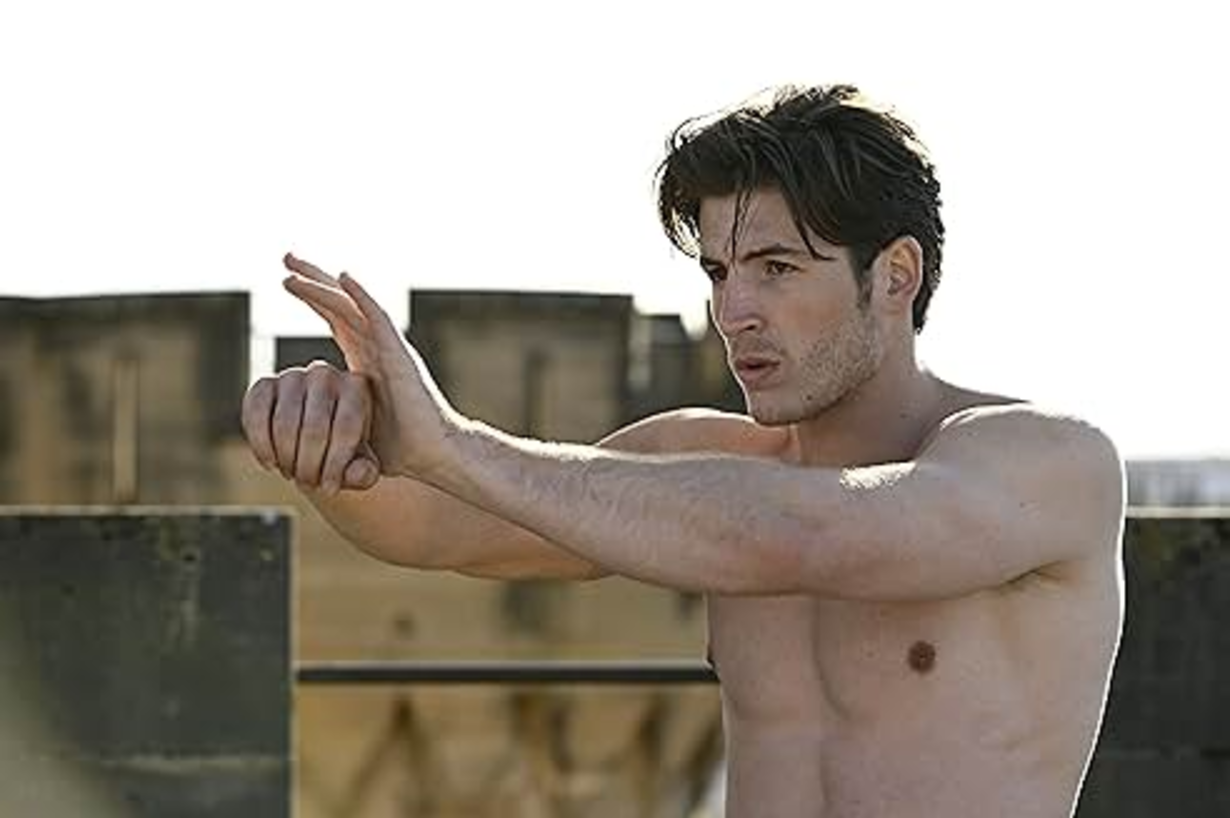
Some viewers will feel the film gets too close to its own taboo subject matter for comfort. They will definitely have a point; this movie is incredibly unsettling at times. But the filmmakers obviously want to present a predator in the most unvarnished way possible.
Gay sex work has been successfully featured before in movies like Greek Pete (2008) and Sebastian (2024). It's a murky, complicated world, and Blue Film aims to show the possible corrosive nature of prostitution and where some of these boys come from before the cam light shines on them.
Blue Film will not be for everyone and was never intended to be. But it is a seriously strong piece of queer filmmaking. A gripping drama starring two extremely capable performers. Watch out for Kieran Moore in the future, hes a talented actor with a bright future. Recommended, but be warned it's a tough film to sit through at times.
Blue Film will be released in UK cinemas from September 11th, 2026.
Scene was founded in Brighton in 1993, at a time when news stories about Pride protests were considered radical.
Since then, Scene has remained proudly independent, building a platform for queer voices. Every subscription helps us to report on the stories that matter to LGBTQ+ people across the UK and beyond.
Your support funds our journalists and contributes to Pride Community Foundation’s grant-making and policy work.




Member discussion