



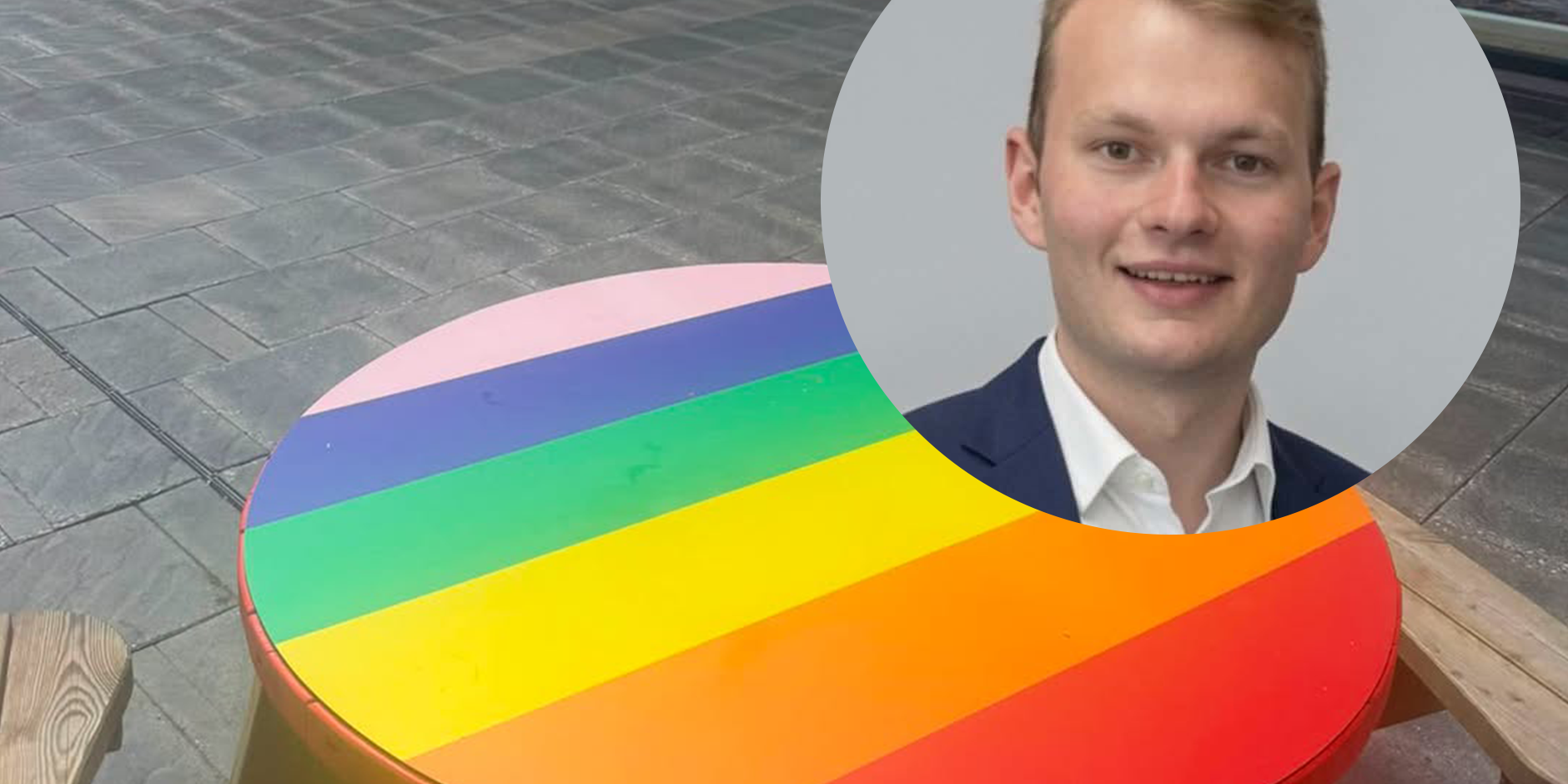
A Restore Britain councillor has been accused of homophobia after claiming that a rainbow-coloured picnic table at a South Wales shopping centre represented a “mandatory ideology” that was becoming “impossible to escape”.
Owain Clatworthy, who represents Pyle, Kenfig Hill and Cefn Cribwr on Bridgend County Borough Council, sparked a backlash after sharing a photograph of the rainbow-painted picnic bench outside a Marks & Spencer in Bridgend.
Posting on Facebook on Tuesday, 28 July, Cllr Clatworthy criticised the display, writing: “You can’t even sit down for a coffee at McArthur Glen for five minutes without being reminded of the latest mandatory ideology.
“This isn’t about kindness or inclusion. It’s about making one political view impossible to escape in every public space.
“Ordinary people are tired of it. They just want to live their lives without every surface being turned into a billboard.”
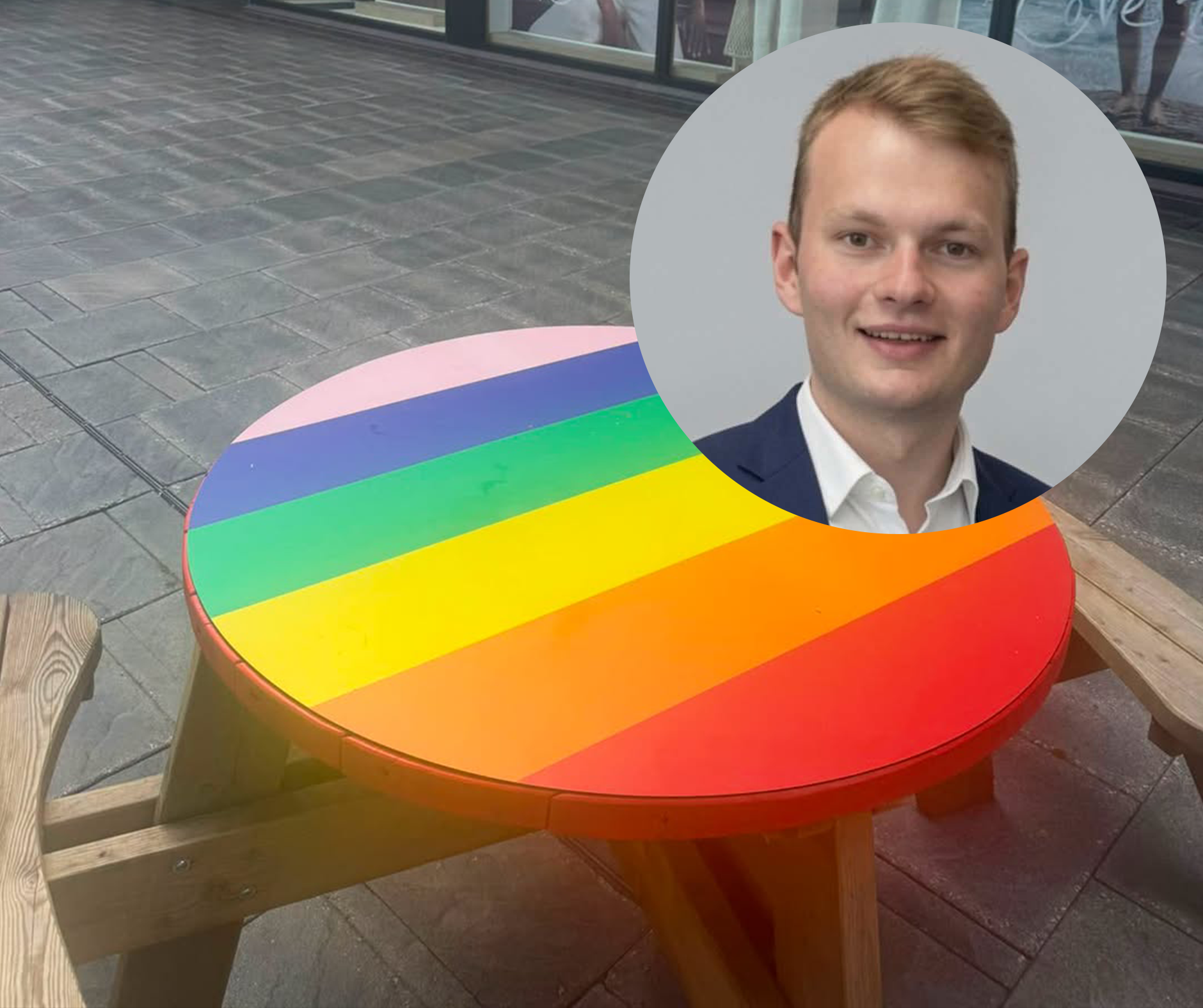
The comments quickly drew criticism online, with many social media users accusing the councillor of overreacting to a symbol widely associated with LGBTQ+ inclusion and Pride.
Thousands of people responded to the post, with some mocking the councillor for appearing to be “triggered” by a picnic table painted in rainbow colours.
Others were more direct in their criticism. One commenter wrote: “Imagine being offended by a bench.” Another described the post as “embarrassing”, while others accused Cllr Clatworthy of promoting anti-LGBTQ+ sentiment.
Several users branded the councillor a “bigot” and “homophobic”, arguing that rainbow symbols are intended to signal support and inclusion rather than promote a political agenda.
The row comes as rainbow flags and Pride-themed displays continue to be used by businesses, councils and organisations across the UK to demonstrate support for LGBTQ+ communities.
Restore Britain, the political party Cllr Clatworthy represents, has positioned itself against what it describes as “woke ideology” and identity politics, frequently criticising diversity and inclusion initiatives.
Scene was founded in Brighton in 1993, at a time when news stories about Pride protests were considered radical.
Since then, Scene has remained proudly independent, building a platform for queer voices. Every subscription helps us to report on the stories that matter to LGBTQ+ people across the UK and beyond.
Your support funds our journalists and contributes to Pride Community Foundation’s grant-making and policy work.

Member discussion