

The Beekeeper of Aleppo Theatre Royal Brighton
a portrait of a couple navigating almost unbearable loss while still reaching for each other across the darkness. It is compassionate, deeply human work.

There are productions that reach inside you and send you back out into the night a slightly different person. The Beekeeper of Aleppo is one of these.
Adapted by Nesrin Alrefaai and Matthew Spangler, the dramatist who gave us The Kite Runner, from Christy Lefteri's internationally bestselling novel, this is a story that may be new to many audiences. It asks only that you show up and allow yourself to feel. Nuri is a Syrian beekeeper; Afra, his wife, a gifted artist. Their life in Aleppo is one of warmth, colour and community, until war obliterates everything they know and love, and they are forced to flee. What follows is their extraordinary, harrowing, and quietly heroic journey towards safety, and towards one another.
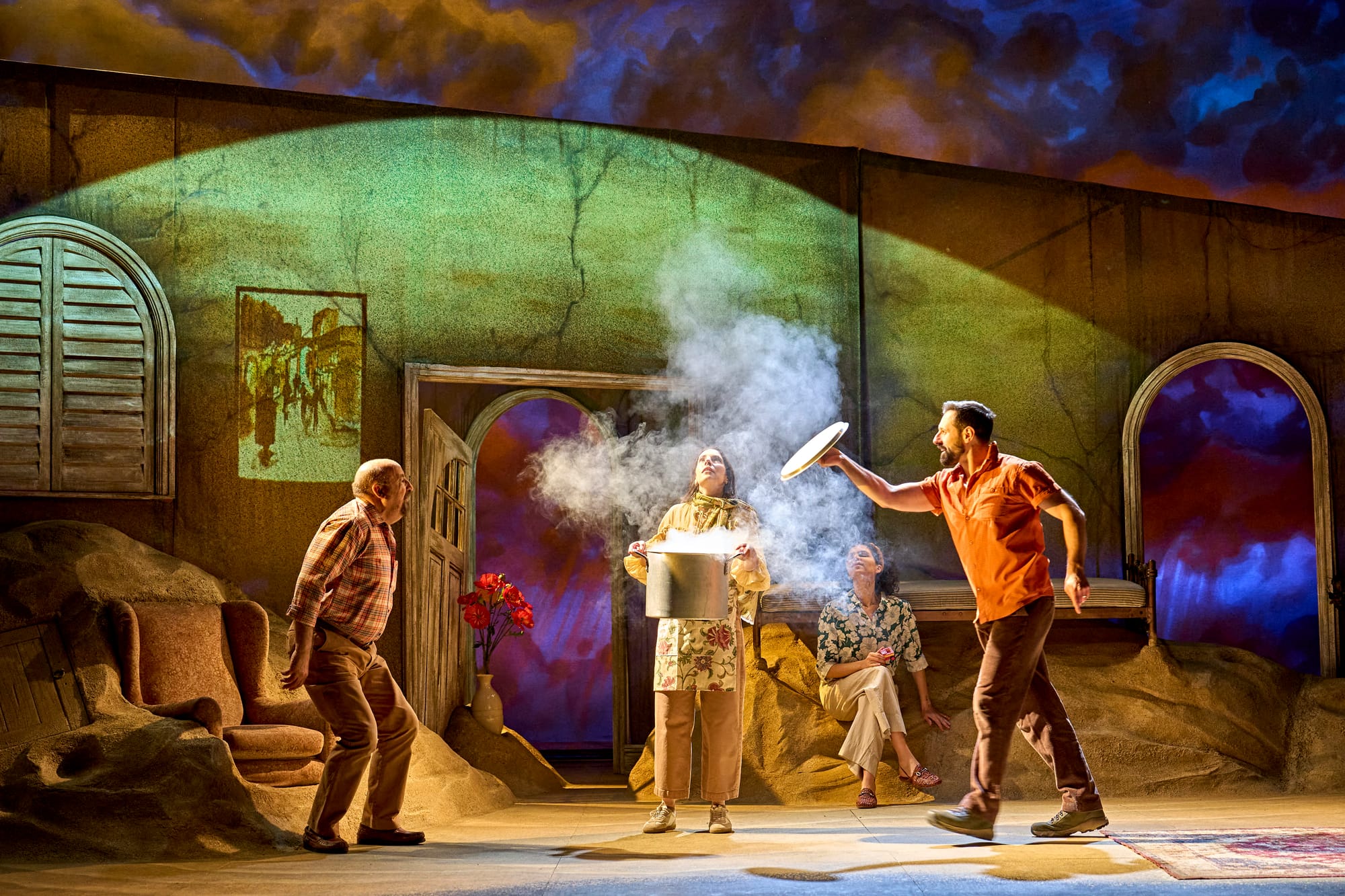
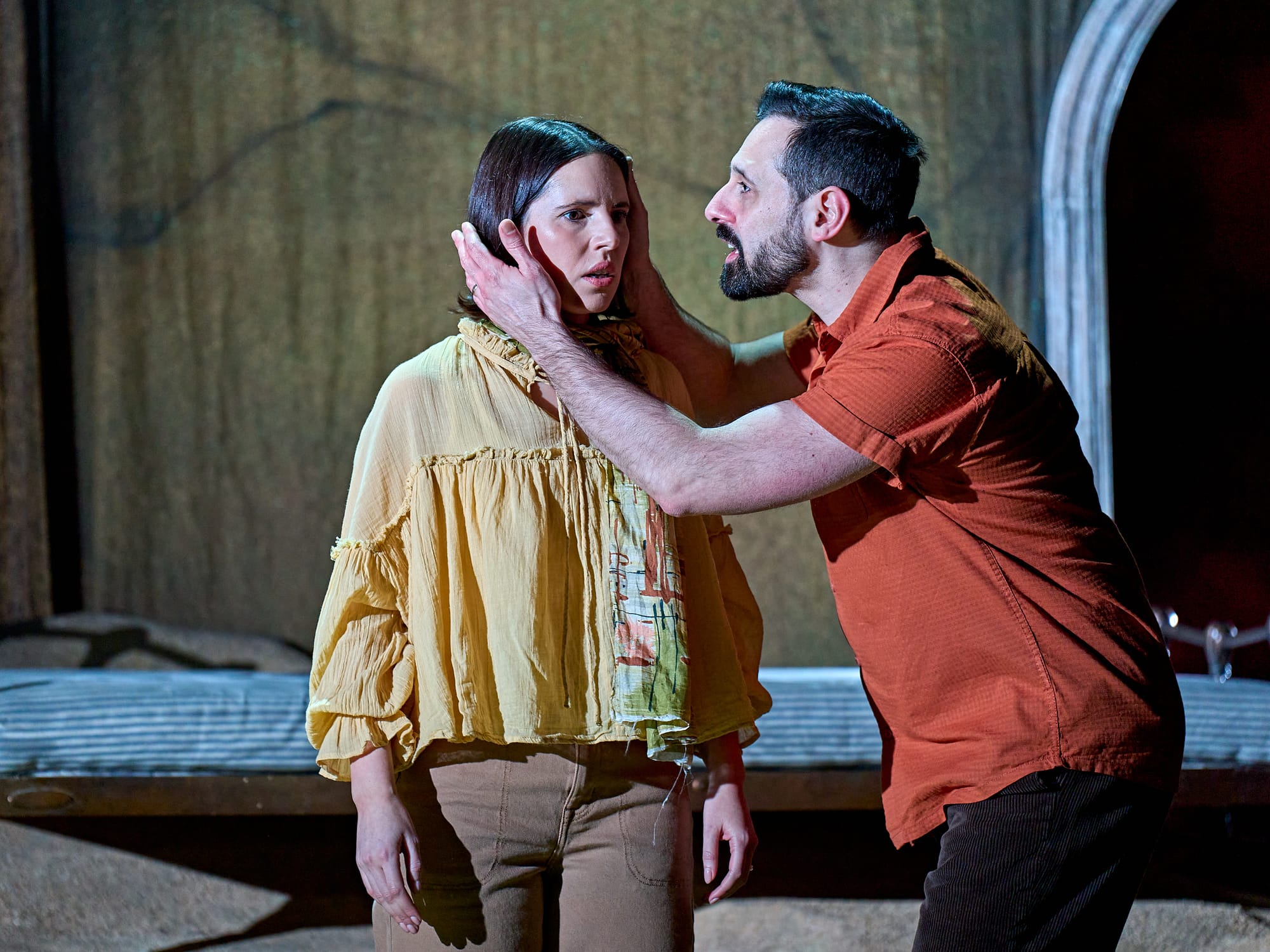
Adam Sina and Farah Saffari anchor this production with performances of emotional intelligence. Sina's Nuri carries both the weight of devastation and a trembling, stubborn tenderness, while Saffari's Afra, psychologically shattered and robbed of her sight by trauma, never collapses into victimhood. Together they create a portrait of a couple navigating almost unbearable loss while still reaching for each other across the darkness. It is compassionate, deeply human work.
The production is visually intriguing. Ruby Pugh's set, spare, evocative, suffused with the warmth and light of Syria, works in quiet harmony with Ben Ormerod's lighting design. Images shift from the destroyed streets of Aleppo to the vast, terrifying expanse of the Mediterranean, with projections playing across gauzy, perforated screens that dissolve one world into another. A soundscape that conjures the meditative hum of a beehive becomes something tender: a reminder of what was, and what might yet be.
The play moves fluidly between past and present, memory and reality, and it is in this structural restlessness that the full weight of displacement makes itself felt. One of the production's most quietly devastating observations is the contrast between the rare, luminous acts of kindness the couple encounter on their journey through Turkey, across Greece and the cold, bureaucratic indifference that greets them on British soil. Those official interactions are bracing and uncomfortable to witness, and deliberately so. The play refuses to let us off the hook.
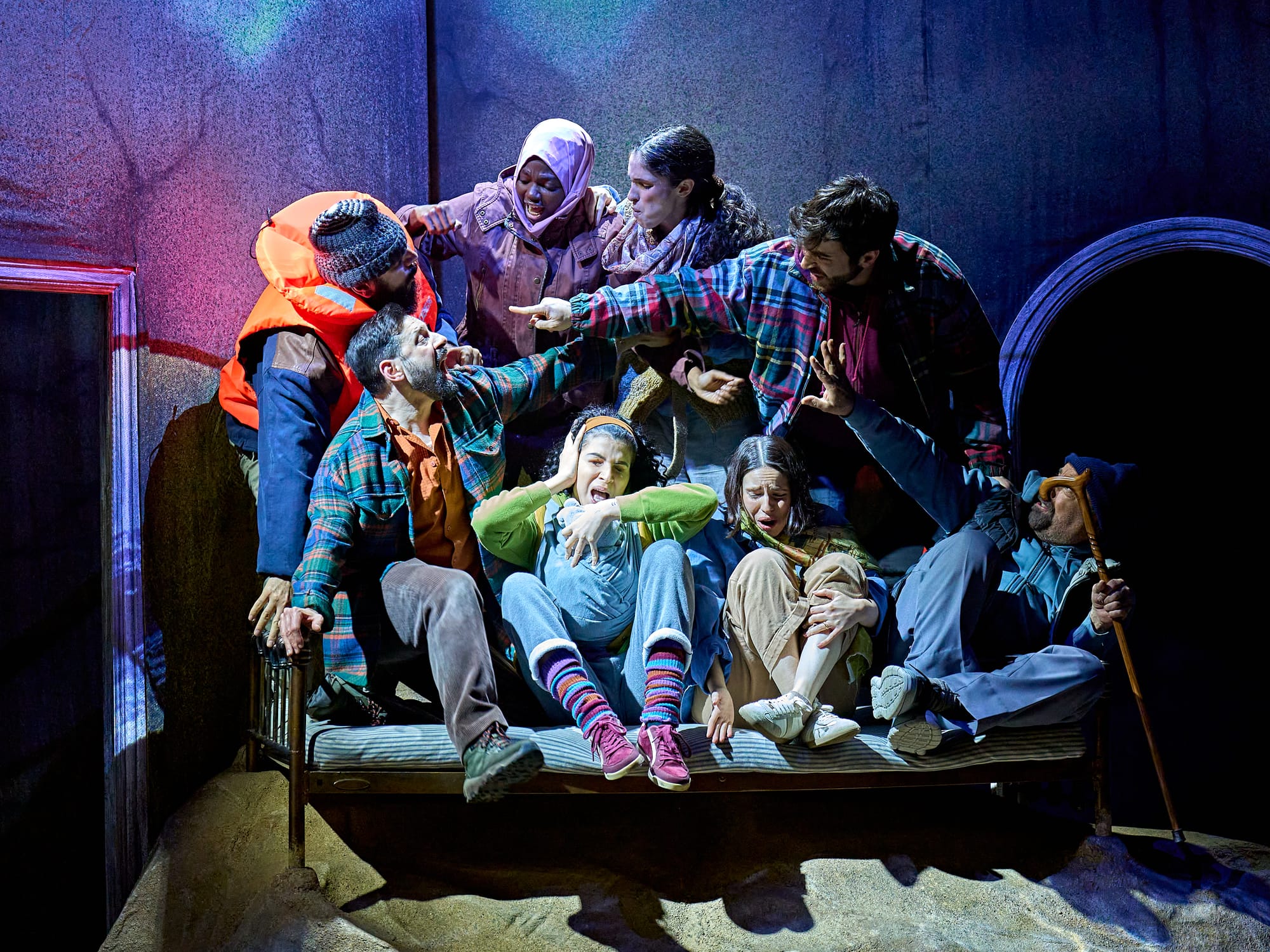
As we in the LGBTQ+ community know too well, the experience of being made to feel unwelcome, invisible or inhuman by systems that should protect you is not theoretical. That knowledge gives this production an additional resonance. To watch Nuri and Afra navigate corrupt traffickers, detached officials, and a revolving cast of strangers, some exploitative, some unexpectedly kind, played with considerable skill by the ensemble, is to feel the full, relentless toll of a world that sorts people into deserving and undeserving. It is not comfortable. It should not be.
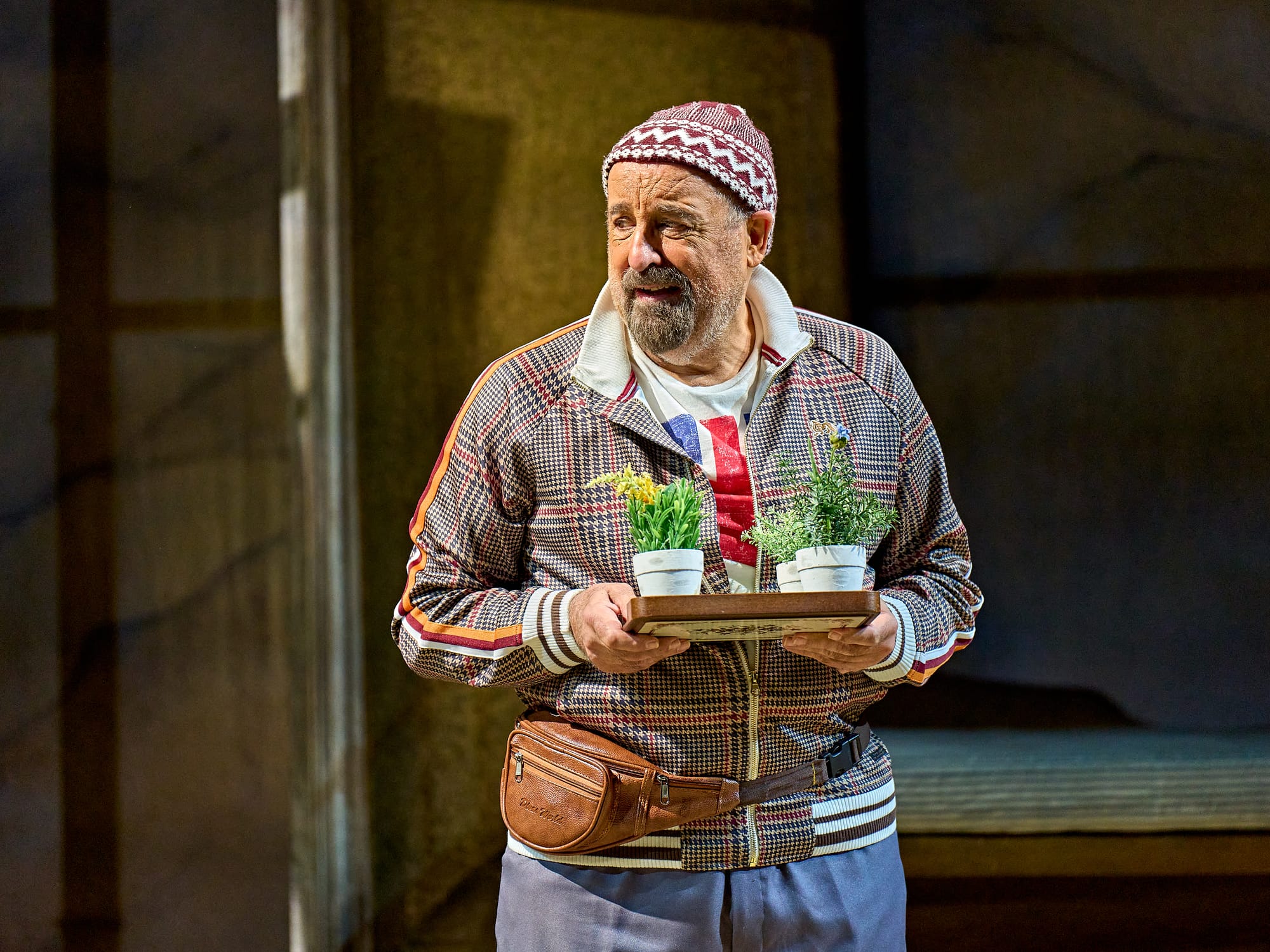
Ultimately the thread is the tenderness running beneath its urgency. At its heart, this is a meditation on grief and hope, on how all of us, in our own ways and at our own moments, are asked to absorb loss and find a reason to keep moving. The specific cruelties here may be unlike anything most of us will face. But the love, the grief, the desperate need to be held and understood, those belong to every one of us.
Go. Superb theatre, and so necessary for us all in the UK right now.
The Beekeeper of Aleppo runs at Theatre Royal Brighton until 13 June 2026
More info or to book tickets here.
Scene was founded in Brighton in 1993, at a time when news stories about Pride protests were considered radical.
Since then, Scene has remained proudly independent, building a platform for queer voices. Every subscription helps us to report on the stories that matter to LGBTQ+ people across the UK and beyond.
Your support funds our journalists and contributes to Pride Community Foundation’s grant-making and policy work.



Member discussion