

Tactical voting prays on our vulnerabilities and is ultimately undemocratic
Tactical voting is an incredibly popular way of trying to prevent Reform taking power. Sometimes it works, sometimes it doesn't. But ultimately, we need to ask ourselves whether it is democratic.


Yesterday, I received an email from Forward Democracy. Despite not living in Makerfield, it told me that the way to stop Reform is to vote Andy Burnham.They are the group behind the tactical voting tool designed to stop Reform and the Conservatives from winning local and general elections. But there's a side of tactical voting nobody talks about.
It is usually the case that minority groups are the target demographics for the promotion of tactical voting. For example:
- Stop Reform to protect migrant rights
- Stop Reform to protect LGBTQ+ rights
- Stop Reform to protect disability rights
It is a system that plays on the fears of minority groups. And it is absolutely right that we do all that we can to stop far-right parties taking power. However, there is an issue with tactical voting in that it backs us into a corner, essentially scaring us into voting for a party we may not align ourselves with.
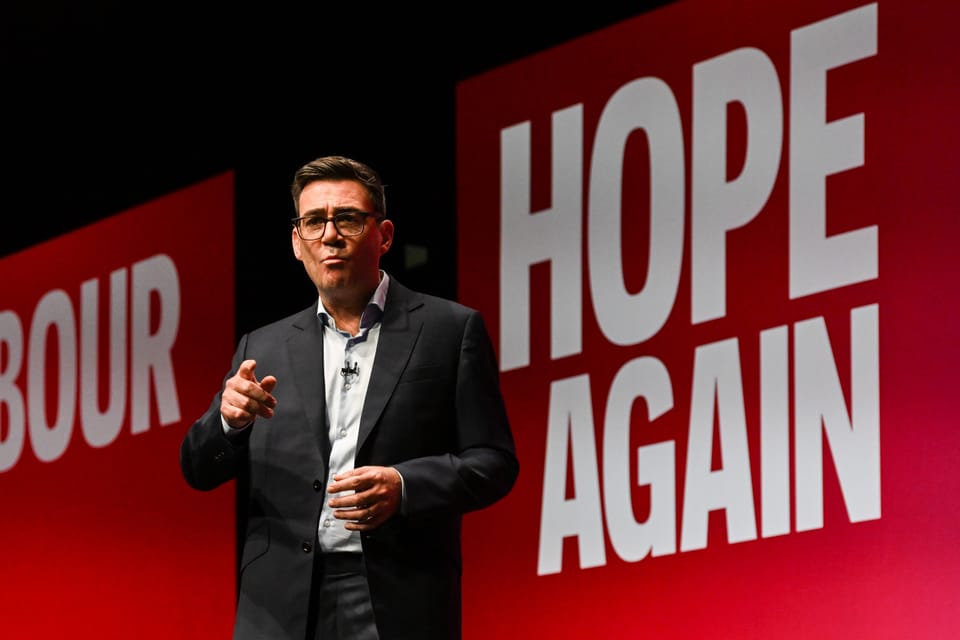
Today is the by-election in Makerfield - a highly consequential fight between Labour's Andy Burnham, and Reform's Robert Kenyon. This election will probably determine who takes over from Sir Keir Starmer as Prime Minister.
As soon as Burnham was announced as the candidate, we knew it would be a two-horse race. The official 'tactical vote' is to vote Burnham to prevent another Reform MP getting in. And the advice - on this occasion - is correct. There is an incredibly small chance that any of the other candidates stand a chance.
But I fell victim to this system recently. Last month, I stood as a local election candidate for the Green Party. For the first time ever, the party fielded candidates in all available wards across Kingston upon Hull. That's nineteen candidates. We saw the national polling which showed the Green Party was making waves, and our membership surpassed that of the Liberal Democrats and the Conservatives, and likely Labour (who don't report their official membership numbers anymore, but we can make an educated assumption).
But the tactical voting advice across Hull varied between Labour and the Liberal Democrats. The local election in my city wasn't an all-out election. By that, I mean only nineteen out of 57 seats were up for election. Even if Reform had won all of those available seats, it wouldn't have meant they would take power.
So, we had an opportunity here to elect new and progressive voices. But the tactical voting advice said, 'Don't mess with the flow, no, no. Stick to the status quo.' (I have one more High School Musical reference, and then I'm done). Instead of crême brûlée, hip-hop, or playing the cello, we just get crap politics.
To give a bit of context, the Labour Party and the Liberal Democrats have tossed power between them here for an excessively long time, except for two years where the Conservatives briefly held power. We have also had other views represented on the council, with UKIP and plenty of independents. But now, Reform has broken the glass ceiling and taken ten seats on the council.
Once again, we have no progressive voices on the council - just a strange hodgepodge of Labour, Lib Dems, Reform, and independents with no party having overall control. It's more of the same, and it's residents who will feel that.
I want to make it really clear that the Liberal Democrats are not progressive. They often sit on the fence on many issues, try not to rock the boat, and manage rather than progress anything. They are incredibly boring - the political equivalent of vanilla. But they are seen as the 'safe bet'.
Now, tactical voting could be a powerful tool if it was also campaigning for proportional representation, or another system of voting. Forward Democracy could quite easily come out and say, 'We know the situation is crap, but until we get a system that is truly democratic, this is the best we can do.' Instead, it backs us into a corner, and tells us that the best way to stop the right and far-right is to vote for boring, non-progressive, and sometimes actively harmful parties.
If we look at the Labour Party being touted as the tactical choice in Makerfield, would you say that Andy Burnham is progressive? I mean, he has recently backtracked on his support for trans people, has said that if he wins the Labour leadership election, he would keep some (or most) of the current cabinet, and do not forget that he has been an MP before between 2001 and 2016. He is a seasoned politician who has skin in the game. He does not represent anything new.
Many people vote tactically because they are rightly terrified of what a Reform government would mean. None more so than LGBTQ+ people and disabled people, because we have seen their policies, and they are grim. But the Labour Party is not much better. Nor are the Liberal Democrats (who are, in my opinion, Tory in all-but party colour).
I'm not telling you who to vote for here. I'm not encouraging you to reject tactical voting. I am asking you to consider whether this system is truly representative and democratic. Because to me, it isn't. It is like voting Hilary Clinton to try stopping Donald Trump back in 2016. Voting for the 'lesser evil' is still voting for evil.
Publication does not imply endorsement. The views expressed are solely those of the contributor.
Full list of candidates in the Makerfield by-election: Jake Austin (Liberal Democrats), Count Binface (Count Binface Party), Andy Burnham (Labour Co-op), Dan Clarke (Libertarian), John Dyer (Independent), Ed Gemmell (Climate), Paul Gould (Independent), Howling Laud Hope (Monster Raving Loony Party), Robert Kenyon (Reform UK), Robert Pownall (Independent), Rebecca Shepherd (Restore Britain), Sarah Wakefield (Green Party), Peter Ward (Rejoin EU), and Michael Winstanly (Conservative).
Scene was founded in Brighton in 1993, at a time when news stories about Pride protests were considered radical.
Since then, Scene has remained proudly independent, building a platform for queer voices. Every subscription helps us to report on the stories that matter to LGBTQ+ people across the UK and beyond.
Your support funds our journalists and contributes to Pride Community Foundation’s grant-making and policy work.



Member discussion