



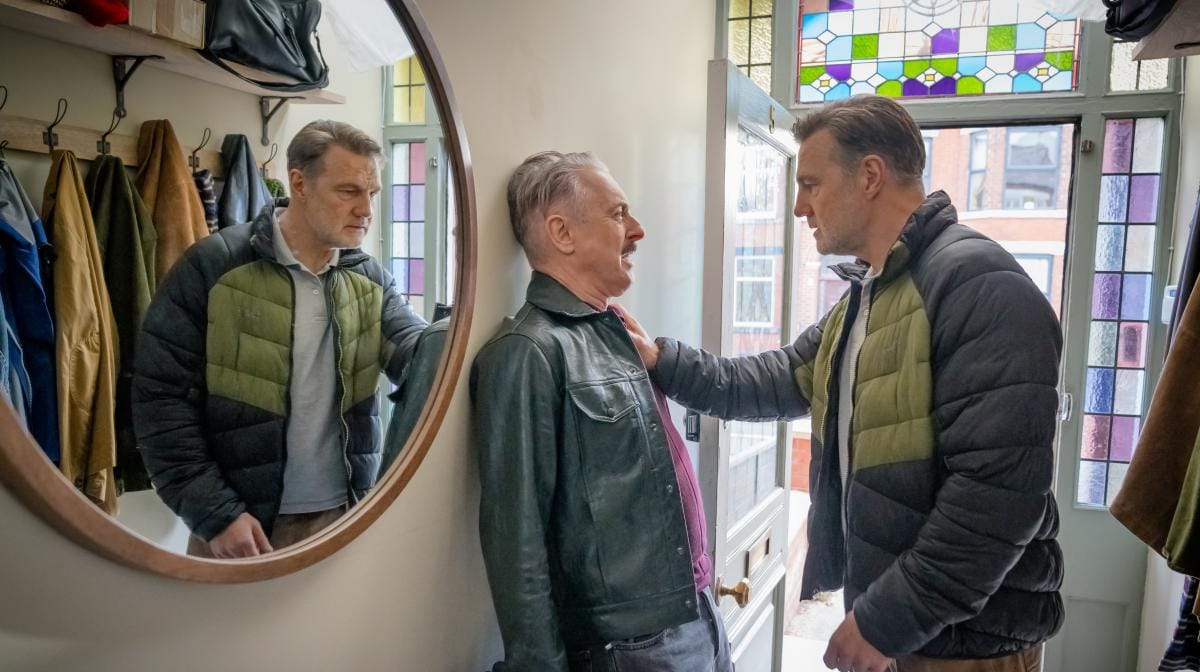
Russell T Davies has described his new Channel 4 drama Tip Toe as a “natural legacy” of his critically acclaimed series It’s A Sin, as leading HIV charities welcomed its up‑to‑date portrayal of life with the condition.
Davies’ 2021 hit It’s A Sin, set during the height of the AIDS crisis in 1980s London, became Channel 4’s most‑watched drama series and was widely credited with transforming public understanding of HIV in the UK. The series followed a group of young gay men and their friends, capturing the exuberance of the early 1980s before charting the devastating toll of the epidemic.
However, the story concluded in 1991, at a time when an HIV diagnosis was still widely seen as a death sentence, before effective treatments became available.
Speaking about the connection between the two shows, Davies said Tip Toe continues that story into the present day.

“It’s an honour to portray Alan Cumming’s character, Leo Struthers, as a man living with HIV since 1994,” he said. “It feels like the natural legacy of It’s A Sin. There wasn’t the time in that show to tell the long‑term story - that medications were found which saved so many lives - so this feels like a right and proper continuation.”
Davies, who is a patron of George House Trust and a long‑time supporter of Terrence Higgins Trust, said charities had encouraged him to reflect modern realities.
“I’ve often been asked by people in both organisations to show modern‑day characters who are HIV positive and living straightforward, happy lives,” he said. “It’s an honour to do so in Tip Toe.”
He added that the series would also confront ongoing stigma and misinformation. “There’s some contentious stuff in there too, as the age‑old problem of stigma raises its head, as well as the problems of HIV denial. The fight never ends, but Leo’s ready on the front line.”
It’s A Sin had a measurable impact on HIV awareness when it aired during National HIV Testing Week in 2021. On the first day of the campaign, a record 8,207 HIV test kits were ordered — far exceeding the previous high of 2,709.
The series also drove a surge in online searches about HIV and AIDS, including a 3,100% increase in queries about why AIDS was so deadly in the 1980s, and a 2,150% rise in searches asking whether women can contract AIDS.
Terrence Higgins Trust reported a 30% increase in calls to its THT Direct helpline in the day after the first episode aired, highlighting the show’s role in prompting public engagement with sexual health information.

Richard Angell OBE, chief executive of Terrence Higgins Trust, said few programmes had had such a profound impact. “No TV series has done more to engage and re‑engage the public in the fight against HIV than It’s A Sin,” he said. “It reminded us of the devastation of the AIDS crisis and how fortunate we are to live at a time when there are highly effective ways to prevent, test for and treat HIV.”
He praised Tip Toe for showing how treatment has transformed life with HIV. “We thank Russell for doing what he couldn’t in It’s A Sin - including showing Leo taking one pill a day and living well with HIV three decades on from his diagnosis.
“That single pill keeps his HIV in check and means he cannot pass the virus on to sexual partners. HIV is a tiny part of his life, leaving him with plenty of time to run his bar, spend time with friends and even feud with his neighbour.”
Darren Knight, chief executive of George House Trust, said accurate representation remains key to tackling stigma. “Only when people know the facts about HIV will we truly tackle the stigma and discrimination that still persists,” he said. “Through representation, inclusion and truth, Russell’s writing helps us reach and educate more people.
“Tip Toe is another strong example of bringing those facts into people’s living rooms - challenging prejudice and giving audiences the knowledge they need about HIV in 2026. We thank everyone involved for helping to build a world where HIV holds no one back.”
Scene was founded in Brighton in 1993, at a time when news stories about Pride protests were considered radical.
Since then, Scene has remained proudly independent, building a platform for queer voices. Every subscription helps us to report on the stories that matter to LGBTQ+ people across the UK and beyond.
Your support funds our journalists and contributes to Pride Community Foundation’s grant-making and policy work.





Member discussion