

Review : Thirst (2019)
A movie featuring a thousand-year-old gay vampire with a love of a very specific male appendage and little or no time for women. Sit back and relax; Hjörtur will do all the work



Directors Steinþór Hróar Steinþórsson and Gaukur Úlfarsson :80 mins
Hello, cinema lovers. Today's movie gives us perhaps Iceland's most interesting cinematic export yet: a movie featuring a thousand-year-old gay vampire with a love of a very specific male appendage and little or no time for women. Sit back and relax; Hjörtur will do all the work.

First released in 2019 in Iceland, Thirst is directed by Steinfóur Hróar Steinfóursson and Gaukur Úlfarsson. It is, by any measure, an odd film. It opens with a roadside hook-up that ends in a gory explosion where a victim's dick is literally ripped off him. This film is liberal in its use of fake blood. The story's central anti-hero is openly and explicitly gay. There is no queer coding to be figured out between the lines here. This vampire is not Tom Cruise's Lestat. We see a clearly stated character that the film then builds its entire logic around.
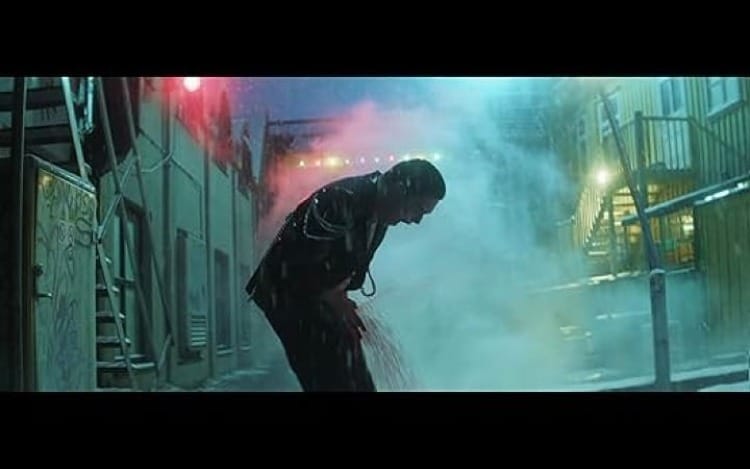
The vampire of the hour is Hjörtur, played with a haunted presence and centuries-long weariness by Hjörtur Sævar Steinason. He preys exclusively on men. He has no appetite for women. He forms an unlikely alliance with Hulda (Hulda Lind Kristinsdóttir). She's a troubled young woman entangled with local police over her brother's death.
A platonic relationship develops between the two characters and becomes the beating heart of the film. It's shown as a quirky and interesting dynamic that develops between two outsiders; both have been rejected by the world and cast out as defective yet find solace in each other. All the while, they navigate Reykjavík's wintry streets together.
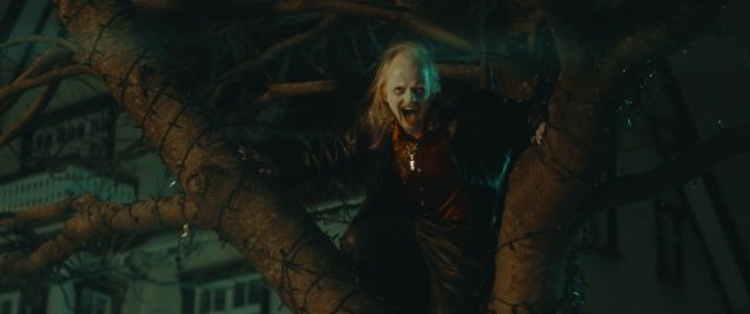
On screen, gay male characters in horror tend to be historically shown as coded figures or sympathetic victims. Hjörtur is something else entirely: a queer protagonist who is also the most powerful figure in any given scene. He's capable of splitting skulls with his hands while delivering some funny deadpan lines. His character is grounded through his loneliness. He's given a sad longing for true connection that the film takes seriously even as the blood comically splatters across the screen.
The film's main antagonists are a wacky religious group/cult operating behind the scenes in Reykjavík. The parallels shown between queer monstrosity and religious bigotry are not exactly breaking new ground, but Thirst shows these themes competently and funnily. There's also a rotating cast of police officers who start investigating strange murders at night. Some of the actors cast here are less talented than you would hope, but it offers an interesting contrast to the supernatural shenanigans.

The production is shot with the kind of synth, neon-drenched visuals that pay homage to 80s and 90s genre cinema. The directors obviously love movies like The Lost Boys and Innocent Blood, and that comes through on screen. They imbue Reykjavík with an impressively bleak gothic atmosphere. The practical effects are the film's genre calling card and reportedly required well over 200 litres of fake blood to achieve. There is, however, a recurring joke involving several rubber cocks that lands flatly; the intention is to be funny but fails miserably and feels tawdry.

The film is not without its faults. The film's cult subplot takes too long to get going. Hulda is underwritten as a character for much of the runtime, spending extended stretches as a passive bystander rather than an active participant in the plot. However, Steinason's terrific performance carries the film through some of its weaker points. His Hjörtur is compelling; you never take your eyes off him when he's on screen. One particular scene where Hjörtur lusts after a beautiful man he sees from afar is wonderfully portrayed and shows his character's viewpoint as well as his curse.
For queer audiences, Thirst offers something that genre cinema doesn't provide often enough. A gay central character whose identity is not the source of his suffering, or a shorthand for being different. Hjörturs identity is simply a fact around which the film's entire world is duly organised. It's a refreshing viewpoint, and the final product is an effective movie that slightly overreaches but is entertaining nonetheless. A great indie gem; can't wait for the sequel.
Thirst is available on UK digital platforms from 22 June.
Scene was founded in Brighton in 1993, at a time when news stories about Pride protests were considered radical.
Since then, Scene has remained proudly independent, building a platform for queer voices. Every subscription helps us to report on the stories that matter to LGBTQ+ people across the UK and beyond.
Your support funds our journalists and contributes to Pride Community Foundation’s grant-making and policy work.






Member discussion