

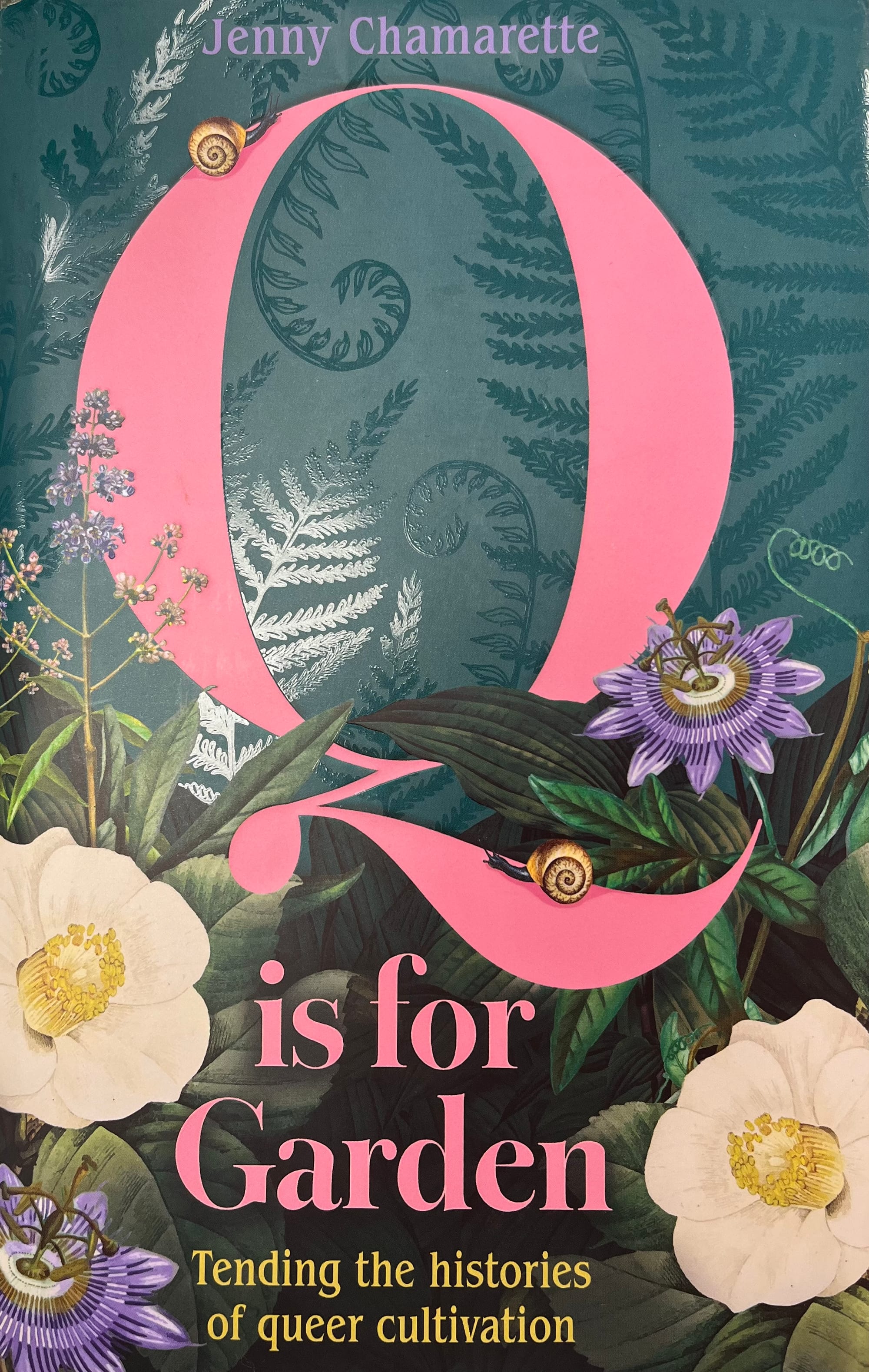
Unearthing Stories of Queer Cultivation: 'Q is for Garden' by Jenny Chamarette

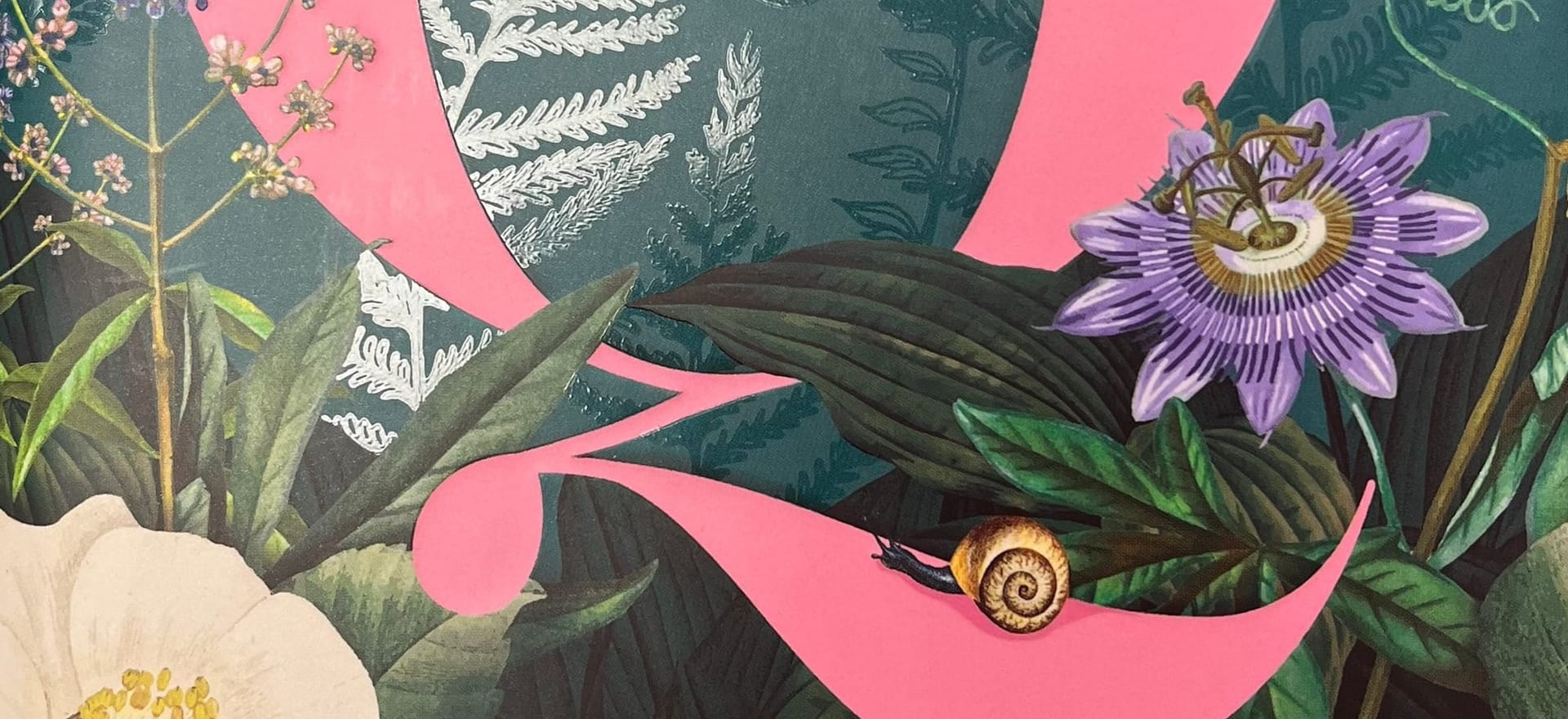
Curious, tender and beautifully hopeful, Q is for Garden welcomes us into a collective process of recovery, remembering and reimagining. This is a book that carefully, but determinedly, reaches into the earth to uproot binary thinking and cultivate plurality.
We often imagine gardens as synonymous with a certain kind of middle-class domesticity. Just think of the ‘white picket fence’ marking the garden’s borderlines – an enduring cultural symbol of the idealised, suburban nuclear family. Jenny Chamarette’s book powerfully rethinks ‘the garden’, carefully unearthing the buried histories of queer cultivation. Fascinating stories of queer gardeners, botanists, ecologists, activists and artists show us that there has always been a Q in garden, though it has not always been tended to.
To cultivate is to choose what to grow, what to nurture, what to help flourish – it is an act of care and a choice about what is cared for. Chamarette reminds us that ‘flower’ or ‘weed’ is a choice of categorisation not an intrinsic quality. Garden spaces can be charged with the binary thinking that all too often conditions the way we treat the world and one another: flower or weed, wanted or invasive, cared for or killed.
In this book, the fences, walls and hedges that physically enclose gardens become a way of talking about a narrow, bounded type of thinking that is rooted in the binaries of colonialism, patriarchy and heteronormativity. The garden space is defined by its borders, yet these boundaries are constantly transgressed by all manner of more-than-human life: by creeping roots, seeds carried on the wind, pollen-bearing insects and trail-leaving snails. Just like the garden fence, binary thinking will always fail to contain the wonderful diversity of the world.

Chamarette’s writing style skilfully mirrors the book’s themes. The emphasis on plurality is embodied in the form of the book itself, which refuses categorisation and linearity as it fluidly slips between genres, intermingling memoir, essay and poetry.
This is a book that delights in finding connections, in the shared roots of plants, people and words. The language Chamarette uses is compost-like: words accrete multiple layers of meaning. ‘Tending’ to a garden becomes inextricably linked with the idea of ‘tenderness’, a word that holds within in it kindness, care, pain and healing.
The ‘plot’ of Q is for Garden is both the story it tells and the piece of land it cultivates. The Q in garden grows in the place where the literal and the figurative entwine, but never become locked in a binary of real and symbolic. In this book, planting seeds is both the physical act of burying your hands in the soil and the nurturing of ideas that initiate change.
Chamarette’s Q defies easy definition. It can describe sexuality, yes, but it can also describe a mode of thinking and feeling, a way of being in the world. For Chamarette, tending to the more-than-human can open up ways of being that are generous, creative and multiple. The eddies of success and failure that make up the work of gardening act as a foil to capitalist narratives of linear progress, making space for an alternative way of living.
Q is for Garden gradually deconstructs the binaries that shape how we think. It is a book that dismantles the categories that limit how we see the world, not with the hammer blows of man-made tools, but with the slow, fracturing pressure of roots that refuse to be confined.
Q is for Garden is published by Manchester University Press.
Scene was founded in Brighton in 1993, at a time when news stories about Pride protests were considered radical.
Since then, Scene has remained proudly independent, building a platform for queer voices. Every subscription helps us to report on the stories that matter to LGBTQ+ people across the UK and beyond.
Your support funds our journalists and contributes to Pride Community Foundation’s grant-making and policy work.






Member discussion