

We are here, and we are singing
Sixty queer voices. Find out what happens when you finally belong somewhere. They came looking for something. What they found was each other, and the sound they make together will floor you.


Inside Brighton's Rainbow Chorus, where queer voices find each other
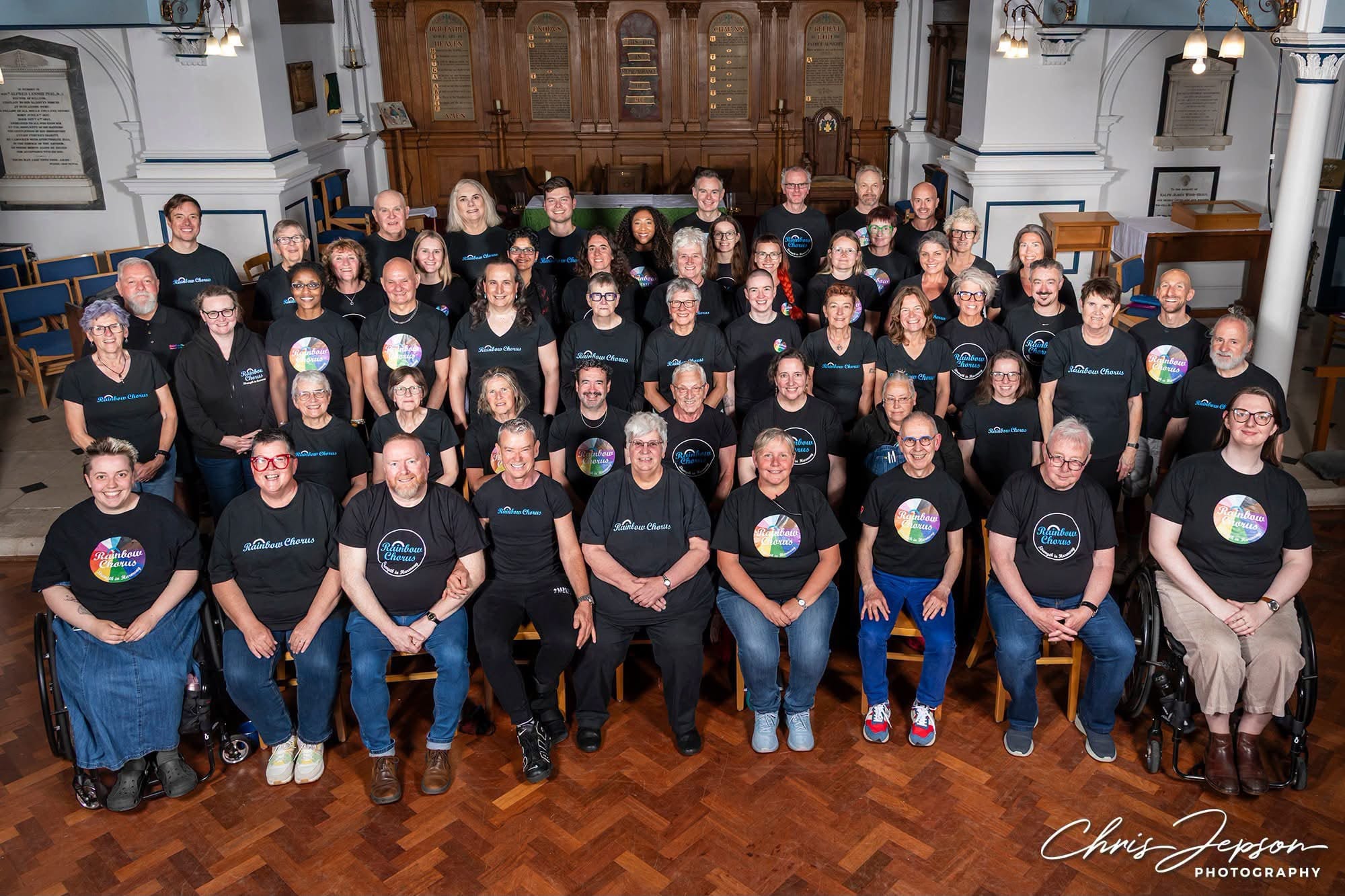
It is a Monday evening in Brighton and sixty-odd people are filing into a rehearsal space ( St George's Church in Kemptown) , shaking off the rain and heading for the tea urn. Someone has baked a cake. There is a low hum of catching up, of hugs and laughter, and then the room arranges itself into sections and something shifts. The noise of the week falls away. A chord is struck. And they begin.
Rainbow Chorus is Brighton's LGBTQ+ choir. It also runs RC+, a lower-commitment monthly session for those who want to sing without the full rehearsal schedule. We spent time with six of its members: a nervous first-timer, a long-standing couple, a new accompanist, and the chair who once stood at the very same door, terrified. What follows is their account of what happens when queer people get into a room and sing.
The door
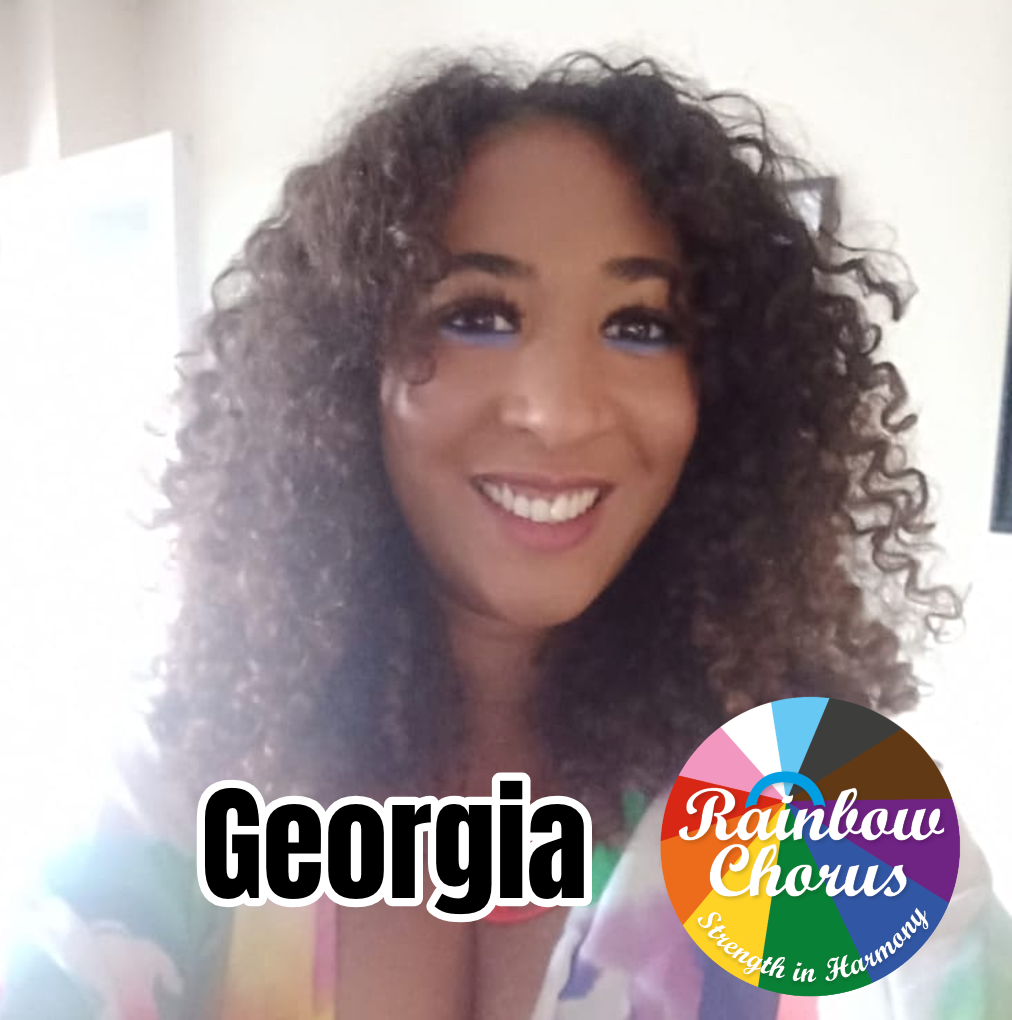
Almost everyone remembers the exact feeling of walking in for the first time. For Georgia, an alto who moved to Brighton during lockdown and spent years feeling alongside the city rather than inside it, knowing she would not be the only new face helped: "New member intake is twice a year, and I would not be the only new person joining. I can't say I always hit the right notes, but I know that I won't be judged if I don't, as long as I try."
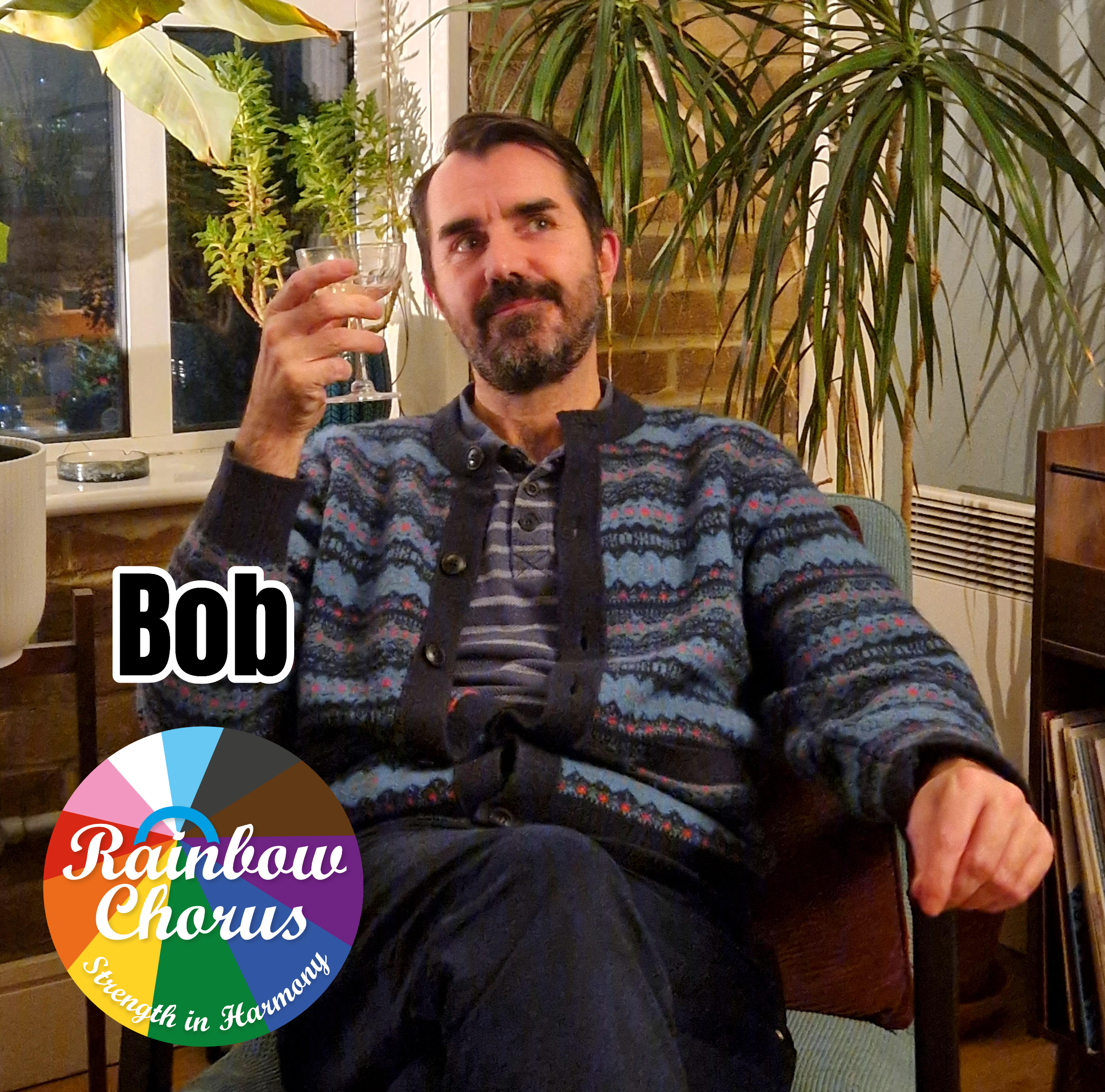
Bob, a tenor recruited mid-karaoke by a choir member who spotted something worth nurturing, found the process kinder than expected. "Aneesa, the choir leader, and the members were extremely welcoming and quickly put us at ease. Having a small group all auditioning on the same day meant that it felt much easier at the first rehearsal, with some familiar faces about."
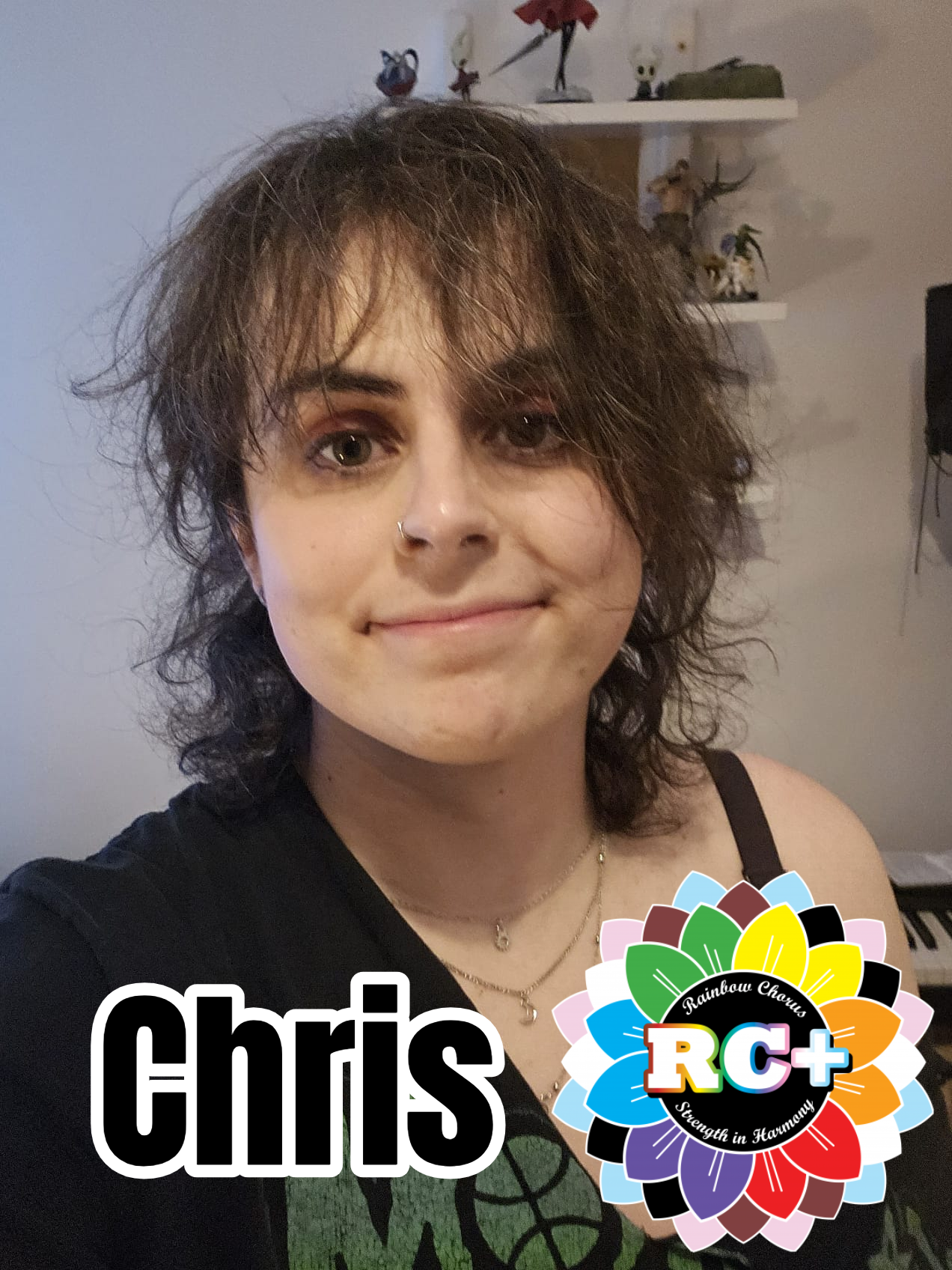
For Chris, a transfeminine non-binary person who sings with RC+, the lower-pressure format was the right entry point. "The smaller, more relaxed feel of RC+ definitely felt more suited to me. It still felt daunting to sing in a new space with total strangers. Fortunately, everyone is really welcoming, so I was given the space and the grace to be able to make mistakes without any pressure."
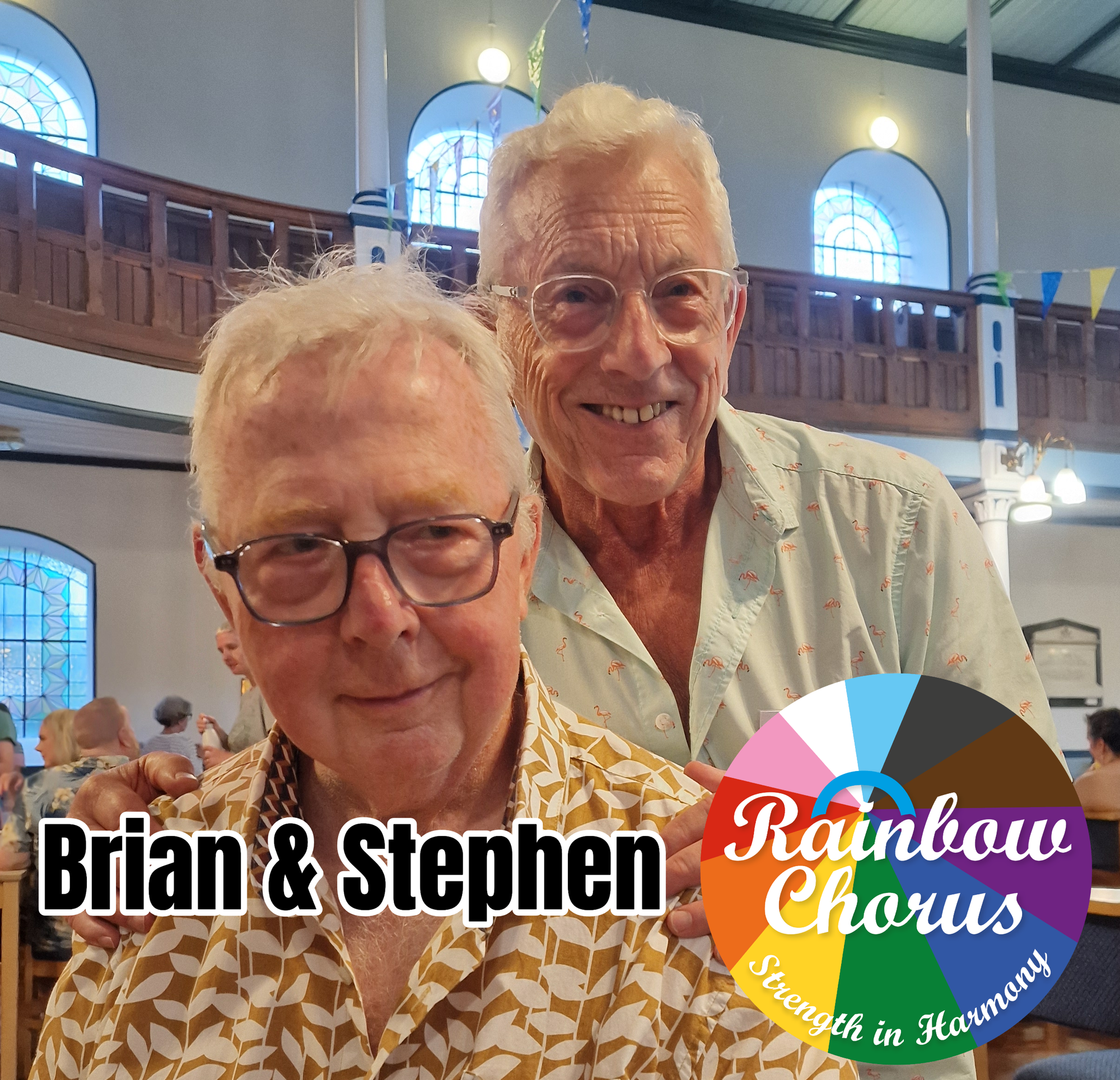
The experience of Brian and Steven had particular weight. The couple came to Rainbow Chorus partly because singing is recommended for people living with Parkinson's disease, which Steven was diagnosed with six years ago, and he had previously sung with both the NYC and London Gay Men's Choruses. "During the first three months, we continued to feel a little anxious about how we both were fitting in," Brian recalls. "Steven had issues with handling the music, turning over pages quickly enough. We bought a set of music for Steven so corners could be turned down, scores highlighted. We were encouraged by how friendly and generally supportive folks were."
Soprano Debs came having sung in church choirs, choral societies, chamber choirs and barbershop quartets, and having watched her wife sing with the group for years. When she finally joined: "The Rainbow Chorus was something completely different, made up of LGBTQ+ singers, which I hadn't experienced before, with a very diverse repertoire, all learned off page. I wanted to sing in my local area with my people and my wife and be authentic."
"Our summer concert is sixty voices saying we are here and we are proud, and we would very much like you in the pews at St George's Church on 11th July to hear us; tickets at zeffy.com."
Who we are
"I tried to squeeze myself into boxes that never felt quite right. That journey of self-discovery has shaped the way I approach my role as chair."
Ask the members of Rainbow Chorus to describe themselves and the answers resist easy summary. They are a bisexual soprano and spiritual being who describes herself as a "disco mirror ball, reflecting different things to different people." A middle-aged gay man who has mainly straight friends and lives in a small East Sussex town. A transfeminine non-binary person who does not want to be pigeonholed into a vocal range any more than a gender box. A lesbian who, upon reflection, also identifies as pansexual and queer and "not really interested at this stage of my journey in trying to define myself with any label."
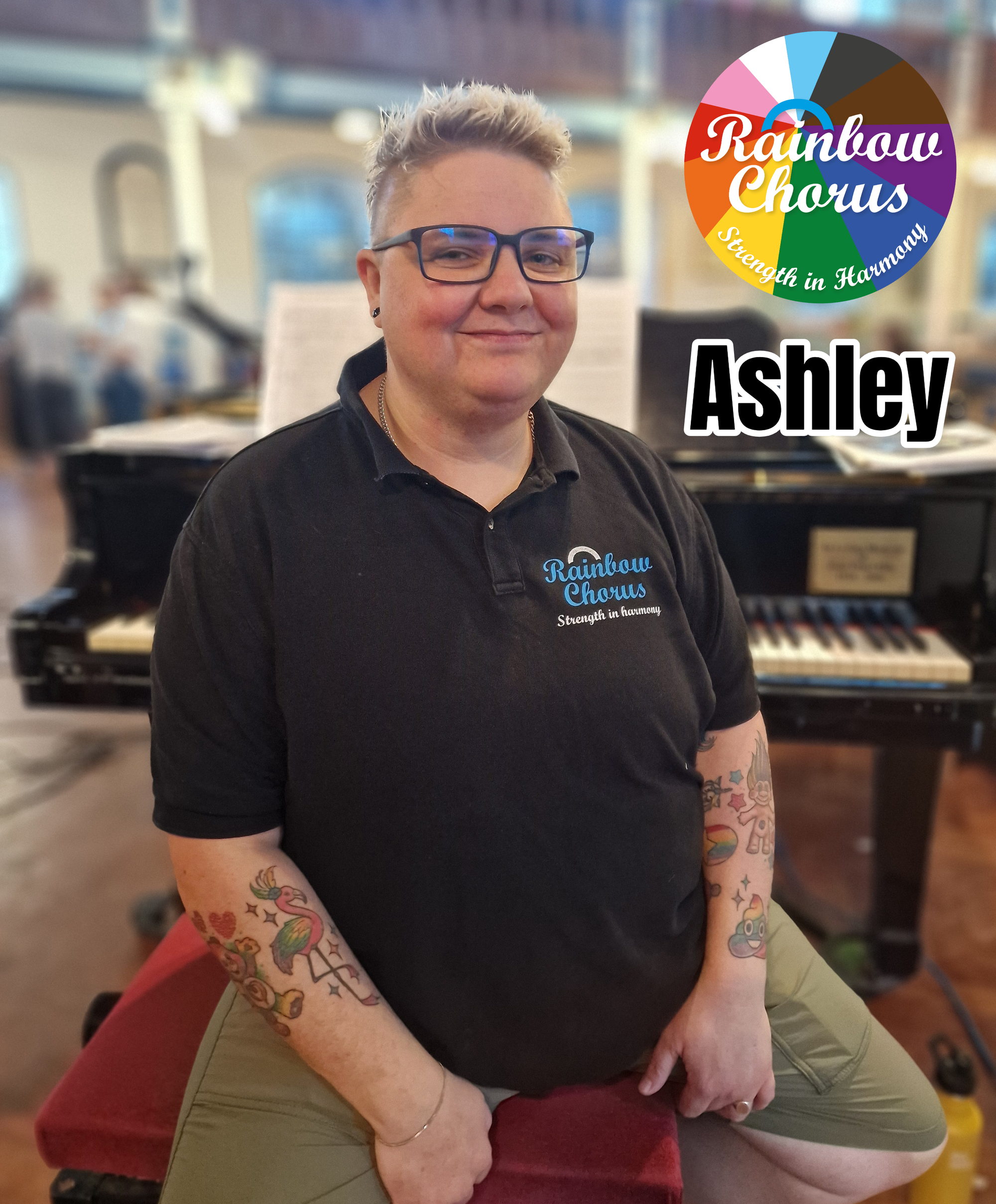
Ashley, who chairs Rainbow Chorus and uses they/them and she/her pronouns, describes their identity as something discovered over time: "For much of my life, I tried to squeeze myself into boxes that never felt quite right. That journey of self-discovery has shaped the way I approach my role as chair, allowing me to foster an environment where everyone feels comfortable just being themselves. To me, it's not simply about being accepted; it's about being genuinely welcomed, celebrated, and embraced for who you are."
That breadth runs through the whole choir. Georgia values that "there is no requirement to be led by a label if that doesn't feel right. I love being part of a choir that celebrates our differences and the nuances of our varied identities, while still uniting us in our shared experiences as queer people." Chris finds a parallel freedom in the music itself: "RC+ is a mixed gender choir, and I don't feel like I'm pigeonholed to sing in a certain range, so it gives me ample space to sing in a vocal range which feels comfortable for me." For Bob, the choir offers reconnection to a community he had drifted from: "I used to enjoy the gay scene when I was younger, so it is great to be able to reconnect to the LGBTQ and queer community now that I'm not so bothered about going out clubbing."
The sound itself
"It's a great feeling to sing with others," says Chris. "The big advantage of a choir is the voices all blend together, so it kind of takes the spotlight off you." Bob reaches for something more expansive: "The joy and pleasure one gets from singing as part of a big group cannot be overstated. You can feel the sense of accomplishment radiating from the choir, and Aneesa's smile is a reward in itself."
Debs finds a quality that is harder to manufacture: "Sometimes in performance, or just before in rehearsal when it is coming together and we get it right, the dynamics come together, the tuning, we can actually feel it. A flag is raised and you realise what you are really singing for and about. That is when the singing transcends the ordinary." She speaks with equal feeling about performing alongside the sign language interpreters: "Their contribution to our concerts is huge, and sometimes they absolutely make the songs come to life. They are so talented and help us connect with our deaf audience, which I have never been able to do before. I consider this a privilege."
For Brian and Steven it has taken real work. "There has been a lot of music to learn. Only through illness have we missed one choir rehearsal. We have tried to rehearse, on our own, at least three times a week." Brian is still working on his own instinct to sing out; Steven, he notes with quiet pride, "is able to blend in with the choir well." Georgia captures what it feels like when the hard work pays off: "It is such a great feeling when we all come together in our sections, get it right, and produce an awesome sound. It is especially powerful when we sing one of our more political pieces and tell the world what we are really about." Ashley, in the soprano 2 section once the chair hat comes off, agrees: "Hearing the beautiful sound we create together never fails to send shivers down my spine."
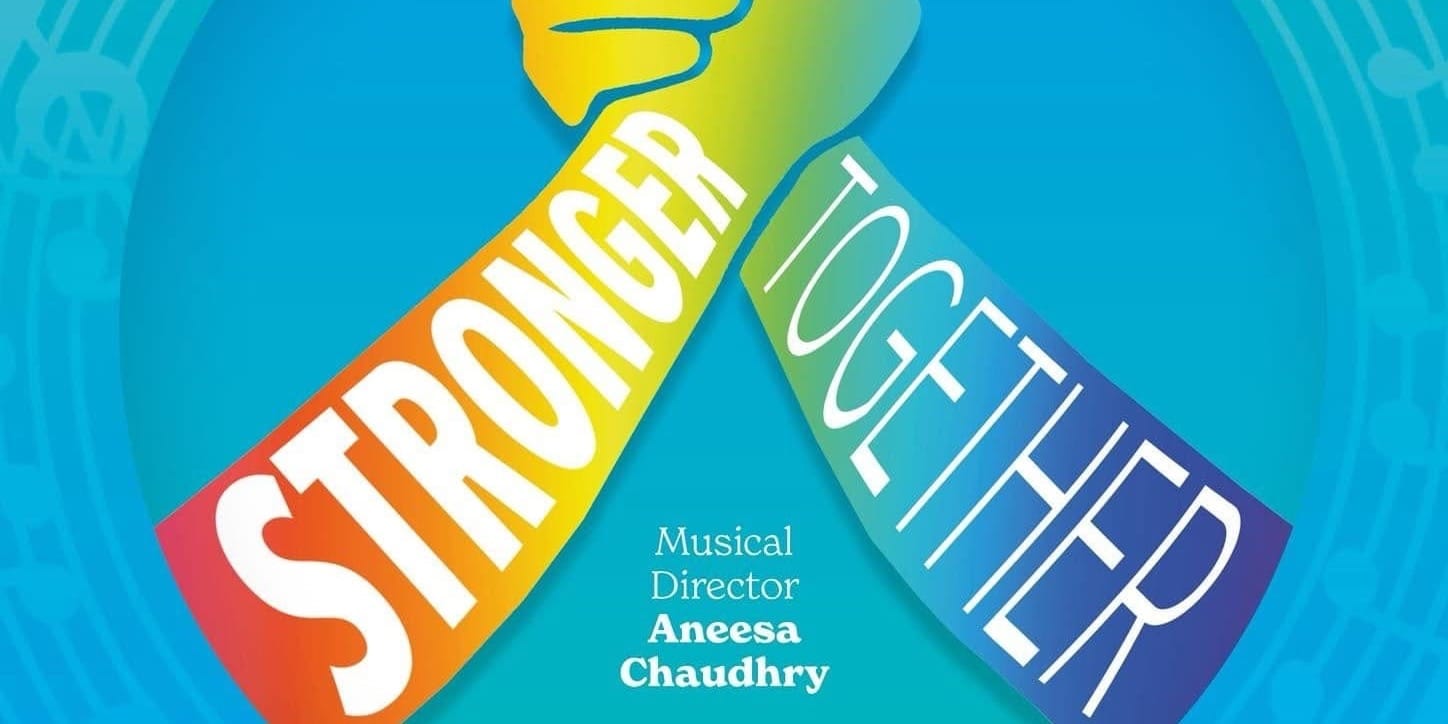
"Come to St George's Church, Kemptown on 11th July and let us show you what it sounds like when a community refuses to be quiet: Stronger Together, and we mean it; grab your ticket at zeffy.com."
The view from the piano
Adrian arrived as the choir's accompanist after an interview that included playing for a rehearsal. Still, nothing quite prepares you. "A lot of members turned up, so there were at least sixty people in the room and everyone was catching up, fresh from their summer holidays. It felt both exciting and overwhelming and I remember nervously thinking: I hardly know anyone!"
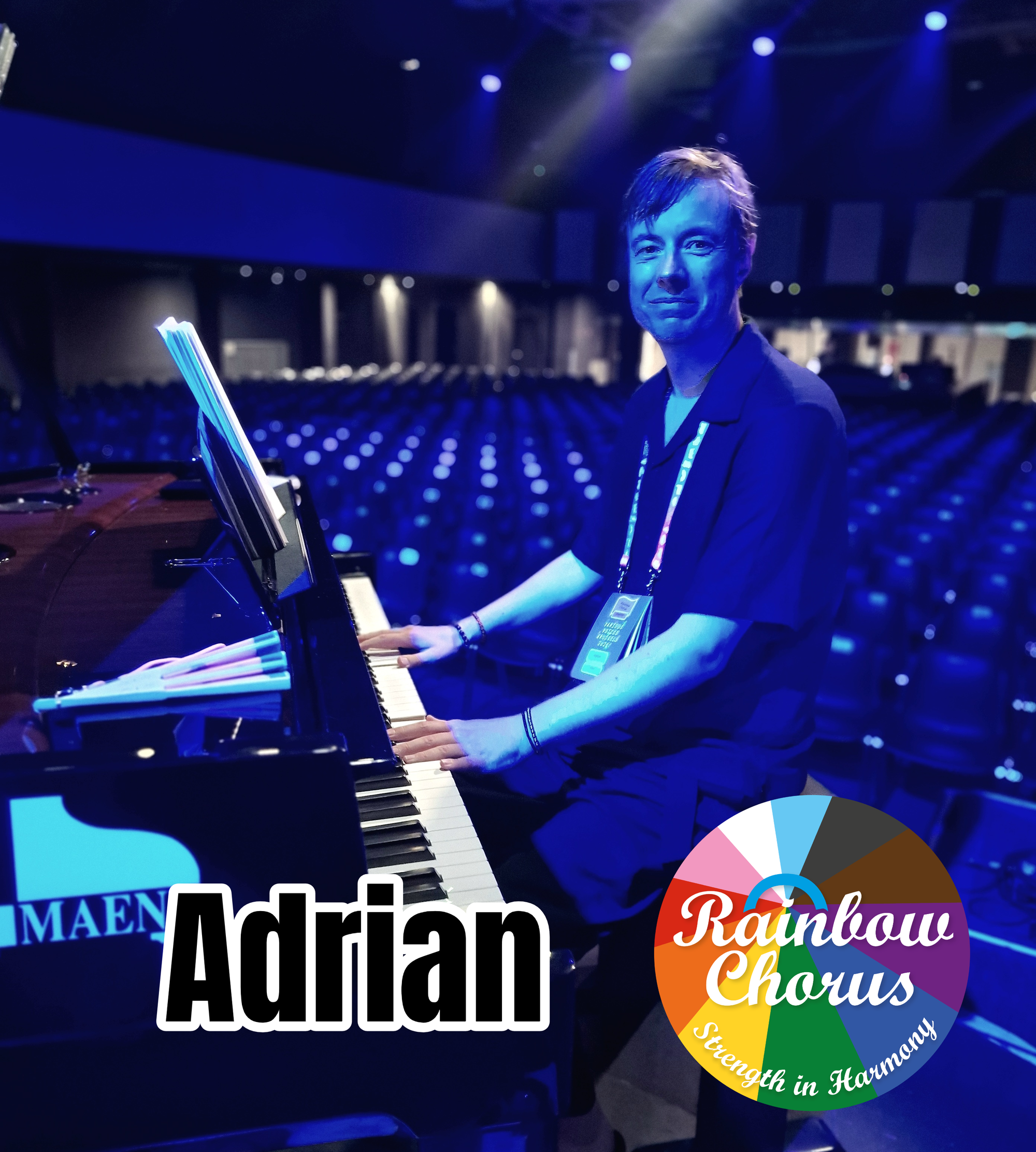
Nearly a year in, his read on the room has deepened. "Playing for singers is a unique skill. I'm always listening carefully to what's happening in the choir and responding, aiming to provide a supportive cushion of sound while keeping the music fresh and organic. There are certain songs that you can feel really resonate with members, and it can feel very emotional and bonding at times." Coming into a specifically LGBTQ+ space has come to feel like more than a job. "It feels a joy and a privilege to be invited into this unique space. Even though it's my job, it feels more than that really. I'm doing important work in our community and playing a more active role at a time when we need to maintain a strong presence."
Finding your people
"When I first arrived in Greenwich Village in New York, I felt at home. I have a similar feeling being in the Rainbow Chorus."
Brighton is a city that sells itself on welcome, but welcome and belonging are different things. Georgia, who moved here during lockdown, found that singing at community events with a choir so embedded in the city "really helped me feel like I am part of Brighton in a way I did not anticipate." For Chris, who struggles with social anxiety, each rehearsal has been a small act of accumulation: "With each rehearsal I go to I feel more and more comfortable. When I first joined, there was loads of checking in from other members of RC+, so I felt very welcome."
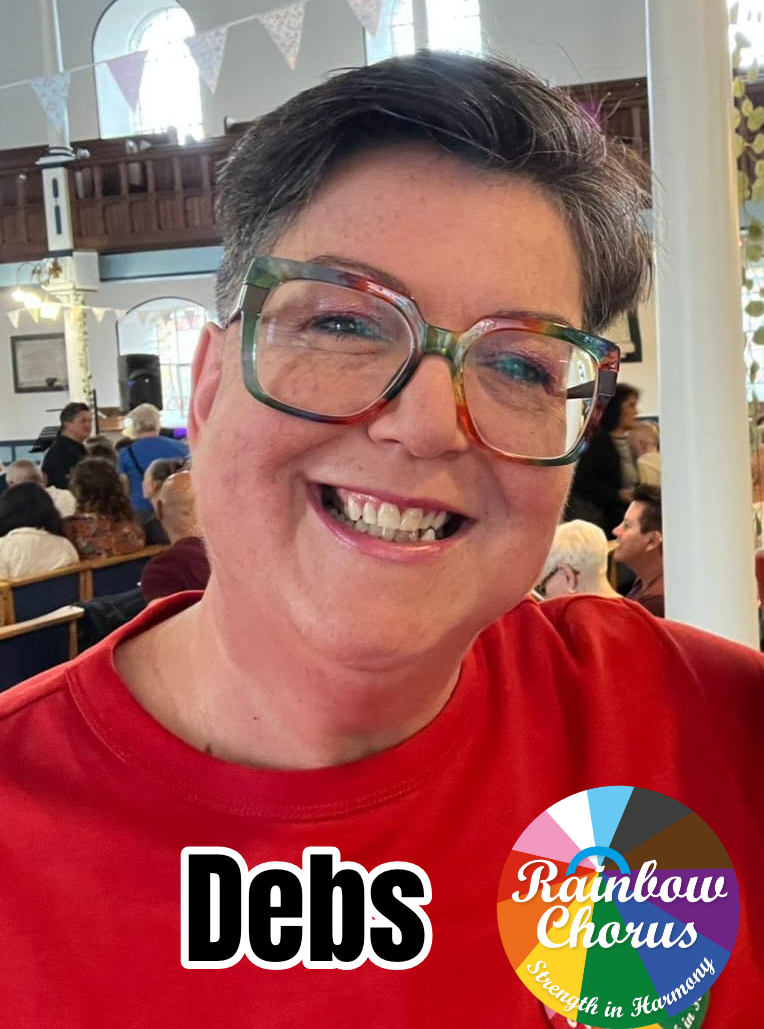
Brian's summary of what the choir has come to mean lands quietly and hard: "When I first arrived in Greenwich Village in New York, I felt at home. I have a similar feeling being in the Rainbow Chorus." Debs reaches for one of the choir's own songs: "Where do I belong? That is how one of our favourite songs, 'Chosen Family', starts, and I have had the honour of saying those words myself in performance. For some of the older members of the community who have experienced times of closeting and state-sanctioned homophobia, having a space to celebrate your whole authentic self is an amazing thing." Bob, who grew up without many of those same struggles: "I have really appreciated finding out more about these and singing loudly and proudly to try our best to help people through them."
Holding the space
Ashley chairs Rainbow Chorus with a fundamental understanding of what is at stake when a new member walks through the door, because they remember being that person. "I vividly recall the first time I walked through that door, feeling overwhelmed by nerves and doubting whether I truly belonged. Instead, I was welcomed with warmth, patience, and a genuine sense of joy. That experience left a lasting impression, and it's exactly how I hope everyone feels when they join us." The choir extends well beyond rehearsals: camping trips, walking groups, dinners, pub nights, theatre outings. The Rainbow Chorus has just returned from the international LGBTQ+ Choir convention Various Voices and are looking foreword to attending Hand in Hand in 2027, the UK & Ireland's Queer Choir festival. "It's so much more than just a choir; it's a vibrant community. Everyone belongs, and genuine care and encouragement are always present. While I wish I could say we always get it right, claiming perfection would mean we've stopped learning and growing."
Louder than you think
There is a political dimension to all of this, held lightly by most, but present. Performing at IDAHOBIT, the International Day Against Homophobia, Biphobia and Transphobia, crystallised something for Brian: "My political sense was fully engaged and I realised the choir was more important than just singing together as another gay choir. We were not just doing it because it was good for us as individuals, but we were doing it for a wider community."
Debs is characteristically direct: "There has and always will be something political about a queer choir. A queer anything. NOW, right now, being part of the LGBTQ+ family is a defiance, against the odds. The choir is a safe space. It is a political beacon, it says: you know what, we are here and we are queer. And together we have strength, solidarity, brother and sisterhood." Georgia echoes her: "Our communities have a history of resistance. It is part of our heritage. Singing in RC is a political act because we are visible, loud, and very proud of who we are." Adrian, from the piano stool: "The real magic happens when we get in front of an audience and everyone comes together as one unified group. That feels great."
Just come
Chris: "Give RC+ a go. No matter what your skill level, the experience feels very communal and everyone around you will help you put your best foot forward." Bob: "It's not for everyone, but it certainly is open to everyone. You never know, you might just love it." Georgia: "Being part of the choir is good fun. We don't take ourselves too seriously, and if you want to meet new people, celebrate our community, and make some noise while doing it, give it a go."
And Debs:
"If you have been thinking about joining, just do it. Come along. You will be welcome. We need you as much as you need us. We are stronger together, and families must grow. Come along and be a part of ours. Be chosen."
Rainbow Chorus is, on the surface, a group of people who meet to sing. Spend five minutes with any one of them and you realise it is something else entirely. A place where people arrive a little lost and leave, if not transformed, then at least a semitone closer to themselves. Where the music is the point, and also never quite the point. Where belonging is not a grand gesture but someone making space for your voice, and trusting you to use it.
Some things, it turns out, are worth singing about.
Ashley says: "Everyone is welcome at Stronger Together, our summer concert at St George's Church, Kemptown on 11th July — come and be part of something that is so much more than just a night of singing; tickets from £10 at zeffy.com."
Rainbow Chorus singing Chosen Family @ Various Voices Queer Choir Brussels 2026
Scene was founded in Brighton in 1993, at a time when news stories about Pride protests were considered radical.
Since then, Scene has remained proudly independent, building a platform for queer voices. Every subscription helps us to report on the stories that matter to LGBTQ+ people across the UK and beyond.
Your support funds our journalists and contributes to Pride Community Foundation’s grant-making and policy work.


Member discussion