

Review: Nova Scotia House by Charlie Porter
Nova Scotia House is a queer elegy that refuses to be silenced by grief or gentrification

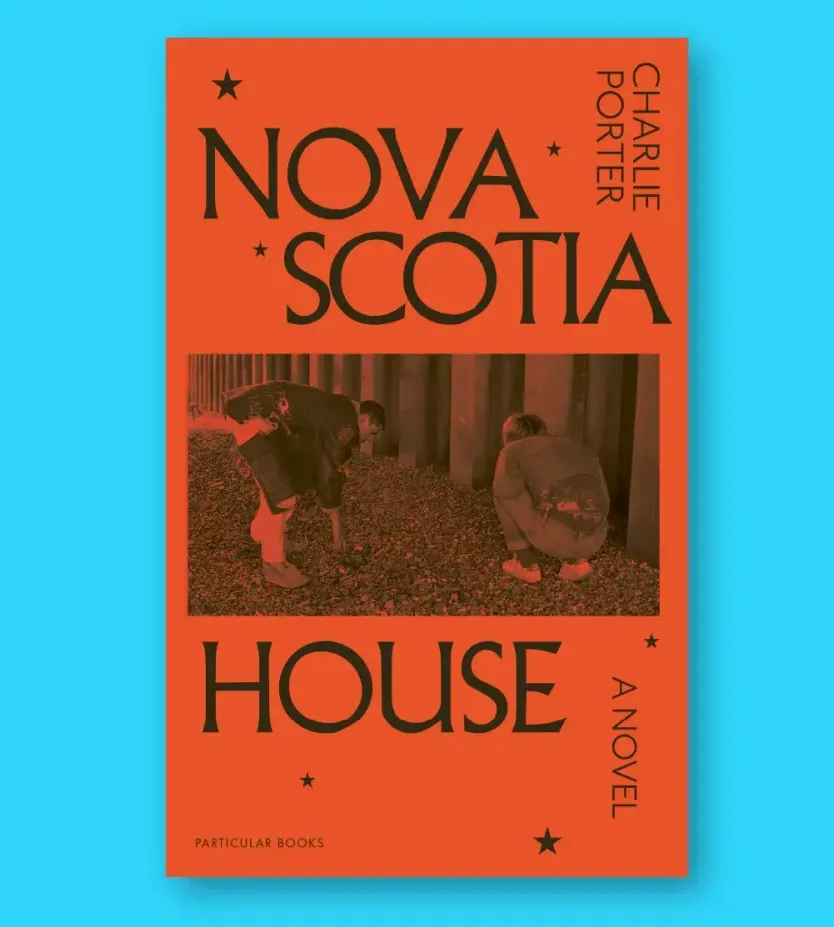
Charlie Porter's debut novel arrives with a deceptively quiet premise. Johnny is 19 when he meets Jerry, who is 45 and HIV positive, in early 1990s London. They fall in love, make a home together in a council flat in the East End, and build a life on their own terms. Then Jerry dies quickly in the summer of 1995, just months before combination therapies transformed HIV from a death sentence into a manageable condition. The timing is devastating, and Porter knows exactly what to do with it.
"He said he would understand if it was too much for me, that I could leave him, that I was young, I should be living, I said to him, I am living."
Nearly thirty years later, Johnny is still in that flat eating what he grows, saving what he can, shagging the neighbours, cursing the developers. The building, Nova Scotia House, a small pocket of social housing in one of London's last undeveloped East End corners, now sits in the shadow of a rising tower block. As the new development climbs, Jerry's lovingly kept garden loses its light. It is one of the novel's most quietly political images: queer community space, literally built over.

Nova Scotia House weaves its three threads; AIDS grief, queer memory, and the erasure of affordable urban space, with remarkable control. Porter who is a writer, fashion critic and curator, has spoken of asking what to do with the anger that haunts generations of British gay men, and the novel itself is his answer: not fury, but witness. Johnny keeps Jerry's spirit alive through small rituals, tends the garden, contributes to the UK AIDS Memorial Quilt, whose photographs are reproduced in the book. Survival and remembrance are framed explicitly as acts of resistance.
The prose style demands some patience. Porter favours long, unpunctuated sentences that circle their subject and restlessly refine it, broken by blunt declarative statements. The rhythm is distinctive, even hypnotic over time, though early pages require you to lean in. Those willing to meet the novel on its own terms will find the payoff considerable. Johnny's voice becomes something familiar and understandable.
What gives Nova Scotia House its particular charge for queer readers today is how precisely it maps the gap between then and now. HIV treatment has transformed lives, but stigma persists. Social housing in London remains under existential threat. the Queer spaces are mapped out by Porter, and all strike and feel real, written with the textures of queer spaces vibrantly through them, although all in the book are fictional, Porter documents how physical, cultural, intergenerational spaces continue to disappear. Porter locates all of this in one garden, one flat, one grief-struck man, and the result is something rare: a novel that functions as both love story and manifesto, elegy and act of defiance. It even has the good grace to offer some honest renditions of app driven desire and recreational sex and an sanguine ending.
This is a debut of real ambition, and a reminder that the queer past is not safely archived history. It is still, urgently, unfinished business.
Nova Scotia House by Charlie Porter is published by Penguin, £10.99.
Scene was founded in Brighton in 1993, at a time when news stories about Pride protests were considered radical.
Since then, Scene has remained proudly independent, building a platform for queer voices. Every subscription helps us to report on the stories that matter to LGBTQ+ people across the UK and beyond.
Your support funds our journalists and contributes to Pride Community Foundation’s grant-making and policy work.







Member discussion