

Review: Bath Haus by P.J. Vernon
Bath Haus is a thriller that trusts its queer readership entirely; with complex desire, moral ambiguity, and the suffocating specific terror of watching a life you've built brick by brick start to crumble.

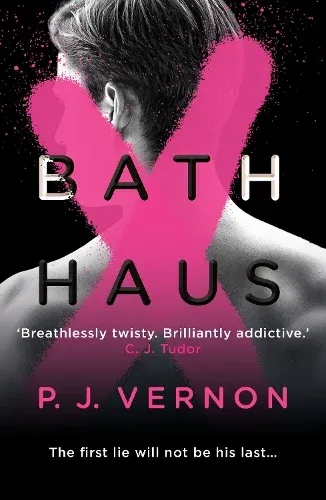
P.J. Vernon's debut thriller is an unflinching piece of queer fiction that explores the messy, complicated, fully human interior life of queer/gay men navigating desire, secrecy, and the terrifying distance between who we are and who we've promised to be.
At its heart, Bath Haus is a love story gone wrong in the most visceral way possible. Oliver Park; recovering addict, younger partner, perennial outsider in the world of wealth and stability his relationship with Nathan affords him , makes a single catastrophic decision that sets off a chain reaction of consequences that Vernon orchestrates with the precision and cold delight of someone who genuinely loves the thriller form. What begins as a stolen hour of anonymous desire in a gay bathhouse spirals into something far darker: violence, survival, and a lie that metastasizes with every page.
Vernon doesn't moralize. He doesn't treat the bathhouse as a symbol of moral failure or something to be explained or apologized for. The sex-positive architecture of this novel is one of its quiet strengths, desire is rendered as fully legitimate, as inevitable, even when its consequences are catastrophic. What destroys Oliver isn't that he wanted something outside his relationship. What destroys him is the violence that follows, and then the lies he builds to survive it.

And those lies are where Vernon really shines. The tension here is white-knuckle stuff. Vernon has a gift for the physical: the body registers fear, shame, arousal, and desperation in prose that feels almost tactile. There's an atmosphere of transgression that clings to even the most mundane scenes; brunch conversations feel dangerous, a familiar glance carries menace. The domestic space becomes a crime scene of a different kind: the site of an ongoing deception.
Oliver is a deeply layered fully realised person whose past with addiction and shame makes him both sympathetic and genuinely complicated. Vernon earns our loyalty to Oliver even when he's making choices that make us want to shake him. He owns his failures in a way that the other characters simply don't, and there's something quietly radical about a novel that humanizes an addict and a liar this thoroughly, that pushes past easy judgment to find the frightened, striving person underneath.
The novel shifts between Oliver's and Nathan's perspectives, and while their voices occasionally blur into one another - a minor frustration - the dual viewpoint allows Vernon to interrogate the relationship from both sides of its fault lines. Nathan is not a wronged innocent; he too is carrying secrets, and the novel's explosive final act reframes everything that came before it in ways that are surprising.
There are small reservations worth noting. A few of the supporting characters lean into familiar queer character types, the bitch witty best friend, the emotionally wobbly older gay, and the heightened final act occasionally tips into camp. But camp, it should be said, has a long and honourable tradition in queer storytelling, can heighten dread and even when Vernon veers toward the theatrical, he never loses the emotional thread.
Bath Haus is a thriller that trusts its queer readership entirely; with complex desire, moral ambiguity, and the suffocating specific terror of watching a life you've built brick by brick start to crumble. Vernon understands that plot is nothing without a character we're willing to fall with, and that the most dangerous rooms aren't always the ones in a bathhouse. Sometimes they're the ones we share with the people we love most.
If you appreciate a thriller with genuine psychological depth and an unapologetically queer soul, Bath Haus will grip you by the throat and not let go.
For more info or to order see the UK publishers website here.
Scene was founded in Brighton in 1993, at a time when news stories about Pride protests were considered radical.
Since then, Scene has remained proudly independent, building a platform for queer voices. Every subscription helps us to report on the stories that matter to LGBTQ+ people across the UK and beyond.
Your support funds our journalists and contributes to Pride Community Foundation’s grant-making and policy work.



Member discussion