Not all of us vote the same way. And the people trying to weaponise that fact know exactly what they’re doing.


There is a piece elsewhere in this issue (p.27) that I want you to read alongside this one. It is called “Not all of us vote the same way, and that’s the point.” It argues that LGBTQ+ political identity has never been and should never be monolithic. We are not a bloc. We do not owe our votes to any party. We contain multitudes. I believe all of that. I’ve believed it for most of my adult life, including the years I spent in local government.
But I also believe that data can be weaponised. And that being a critical reader of polls is not the same as dismissing inconvenient findings. It is, in fact, the only honest response to them.
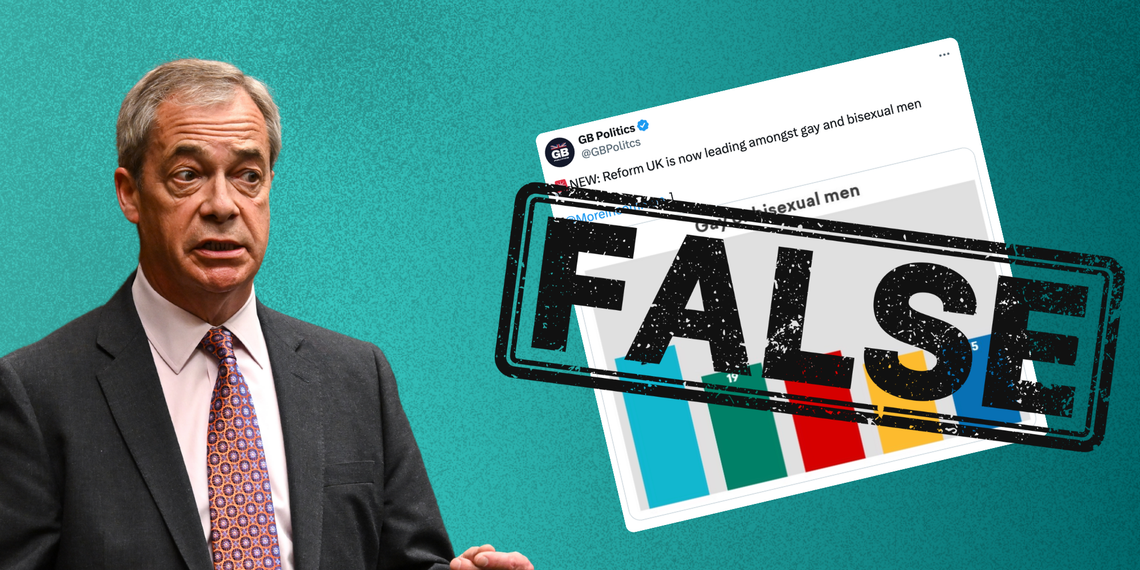
In March, a More in Common survey began circulating on social media under a headline that stopped a lot of people in their tracks. Reform UK, it claimed, was now leading among gay and bisexual men. Within hours, Reform figures including Darren Grimes and Dr David Bull were sharing the bar chart widely, treating it as vindication. Evidence, apparently, that the party’s appeal now reached even into the communities many assumed would be its most determined opponents.
It is, on the surface, a remarkable claim. Reform’s last manifesto pledged to overhaul the Equality Act. It committed to banning what it called “transgender ideology” in schools. Following last year’s local elections, the ten councils the party controls banned the flying of the Pride flag.
Subscribe to continue reading