

INTERVIEW: Max Hovey explores queer culture’s tough conversations in NO FATS, NO FEMS: A Guide to Queer Empathy and Unpacking Prejudice
"When it comes to understanding intersectional queerness, it’s incredibly important to listen to people whose experiences differ from our own."


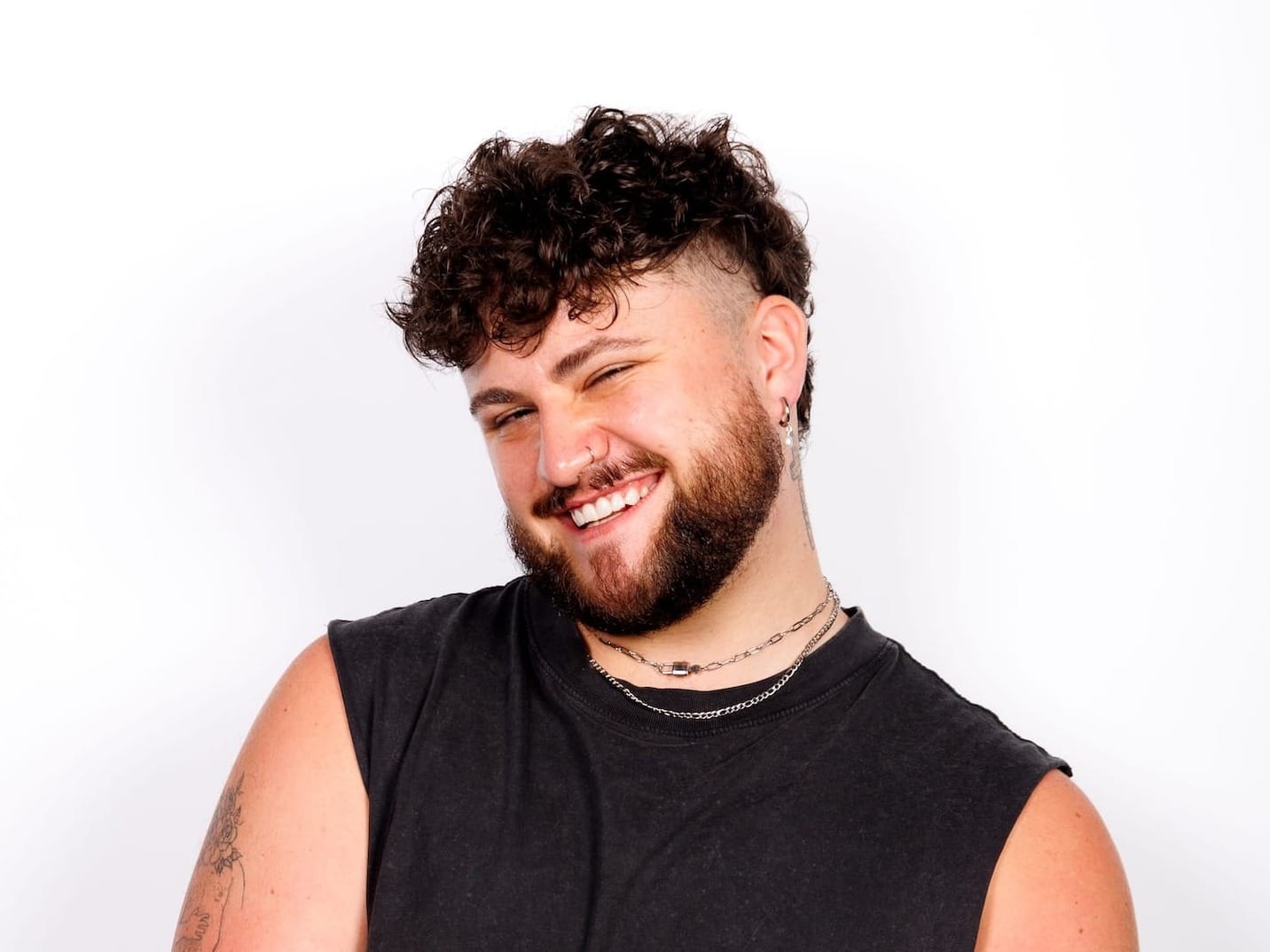
Meet Max Hovey, a London based writer, creator, Climax founder and one of the most unfiltered voices in queer spaces right now.
If you haven’t seen him online yet, you’ve definitely missed a conversation. Max uses his platform to crack open everything from body image and sex positivity to mental health and the messier sides of LGBTQIA+ life. No filters and no softening the blow! His work has landed in The Independent, Attitude, GQ, Bustle and now Scene! It’s his brutally honest, long form storytelling that’s built a loyal following and now, he’s an official author. His debut book NO FATS, NO FEMS is out right now huns.
It’s part manifesto, part reality check, taking on the exclusion, bias and internalised issues that still exist in queer communities and asking what it would really take to do better. Drawing on personal stories and wider research, Max digs into identity, intersectionality, body image and what community actually means, without ever turning preachy.
I had a yap with Max to discuss the book of course, the backlash and everything in between so let's dive in....head first!
DALEYPOP: Hiiii Max how are you and what's your day looked like so far?!
MAX HOVEY: Soooo today involved an early morning leg day at the gym, followed by getting some more book marketing prepped as well as planning my usual sex ed content. I spin a lot of plates!
DALEYPOP: For our readers who might not have discovered you yet, please can you introduce us to yourself and what you do etc.
MAX HOVEY: I’m a gay sex educator and big boy advocate! The gay community has it's issues to say the least but it’s very easy to just point the finger and blame each other for our behaviour (which is still valid by the way) without digging a little deeper as to why we think and act the way we do. Both our relationships to sex and our bodies are something much bigger than us and so I’ve made it my job to talk about these things for a living.
DALEYPOP: This is your first book, huge congrats again on officially becoming a published author! You must feel super proud of yourself. How did the idea for NO FATS, NO FEMS happen and have you always been drawn to writing?
@maxhovey At one point he thought he’d have to take being gay to the grave, he’s now signing his debut book about queer empathy😭🌈
♬ Sand Drawing - Judah Earl
MAX HOVEY: Thank you. I’ve always loved writing, I’ve been writing for publications and my own personal blogs since my late teen years. I was made aware from when I was about 6 by my mum that I had a “very strong sense of right and wrong” and I still do to this day.
Writing gives me the ability to articulate myself in more detail on topics I care deeply about but most articles are usually capped at about 800 words, so I knew a book was something I wanted do for years.
I knew I wanted it to be something important, something meaningful and something rarely discussed in depth, but I just didn’t know where to start as there is so much for us to unpack as a community. Then the title just came to me. NO FATS, NO FEMS. It was punchy, it was controversial and it got people's attention. More importantly, the contents of the book was going to be made pretty clear by it. As soon as I had the title, the rest of the book followed.
DALEYPOP: NO FATS, NO FEMS is something many of us in the queer community have come across especially on dating apps. How did you go about unpacking its impact without alienating the very people you're speaking to?
MAX HOVEY: Within the book itself, I’ve spoken very openly about my own personal experiences and my past.
It was important for me to write this not from a pedestal, but from a place of growth.
Many of the mindsets I discuss in the book I admit to once having myself. That’s why I felt this was the perfect book for me to write. I’m not saying you’re a terrible person, I’m saying this is a thought process you may have and it’s not your fault, but refusing to acknowledge and unpack it is still your responsibility. I think it’s important for people to fully understand why we’re wired the way we are before we’re able to work on it. So the book tries to guide the reader through this process, as well as saying hey, I’ve been where you are, I’ve shared these mindsets, but it’s possible to unlearn them and incredibly liberating when you do.
DALEYPOP: You weave in voices from Danny Beard and MNEK in your book, was it important for you to make this a collective conversation rather than just your own perspective and if so, how come?!
MAX HOVEY: I’m a cis white gay man and with that comes a lot of privilege. Not only is it not my place to speak on certain topics, but in many cases I also lack the personal experience.
When it comes to understanding intersectional queerness, it’s incredibly important to listen to people whose experiences differ from our own. Speaking to 21 different queer individuals for this book is what made it what it needed to be.
DALEYPOP: You talk about internalised prejudice within queer spaces in the book, what were some of the most challenging truths you had to confront in yourself whilst writing?
MAX HOVEY: The biggest one was my views on femininity and body image. In my younger years, whilst I don’t recall ever using the words on the cover of my book, I shared their sentiment.
I had internalised homophobia and femphobia and I had internalised fatphobia.
I didn’t have any truths to confront whilst writing per se, as I’d already confronted them. By the time I was writing this book, I was in a place to fully reflect on the journey of where my prejudices came from, how I perpetuated them, how I unlearned them and how even I still have work to do.
DALEYPOP: I love how you explore race, class and identity, how do these factors complicate ideas of desirability and belonging in queer culture today in your opinion?
MAX HOVEY: The only solid representation we have of queer (men in particular) is of masculinity, muscularity and whiteness. We never see feminine black men represented desirably, we rarely see plus size white men, let alone POC’s, represented desirably. When we don’t see ourselves represented it’s hard to feel like we belong, it’s hard to feel that others find us desirable.
DALEYPOP: There’s a strong theme of empathy (again I love this) throughout the book. What does queer empathy mean to you in practice though? Especially in everyday interactions like dating or nightlife?
MAX HOVEY: Just being understanding of different peoples experiences. I say this many times in my book, just because it doesn’t impact you does not mean that it doesn’t impact other people. I think that’s the main thing to remember.
It’s just taking a step back and thinking about how other people's experiences will be different from our own.
DALEYPOP: For some of our readers who might feel a tiny bit defensive when confronted with their own biases, how do you hope the book reaches and resonates with them?
MAX HOVEY: Give yourself grace. One point I make in the book is that not only do we need to have empathy for others in the community who may struggle more than we do, but we also need to have patience for those who are still learning. Having an unconscious bias isn’t our fault. It’s the result of decades of information being fed to us that can skew our perspective. For myself, I do feel shame about my past mindsets and behaviour but I also give myself some grace as I was the product of the system, as we all are. Having an unconscious bias, internalised prejudice or privilege doesn’t define your character; what defines it is what you do with it. Will you comfortably sit back, knowing that your behaviour and mindsets negatively impact your peers or will you take the time to do some unlearning and in turn, help make the lives of other queer people a little less painful?
DALEYPOP: With LGBTQIA+ rights under increasing pressure globally, how do you see this kind of internal community work connecting to the bigger picture of activism and what does Pride personally mean to you?
MAX HOVEY: I think about this graphic in the New Yorker a lot. For all of the rights many faults, they’re united. They have a clear and more importantly, shared goal, even if that goal is targetting us. The left however is often incredibly fragmented, in my book I describe the left as often being cannibalistic.
Holding each other accountable is both our biggest strength and our biggest weakness.
In the end, a lot of our strength becomes wasted fighting each other, rather than fighting FOR each other. Hopefully, this book can help us better understand each other and over time, have a more united front to fight back because right now, we’re losing.
DALEYPOP: You touch on this tension of feeling judged and judging at the same time. Why do you reckon that cycle is so hard for us queer men to break?!
MAX HOVEY: I state that quite often, those who are the most insecure are the most judgmental. This is true for everyone though, not just queer men. But when we spend most of our lives feeling short changed in our self worth and made to feel inferior, it creates two things; a lot fo insecurity and a yearning for validation, reassurance and to prove our worth. That’s what creates this vicious cycle, we judge others for the very thing we fear the most. What many of us end up doing is masking our insecurities through financial success, our body and appearance, our partners etc, rather than addressing the insecurities head on and unpacking why they exist to begin with.
DALEYPOP: If someone reads your book and still says it's just a preference....what would your slightly unfiltered response be?
MAX HOVEY: So if it’s a preference, you’re saying that if your preference wasn’t available you’d still be okay being with someone who wasn’t your exact type or preference? If the answer is no, then that’s not a preference.
Refusing to date black people or any other person of colour isn’t a preference, refusing to date someone feminine or plus size isn’t a preference.
That’s not me saying you have to date or fuck everyone but instead maybe consider why your so called preference exists to begin with.
DALEYPOP: Now that your first book is out in the world, has it made you want to write another and if so what might you explore next oh and how long did this one take you?
MAX HOVEY: I absolutely want to write another one. I want to be a writer, it’s the one place I can formulate my views in an unfiltered and unrestricted way. You’ll have to wait and see but this one took me 3 years!
DALEYPOP: Any plans for book tours or signings (maybe Brighton👀)? Annnd will we be spotting you at Brighton Pride this year?
MAX HOVEY: I’ve got a few events! I was in Swansea for a talk in Waterstones recently and I’ll be at Queer Britian on the 24th June and am hopefully going to Manchester too! But it’s a lot of planning. I am hoping to be at Brighton Pride yes!
DALEYPOP: Before I let you go, who's your crush of the day, mood of the day and song of the day?!
MAX HOVEY: I’m feeling very blessed. I went to Mighty Hoopla and so many people came up to me to thank me for my book having already read it a week after it came out! Plus I got to see Alexandra Burke and my love for her has come back tenfold so absolutely blasting her in my ears whilst working today!
Scene was founded in Brighton in 1993, at a time when news stories about Pride protests were considered radical.
Since then, Scene has remained proudly independent, building a platform for queer voices. Every subscription helps us to report on the stories that matter to LGBTQ+ people across the UK and beyond.
Your support funds our journalists and contributes to Pride Community Foundation’s grant-making and policy work.
Member discussion