



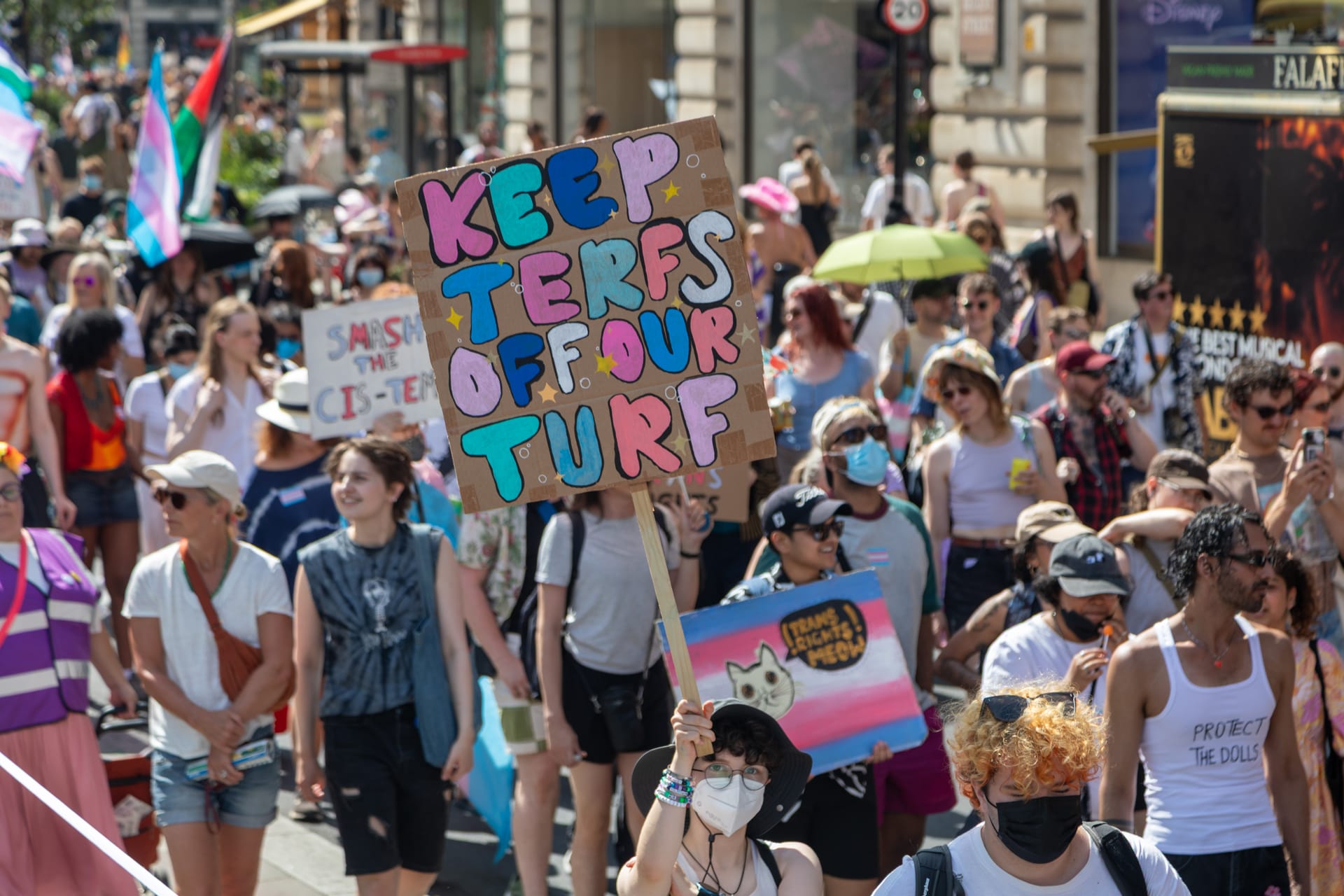
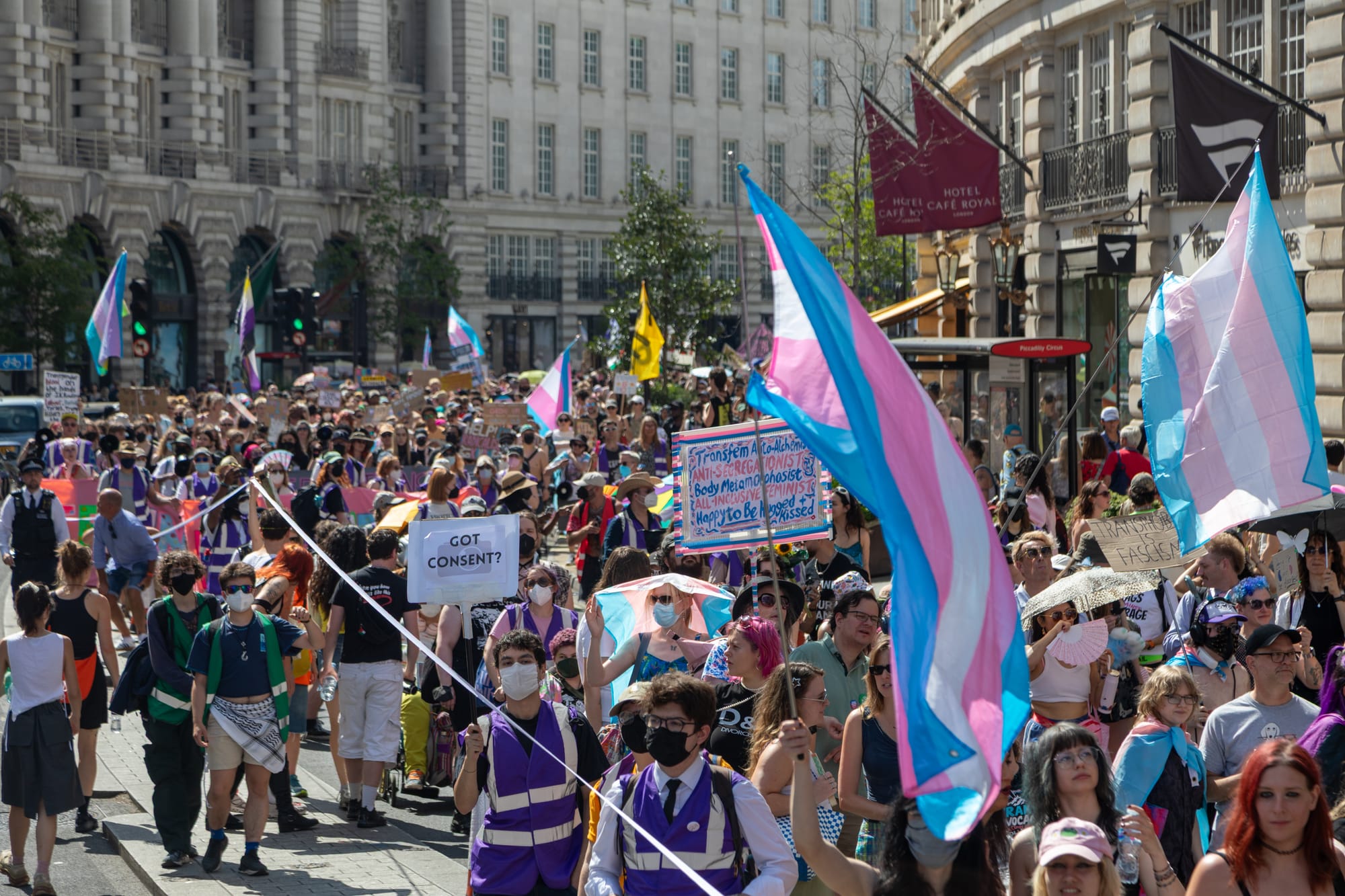
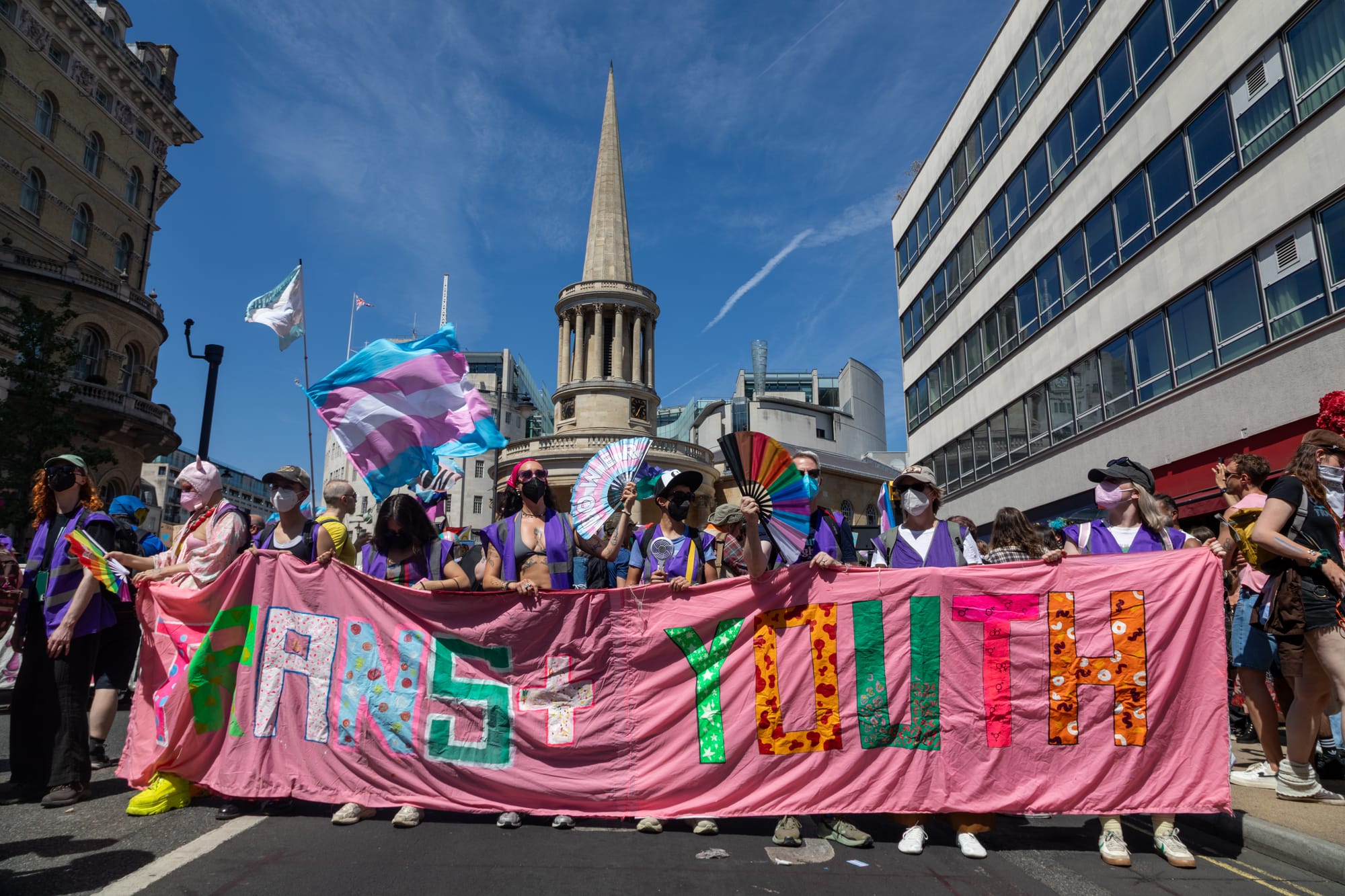
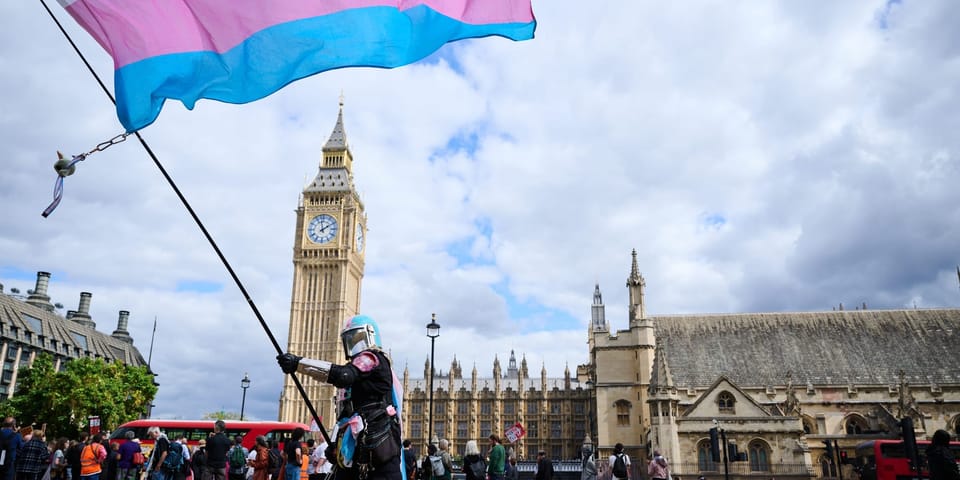
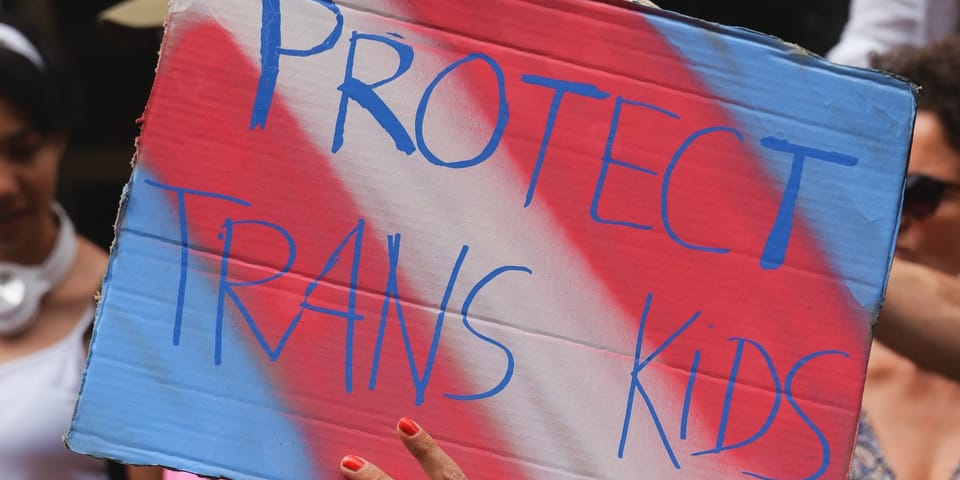
London Trans+ Pride attracted a record-breaking 150,000 people to the streets of the capital on Saturday, marking the largest turnout in the event's history and culminating in a landmark gathering in Trafalgar Square for the first time.
The annual march, which organisers said grew by 50,000 people compared with last year's attendance of 100,000, saw trans and non-binary people, allies and supporters march through central London before assembling in the iconic square for an afternoon of speeches, performances and community celebration.
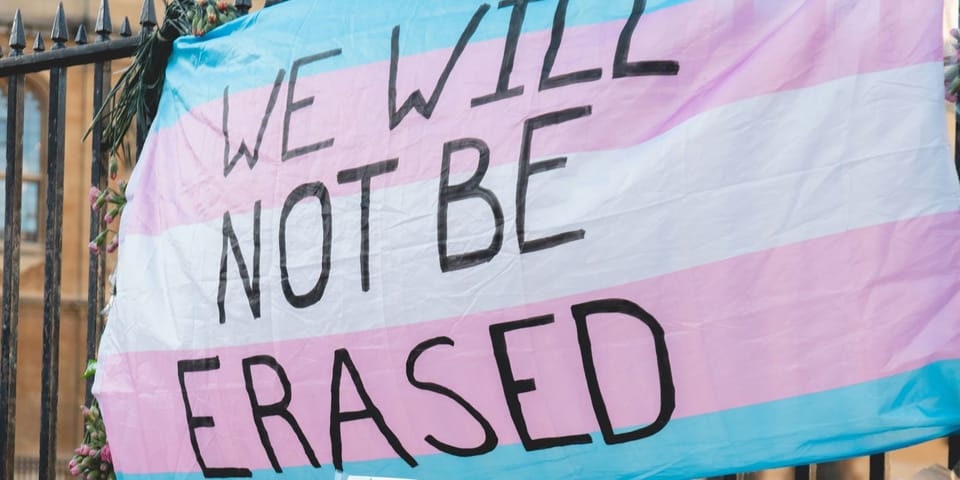
This year's event took place under the theme "Our Future, Our Fight", bringing together campaigners, artists and activists less than two weeks before the Equality and Human Rights Commission's Code of Practice is due to come into force on 5 August.
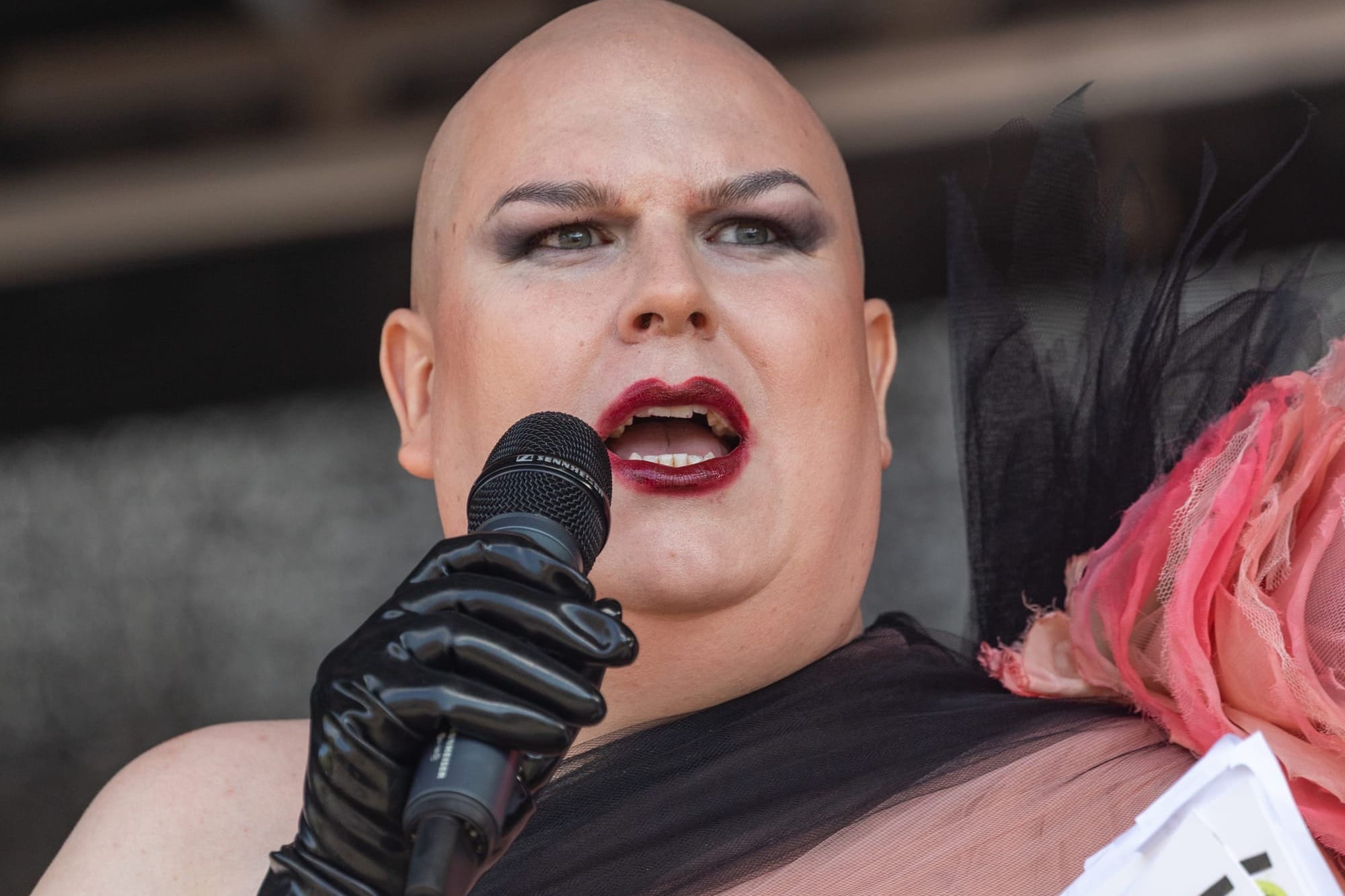
Among those taking to the stage were Ceyenne Doroshow, founder of G.L.I.T.S.; Qween Jean, the first openly trans Tony Award winner and founder of Black Trans Liberation; musician, poet and author Kae Tempest; intersex activist and footballer Ray Newman; Rain Reeta Loi, founder of Gaysians; drag king Chiyo; representatives from Trans Action for Housing Justice; artist Quinnely Rose Z; and multidisciplinary artist Kobi Ayensuo.
High-profile attendees included Heartstopper star Joe Locke, actor Yasmin Finney, presenter Jack Remmington, writer and activist Munroe Bergdorf, and author Juno Roche.
Trafalgar Square became the focal point of the day as crowds filled the steps and gathered around the fountains to hear speeches beneath artist Teresa Margolles' installation featuring face casts of 726 trans, non-binary and gender non-conforming people.
One of London Trans+ Pride's founding members, Lewis G Burton, described the event as "unstoppable".
"London Trans+ Pride has proven once again exactly what it is: unstoppable," they said. "This year we didn't just show up, we showed out, growing from 100,000 to 150,000 people marching side by side, and for the first time ever ending in Trafalgar Square, right in the heart of this city that belongs to us as much as anyone."Every single person who marched today is proof that we are not going anywhere, that our joy is louder than their hate, and that London Trans+ Pride will keep fighting, keep loving, and keep growing until every trans person is safe, seen and free."
A highlight of the afternoon came from Kae Tempest, who addressed the crowd before performing. Speaking about their experiences of attending Trans Pride events over the past 15 years, Tempest said they felt "full of gratitude" to be present and described the gathering as "something so special".
Reflecting on a previous visit to Trafalgar Square, Tempest recalled sitting alone in the location when their track Statue In The Square was released. "I sat there and I thought about this place, and I can't believe there's 100,000 people here," they told the crowd. "And it's us. It's all us."
The march also featured the Trans Unity Quilt, a 96-metre patchwork made up of more than 300 contributions from trans people across the UK. Co-created with CN Lester and the Good Law Project, the quilt includes memorials, personal stories, family celebrations and community references. Its 12 panels will now be preserved at Bishopsgate Archives before touring Pride events across the country.
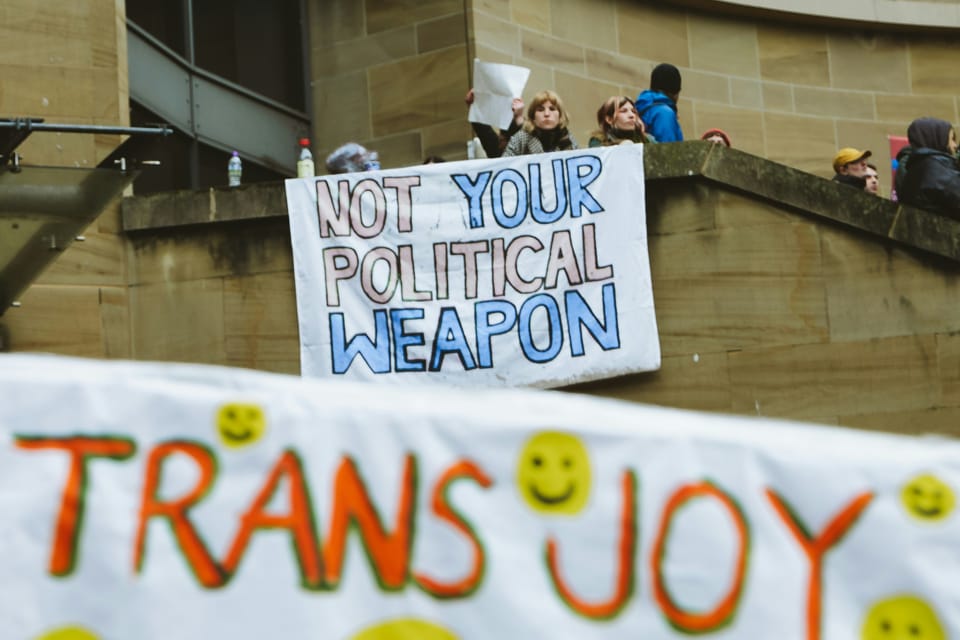
This year's event took place against the backdrop of significant debate over trans rights in the UK. Organisers highlighted concerns over recent legal and policy developments, including last year's Supreme Court ruling on the definition of biological sex, the forthcoming EHRC Code of Practice, restrictions on puberty blockers for trans young people, and proposed changes to school guidance.
Scene was founded in Brighton in 1993, at a time when news stories about Pride protests were considered radical.
Since then, Scene has remained proudly independent, building a platform for queer voices. Every subscription helps us to report on the stories that matter to LGBTQ+ people across the UK and beyond.
Your support funds our journalists and contributes to Pride Community Foundation’s grant-making and policy work.

Member discussion