

INTERVIEW: Hugh Sheehan uncovers the men Britain criminalised for being gay in award-winning Criminally Queer: The Bolton 7 podcast
"The rhetoric once used against gay men is now being weaponised against trans people."


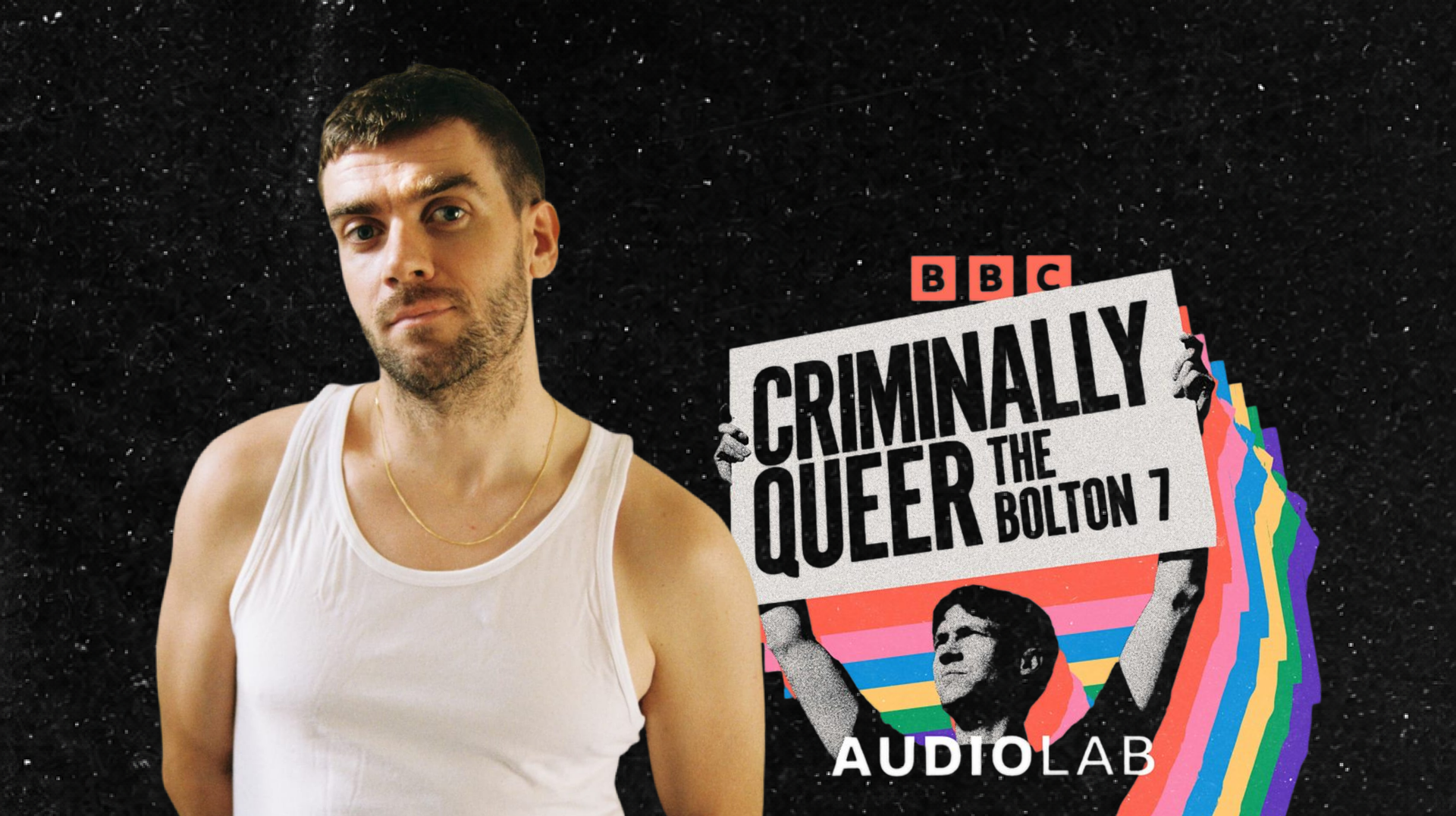
Composer. Sound designer. Writer. Audio producer. All round storyteller. Basically if it involves telling a great story through sound, Hugh Sheehan has probably got it covered! Originally from Birmingham and now based in London after a decade in Helsinki (which feels like a story in itself), Hugh creates work that spans theatre, podcasts, radio, film and live performance. In February 2025, Hugh released an award-winning BBC Sounds podcast called Criminally Queer: The Bolton 7 which quickly established itself as one of the year's essential listens.
In 2026, interest in the series surged once again after the Bolton 7 case was referenced in Channel 4's Tip Toe introducing the story to a new audience and reigniting discussion about one of the most significant yet overlooked chapters in recent LGBTQ+ history.
Described by The Guardian as "mind-bending" and "a staggering tale" and praised by The Sunday Times as "a sad, startling story skilfully unravelled". The series explores the shocking true story of seven gay and bisexual men (the Bolton 7) who were prosecuted following consensual group sex in Bolton (up North) in 1998 and how their case became part of the wider fight for LGBTQ+ rights. What began as a local criminal case soon exposed deep rooted prejudice within the legal system and sparked questions about privacy, justice and discrimination. Through personal testimonies, historical context and extensive research, the series reveals the lasting impact the prosecutions had on the men involved and highlights their significance in the broader struggle for equality in the UK.
@bbcsounds Who are the Bolton 7? @Hugh Sheehan ♬ original sound - BBC Sounds
Far from being just another podcast (literally everyone has a podcast now), Criminally Queer swept up major awards including Gold AND Bronze at the ARIAS for Best Social Impact and Gold at the British Podcast Awards in the sex and relationships category and specialist podcast of the year at the Press Gazette’s Future of Media Awards. The series was also highly commended at the British Journalism Awards. Most importantly though (IMPO), it got people talking. Through painstaking research and compelling storytelling, Hugh shines a light on a chapter of recent British history (it honestly wasn't that long ago) that many people, myself included, didn't even know about. Wild.
The series challenges listeners to think about how recently these injustices took place and the lasting impact they've had on countless lives. It's the kind of podcast that stays with you long after you've fiynished listening, sparking conversations, reflection and hopefully, a greater understanding of the experiences of LGBTQ+ people in Britain. So thanks Hugh, if you're reading this! Not only did you create a brilliant podcast but you introduced thousands of people to an important piece of history that deserves to be remembered.
Hugh has worked on projects ranging from The Louis Theroux Podcast and BBC Radio 4's Profile to productions with Ruby Wax and a forthcoming Audible documentary series. He's also an acclaimed composer and sound designer whose work has been performed across Europe and North America. His 2023 debut album Shapes That Are Different mixed folk music, electronic soundscapes and documentary audio into what sounds like the coolest concept album you've never heard!
When he's not creating award-winning podcasts, composing, producing or generally making the rest of us wonder how there are enough hours in the day, Hugh is also Musical Director of Comhaltas at Ceol Le Chéile and also the founder of record label and concert series Hybrid Forms. Somehow Hugh managed to squeeze me in for a yap so let's get to know the man behind the stories and let's dive in....head first!
DALEYPOP: HUGH! How's your day been so far?!
HUGH SHEEHAN: Not too bad, thanks! I’m sat doing work on my balcony. The local primary school is having its sports day in the park below so there’s lots of laughter and cheering filling the air.
DALEYPOP: For our readers who haven't heard of you or your Criminally Queer: The Bolton 7 podcast yet, can you introduce yourself and what's the elevator pitch for your pod?
HUGH SHEEHAN: I’m an audio producer, writer, composer, and sound designer making work for podcast/radio, theatre, concert hall and screen. My practice often explores questions of gender and sexuality, desire and shame, assimilation and radicalism.
My podcast Criminally Queer is a five part narrative audio documentary series which examines a little known 1998 legal case in which seven gay and bisexual men were arrested and charged with the archaic offences of gross indecency and buggery following consensual group sex.
The series also acts as a framework to more broadly explore the criminalisation of queerness, and asks: how far have we really come?
DALEYPOP: Good question. I can imagine that there were loads but were there any stand out moments during your research for the podcast about the Bolton 7 that genuinely super shocked you?
HUGH SHEEHAN: There were many moments if I’m being honest. Maybe the first and most memorable was getting hold of the trial and police interview transcripts. I was taken aback by the way the men were interrogated about their sex lives. Explicitly and malevolently, and how their morals and selfhood were called into question in ways that were perniciously homophobic. Another was the British Government’s continued failure to offer an unconditional apology to men in England and Wales criminalised for having sex with other men and the hard fought campaign for and latent introduction of disregards (meaning a person’s crimes would be treated as though they never happened) and pardons (something which carries no legal wait, but is simply an extension of the royal prerogative of mercy) for such crimes.
DALEYPOP: The series explores a case from the late 90s but I'd say it feels incredibly relevant today too....why do you think the story still resonates with so many of us so strongly?
HUGH SHEEHAN: Progress is not linear.
It’s easy to see how the hard won rights that LGBTQ+ people had been afforded in the 2010’s are now being revoked.
The moral panic that was prevalent in discussions around age of consent equalisation and was imbued into Section 28. The language of predation and contagion is once again rearing its head. In the series, we make no bones about observing the parallels between the rhetoric and language used to describe gay men in the 80’s and 90’s with that weaponised against trans people today. To examine these histories (widely agreed to be shocking and unjust) in such high fidelity, hopefully exposes the prejudices and hypocrisy of the attacks on marginalised people today.
@bbcsounds @Hugh Sheehan ♬ original sound - BBC Sounds
DALEYPOP: How have reactions been from listeners?
HUGH SHEEHAN: Overwhelmingly lovely. So many gay men who lived through this era of criminalisation have gotten in touch since the series was released. For many of them it feels like the first time their experiences have been properly acknowledged in public. One review on Apple Podcasts put it like this: “Thank you for shining a light on this. It was a hard listen but necessary. Having been a victim of this in the late-eighties with a subsequent conviction, humiliation in the local press, rejected by my family & the deep shame and humiliation that l've carried ever since. I'm surprised I'm still here, if l'm being honest. This podcast is so special & vitally important to ensure it's not forgotten.” so knowing I've had even a small hand in preserving these histories, honouring the courage of the people who lived them and bearing witness to what they went through means a great deal. The reaction from people outside the queer community has been similarly striking. Allies, friends and family of queer people and even those with no direct connection to the community but who simply enjoy history documentaries have responded with real generosity.
Mostly it's been shock, outrage and gratitude for having their eyes opened.
It's reaffirmed something I already believed. Shine a light on injustice and people will notice and hopefully act. It's given me the push to keep doing exactly that.
DALEYPOP: What has been the most challenging part of telling this story responsibly and sensitively?
HUGH SHEEHAN: Telling the story without being able to interview the seven men. Documenting someone's story without being able to hear it from them directly creates obvious narrative difficulties but underneath that sit some harder questions: who has the right to tell these stories and on what basis?
If the people who lived through a human rights injustice can't take part in how it's documented, is it still ethical to tell it?
And where's the line for something being genuinely in the public interest? None of these questions have clear cut answers. I think they're the kind of quandaries anyone reporting ethically on human rights abuses or on stories involving people who've experienced trauma has to sit with. With regard to the story itself, myself and the series’ executive producer Anishka Sharma were both adamant in not wanting to sensationalise the mens’ ordeal and so our challenge was to make each episode engaging and arresting but in a way that was sensitive and compassionate.
DALEYPOP: Well I think you definitely did that. The podcast has been on quite a winning streak recently by the way, congrats! Have you had a chance to take it all in yet?
HUGH SHEEHAN: For the podcast to be recognised by industry peers is incredibly rewarding. Anishka and I put so much hard work into it so it’s been really nice to celebrate that. Hopefully it also means that more people hear the story of the Bolton 7 and that broadcasters will see the value in commissioning such reporting.
DALEYPOP: I hope so. The series has found a new wave of attention months after release and this year. Why do you think audiences are still discovering and connecting with it?
HUGH SHEEHAN: I think when the rights of marginalised people are attacked, people will seek out literature, art and documentary that bears witness to similar injustices; be it for solace, inspiration, understanding and motivation and I think the issues we explore on the podcast are become more and more pertinent to today.
DALEYPOP: So true. Did you always know the pod would be a five part series or did the story keep growing as you dug deeper?
HUGH SHEEHAN: I originally pitched a five part series with five different cases but shortly after the project was commissioned we decided to focus solely on the trial of the Bolton 7. It was remarkably under reported. There seemed to be so much to uncover, examine and contemplate that it made sense to do a deep dive into that case alone, which I think paid off.
DALEYPOP: I think so too! Was there a favourite interview or conversation that didn't make the cut?
HUGH SHEEHAN: Parts of every interview I conducted made the cut but I spoke to most people for at least an hour, sometimes two, so it was impossible to include everything everyone said despite all of the the interviewees being so articulate and knowledgeable. Writer Robin Craig was particularly insightful. He’s writing a book on the history of perversion which I’m eagerly awaiting. Marc Thompson was another, he’s an HIV and social justice activist who has lived a life! He’s engaging, erudite, and funny in equal measure and has done such important work.
DALEYPOP: A lot of your previous work explores themes of gender, sexuality, desire and shame. What draws you to these topics?
HUGH SHEEHAN: I guess my lived experience would be the main factor in my interest in these areas. Homophobia was ubiquitous when I was growing up and masculinity was currency; deviation from the norm being admonished. This was maybe part of the reason it took me so long to come to understand and accept my queerness; I didn’t come out until I was 25.
Shouldering such a heavy weight for so long inevitably had a big effect on my sense of self and with it brought its own sadness, neuroses and anxieties.
I think knowing the detrimental effects of being othered for who you are is partly what drives me to make work that examine these issues. On the other hand, being queer is now one of the best things about my life and so this is also a factor in my continued interest in making work that recognises and celebrates the rich and multiplicitous stories intertwined with sexuality and gender.
DALEYPOP: Do you see your creative work as a form of activism, storytelling or maybe a bit of both?
HUGH SHEEHAN: I definitely don’t see it as activism. I think activists are people who are devoting great amounts of their lives to a specific cause, to the betterment of society through the utmost means who are organising in their communities, are on the streets putting themselves in harms way on a regular basis and being locked up for protesting the greatest injustices of our time. Outside of work I try to be involved with causes that I care about and attend protests as much as possible but I wouldn’t call myself an activist and certainly wouldn’t call my work activism. Storytelling, reporting or journalism, oral history....these are perhaps all suitable names for what I do but I don’t care too much about how people categorise it.
The main goal for me is to make work that excavates a topic or a story to the fullest extent, does so in a way that is compassionate and human, is maybe idiosyncratic in its creativity and helps people understand or learn about an issue I think is important.
DALEYPOP: Has making Criminally Queer changed you personally in any way?
HUGH SHEEHAN: It’s made me appreciate the struggle of my forebearers even more than I did before. It’s inspired me to keep making work that interrogates what it is to be alive and how and why injustice manifests in the world.
DALEYPOP: What does Pride personally mean to you?
HUGH SHEEHAN: Pride to me means eschewing shame, celebrating otherness, rejecting assimilation, embracing unknowability, bearing witness to injustice and demanding equality and liberation.
DALEYPOP: Is there another story from LGBTQ+ history you think deserves much more attention than it's currently getting?
HUGH SHEEHAN: Not historical but access (or lack thereof) to trans healthcare and homelessness amongst LGBTQ+ young people.
DALEYPOP: If you could interview anyone from LGBTQ+ history, who would you interview?
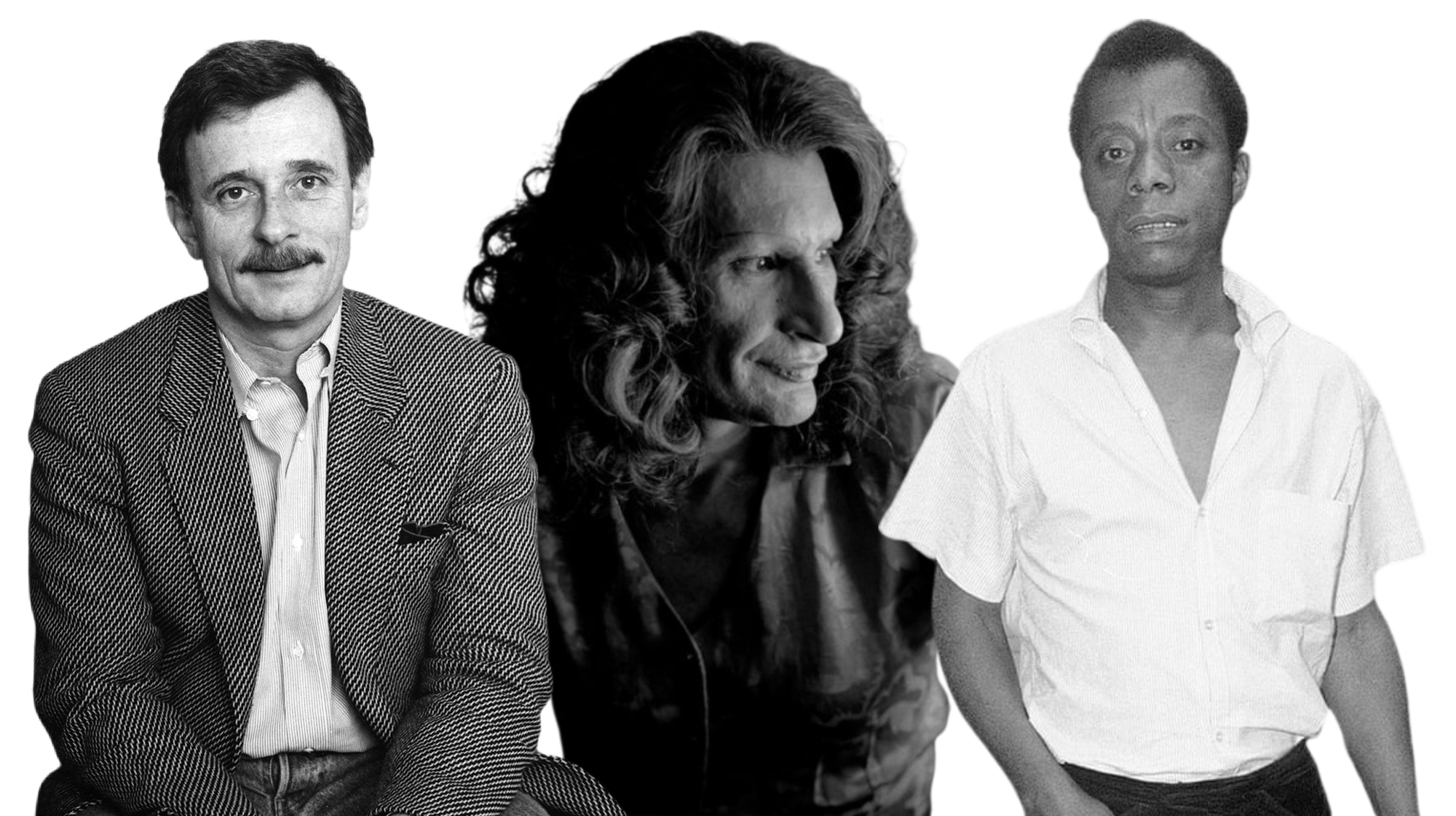
HUGH SHEEHAN: Edmund White. Sylvia Rivera. James Baldwin.
DALEYPOP: How does your background in music influence the way you tell stories in audio?
HUGH SHEEHAN: Cadence, rhythm, intonation, tempo, gesture, counterpoint, harmony and dissonance are all elements I take into account when crafting an audio programme. Be it writing a script, editing an interview, sculpting sound design or arranging the macro structure of a programme. I think my musical background is always at the back of my mind when I’m making decisions.
DALEYPOP: Are you the kind of person who is constantly noticing sounds everywhere you go then?
HUGH SHEEHAN: Yes! I’m really sensitive to anything auditory. It can be cool. I’ll often find beauty or richness in mundane sounds and I guess it means I move through the world focussing on sonorities that others may be less attuned to. But it can also be quite annoying. I was at the cinema last night and the (admittedly not very loud) air conditioning was doing my head in because it interfered with the sound world of the film so much. The friend I was with wasn’t bothered by it.
I recently read an interesting article on misophonia (a decreased tolerance for specific sounds) and a lot of it resonated with me….
DALEYPOP: If your creative career had to be soundtracked by one song....what would it be?
HUGH SHEEHAN: Ooft, hard one. Today’s answer would be An Bhuatais by Michelle Mulchahy. It’s an Irish slow air played on the harp. It so intricately distills the beauty, complexity, sorrow and joy of what it is to be an artist (and human).
DALEYPOP: Podcast, theatre or music. If someone put a water pistol to your head and you can only keep one for a year. Which survives?
HUGH SHEEHAN: Music! It enriches life no end. It’s so intertwined with my every day. I love it so much.
DALEYPOP: I know we're here to mainly yap about your podcast today but....what other podcasts do you listen to? Do you have any guilty pleasures?
HUGH SHEEHAN: Outside of documentaries, I listen to a lot of the two comedians yapping genre of podcast. One of my favourites is Seek Treatment, “a podcast about boys, sex, fucking, dating, and love,” in which the American alt-comedians Cat Cohen and Pat Regan ruminate on their work, social and sex lives. Sometimes they have guests on who they’ll ask “who were you, who are you, and who do you want to be?” which I think is perhaps the most perfect question. They just published their 500th episode and so have established a deep and absurd vernacular. I find their irreverence and unbridled honesty equal parts entertaining and calmative.
DALEYPOP: Super important question: who's your crush of the day?!
HUGH SHEEHAN: Weirdly, crush of the week is one of the sign off questions that Cat and Pat ask each other at the end of every episode of Seek Treatment which makes me think maybe you’re a fan? My crush of the day is Arthur Russell’s album World Of Echo. Russell’s only studio album release, it's a beautiful, sprawling melange of cello, voice and delays.
Scene was founded in Brighton in 1993, at a time when news stories about Pride protests were considered radical.
Since then, Scene has remained proudly independent, building a platform for queer voices. Every subscription helps us to report on the stories that matter to LGBTQ+ people across the UK and beyond.
Your support funds our journalists and contributes to Pride Community Foundation’s grant-making and policy work.


Member discussion