




A trans woman has said she will "never be safe in a man's toilet" as new guidance on single-sex spaces comes into force across the UK.
The comments come as the Equality and Human Rights Commission's (EHRC) updated Code of Practice takes effect today, providing guidance on how organisations should apply equality law following last year's Supreme Court ruling that the definition of sex in the Equality Act refers to biological sex.
The guidance states that many single-sex facilities, including toilets and changing rooms, should generally be provided on the basis of biological sex. It also suggests that service providers consider offering separate mixed-sex facilities where appropriate.
For many trans people, however, the changes have prompted concerns about safety, privacy and participation in public life.
Speaking to Channel 4 News, trans woman Isabella described being verbally abused while using a men's toilet before she began using women's facilities. "I was still using the men's bathroom when one day I was verbally assaulted," she said.
'I will never be safe in a man's toilet', says Isabella who is a trans woman.
— Channel 4 News (@Channel4News) August 5, 2026
Thousands of single-sex spaces in the UK, like changing rooms and toilets, should be used based on biological sex, according to new guidelines that come into place today from the Equalities and Human… pic.twitter.com/FV9aLcAF47
"As soon as I got in, there was a man washing his hands. He looked at me in the mirror, got visibly distressed and shouted at me that I had to leave."
"I felt very unsafe and I left immediately. Since then, I only use the ladies' bathroom."
Isabella said her experiences using women's toilets had been very different from what she had feared.
"I was very scared at first because of all the things that I've seen online," she said.
"I was actually very surprised to see how welcoming everyone was."
She said she initially tried to go unnoticed and leave as quickly as possible, but instead found acceptance from other women.
 Graham Robson
"I've even made friends. I've had lovely chats with people. Girls have complimented my outfits."
The new guidance has sparked concern among LGBTQ+ organisations and trans rights campaigners, who argue it could leave trans people vulnerable to exclusion or force them into facilities where they do not feel safe.
Asked how the changes would affect her, Isabella said her safety should be valued equally to that of cisgender women.
"I do believe that my safety as a transgender woman has to have the same value as the safety of a cisgender woman," she said.
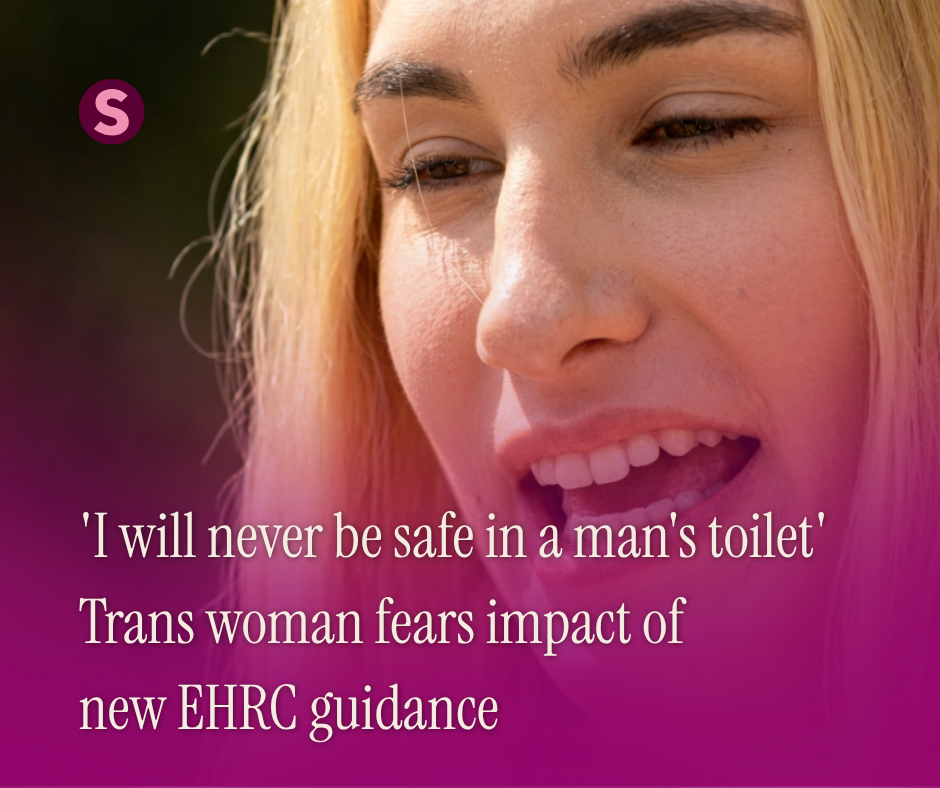
"I feel like I'm not safe. I will never be safe in a men's toilet."
While the EHRC guidance suggests alternative mixed-sex or gender-neutral facilities could be provided, Isabella said such arrangements may not solve every problem.
She warned that directing trans people to separate facilities could effectively force some people to disclose their gender identity before they are ready.
"Using a gender-neutral toilet could out people that are not necessarily ready to be outed or to have their gender identity there for people to know," she said.
Scene was founded in Brighton in 1993, at a time when news stories about Pride protests were considered radical.
Since then, Scene has remained proudly independent, building a platform for queer voices. Every subscription helps us to report on the stories that matter to LGBTQ+ people across the UK and beyond.
Your support funds our journalists and contributes to Pride Community Foundation’s grant-making and policy work.

Member discussion