



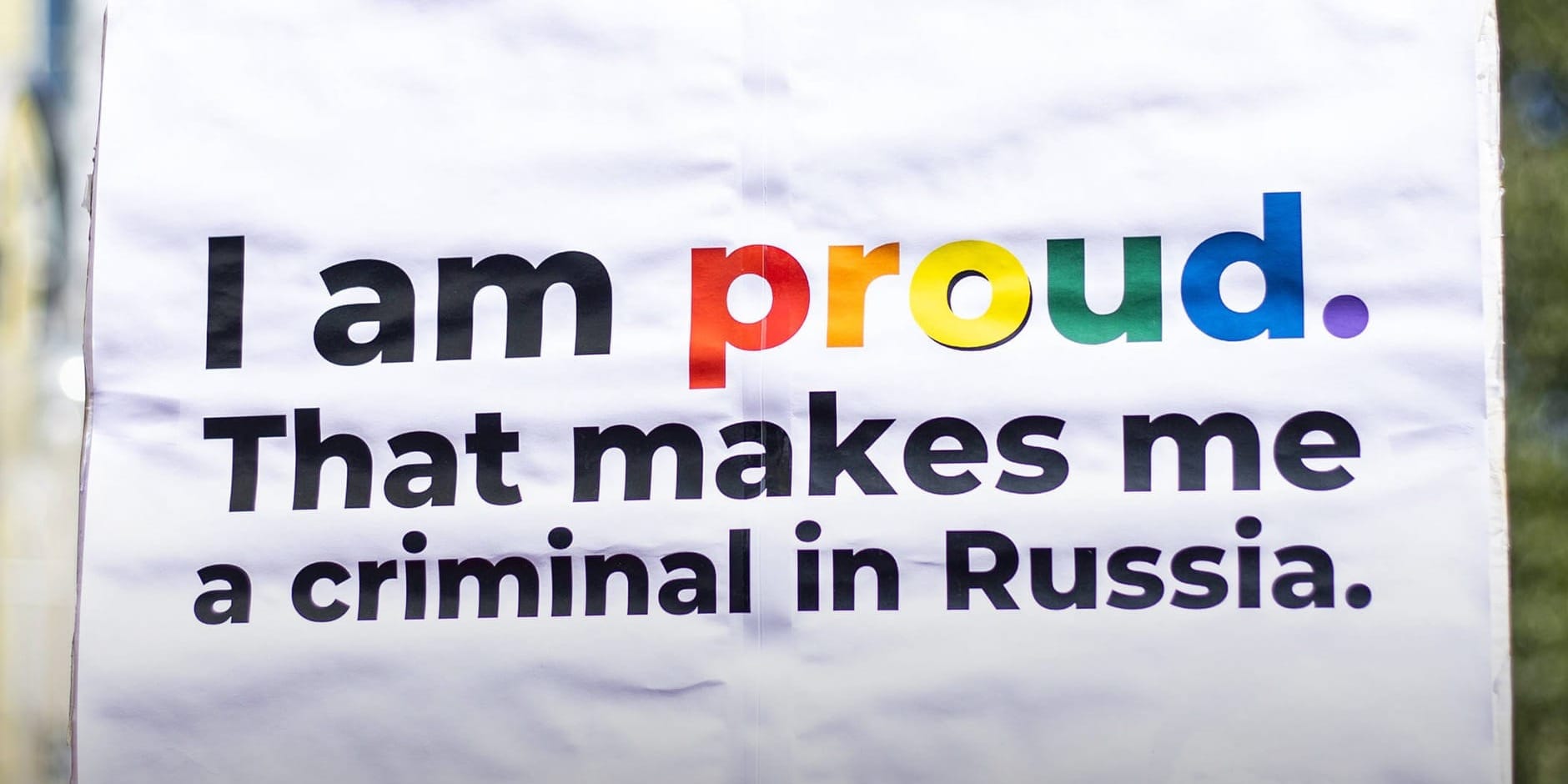
Russian authorities have escalated their crackdown on LGBTQ+ rights after a court in St Petersburg designated the Russian LGBT Network an “extremist organisation”, effectively banning its activities nationwide.
The ruling, handed down by the St Petersburg City Court following closed hearings requested by the Ministry of Justice, is one of a growing number of cases targeting LGBTI organisations across the country. Amnesty International warned the decision would further marginalise LGBTQ+ people and endanger their basic human rights.
The verdict comes just two months after similar rulings branded five other groups as “extremist”: Coming Out in St Petersburg, the LGBT Resource Centre in Yekaterinburg, the Moscow Community Centre for LGBT+ Initiatives, LGBTQ+ group Irida in Samara, and LGBTQ-themed media project Parni+.
Amnesty International said the latest ruling follows a clear pattern established in November 2023.
“When in November 2023 the Supreme Court banned the non-existent ‘international LGBT movement’ as ‘extremist’, it was clear that the authorities would not stop there,” said Marie Struthers, Amnesty International’s Director for Eastern Europe and Central Asia. “The designation of the Russian LGBT Network and other organisations as ‘extremist’ are links in the same chain of persecution and injustice by the Russian authorities against LGBTI people.”
Founded nearly two decades ago, the Russian LGBT Network has played a central role in uniting activists across the country, providing emergency legal and psychological support, evacuating people facing serious risk, and documenting violence and discrimination against LGBTQ+ communities.
“For nearly 20 years, the Russian LGBT Network has provided vital assistance and produced crucial research,” Struthers said. “Banning it is a major, premeditated blow to LGBTI people and their allies.”
Human rights defenders warn that labelling legitimate advocacy organisations as “extremist” exposes activists and volunteers to severe criminal penalties, while cutting off lifelines for those seeking support.
“For nearly 20 years, the Russian LGBT Network has provided vital assistance and produced crucial research”
Since late 2025, Russian authorities have expanded their repression through criminal prosecutions, arrests and administrative fines targeting individuals, private gatherings and media platforms associated with LGBTQ+ themes.
In December 2025, a court in Cherkessk sentenced a resident of Karachay-Cherkessia to two-and-a-half years in prison for joining a group chat and posting comments deemed to promote “non-traditional sexual relations”. Days earlier, three residents of Ulyanovsk were placed under house arrest and charged with participating in an “extremist organisation” for organising closed LGBTQ-themed parties and drag shows.
In January 2026, drag performer Aleksandr Knyagin fled Russia after being placed on a federal wanted list following a police raid on an LGBTQ+ event in the city of Kirov.
Several high-profile activists have also been targeted. LGBTQ+ educator and activist Aleksandra “Sasha” Kazantseva was sentenced in absentia in December 2025 to nine years’ imprisonment on charges including spreading “false information” about the Russian armed forces and alleged involvement in an “extremist LGBT movement”.
Scene was founded in Brighton in 1993, at a time when news stories about Pride protests were considered radical.
Since then, Scene has remained proudly independent, building a platform for queer voices. Every subscription helps us to report on the stories that matter to LGBTQ+ people across the UK and beyond.
Your support funds our journalists and contributes to Pride Community Foundation’s grant-making and policy work.




Member discussion