

RABBIE BURNS' BOTTOM DRAWERS @ The Walrus (Tusk Club) Brighton Fringe
Bonkers, bawdy, and thoroughly Scottish, classic Brighton Fringe at its most gloriously unhinged.


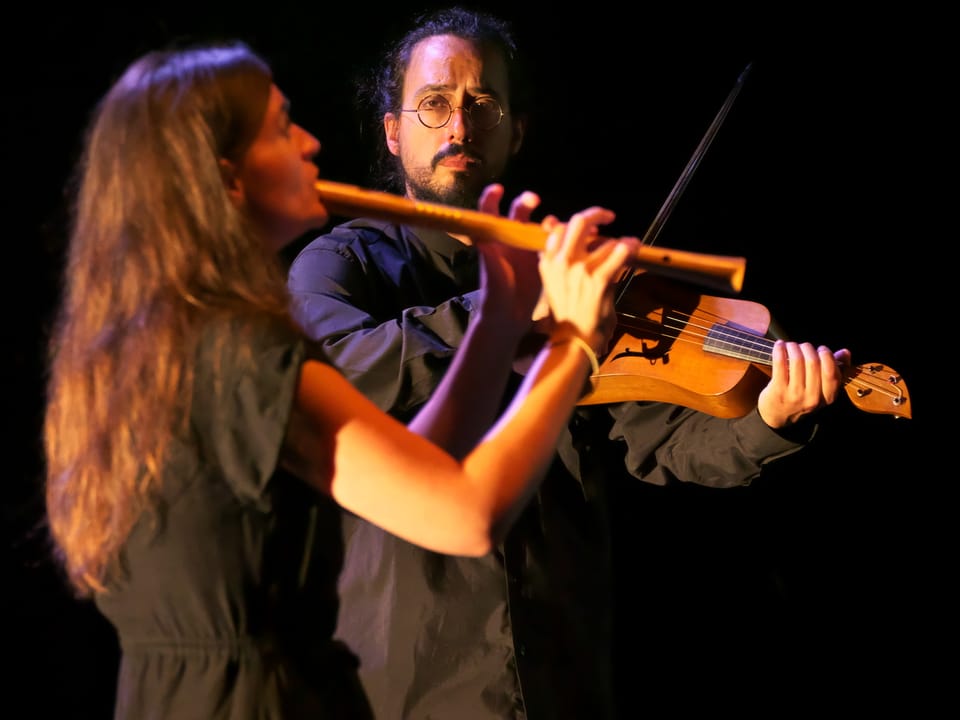
Christine Weir, Cameron Robertson, Shahrukh Mubashir | Dir. Clare Stopford
Scotland's national bard was a serial lover, a Church-baiter, a man who looked polite society dead in the eyes and wrote filth anyway. Robert Burns was, in the most joyful sense, a sexual liberationist two centuries before the rest of us and Rabbie Burns' Bottom Drawers arrives at Brighton Fringe to gleefully prove it.
Downstairs at the Walrus's Tusk Club, this bonkers sixty-minute musical romp is fringe at its most unapologetically fringe. The conceit: it's 1796, Burns has just died, and his long-suffering housekeeper has stumbled across a hidden cache of extremely questionable poetry in the great man's bottom drawer. The literary society decides a public reading is the only responsible course of action. The housekeeper, played with deft comic timing by Christine Weir, needs persuading. A wee dram is offered. Then another. By the third she is absolutely delighted to share every last scurrilous lyric and the audience is singing along from the first number.
The show cleanly separates genuine Burns material, including the tender My Love is Like a Red, Red Rose, from the newly invented filth, presented with a straight face. The contrast is half the joke. Cameron Robertson matches Weir's energy beautifully, the two sharing easy chemistry throughout. Musically Shahrukh Mubashir is the steady backbone on guitar, while Weir herself fluently moves between singing, dancing and keyboards and Robertson's turn on interpretive percussion, recorder and saxophone holds more than a few surprises. The harmonies are lovely throughout the music a mix of rock and roll and trad.
The characters of Maw Broon and Oor Wullie, a formidable Scottish mum and her roguish wee companion, lifted from beloved comic strips, work as a framing device, placing the respectable and the disreputable in exactly the kind of gleeful collision that was Burns' entire brand.
The accents are clearly worked at with care, though the dialect is occasionally so magnificently thick that it becomes genuinely difficult to tell what is supposed to be naughty and what isn't. The cast's vigorous gesticulations provide a helpful prurient compass. One note of constructive bewilderment: there is a duck whistle. This show sails in the waters of gleeful filth, commit to it.
The show closes with a staccato burst of actual Burns facts that reframes this as genuine love for the man. Burns, you suspect, would have approved. Mostly.
Classic fringe. Completely bonkers.
Remaining dates: May 25 (12:15pm) & May 31 (1:30pm). £12.50 / £10 concessions. 16+. Strong language and sexually explicit content as Burns intended.
Full details here on Brighton Fringe.

Or...: in Burns own dialect
Haud yer wheesht an' listen weel ye glaikit sassenach bampots, fur there's a braw wee theatrical stooshie lurkin doonstairs at the Walrus wi' mair brass neck than a gallus heilan coo breengin intae a ceilidh uninvited.
Rabbie Burns' Bottom Drawers hauds its hale daft premise fae the verra year oor Bard cowped his creels. His lang-sufferin housekeeper — played wi' sic magnificent thrawn-ness, then sic magnificent blootered willingness, by the braw Christine Weir — discovers a muckle cache o' poems so heid-burstin scandalous they'd hae the Kirk elders greetin intae their parritch. The literary society resolves tae howk the filth oot an' declaim it tae a roomfu' o' strangers. The housekeeper needs a wee hauf tae loosen her tongue. Then anither. Then a third — at which juncture she is radge wi' delight an' the hale audience is bawlin alang afore the second nummer's hauf wey doon the brae.
This gallus wee show truly kens its Rabbie: a liberationist afore onybody invented the bliddy wird, wha scrievit aboot desire an' bodies withoot a scrap o' shame. Twa hunder year on, that spirit feels awfy queer in the verra best sense — defiant, joyful, an' tellin authority tae awa' an bile its heid.
Musically the thing is a wee gem, so it is. Shahrukh Mubashir is the steady smeddum o' the hale operation on guitar, the reliable backbone haudin the rammy thegither. Christine Weir hersel birls between singin, dancin an' keyboards wi' the energy o' a wumman wha's hud exactly the richt number o' drams, while Cameron Robertson delivers interpretive percussion, recorder, an' — haud ontae yer sporrans — a genuinely impressive turn on saxophone that fair skelps ye roond the lugs wi' surprise. The hairmoanies ur, tae this critic's considerable astonishment, genuinely gey bonnie.
Noo — honest counsel, hen. The dialect is at times so heroically impenetrable that yer critic couldnae tell whit wis the filthy bit an' whit wis jist Ayrshire weather. The cast's vigorous gesticulations provided a prurient compass bearing, which wis, if onythin, funnier than actual comprehension. An' then — yer critic's een narrae wi' purpose — there is, inexplicably, a duck whistle. Ye either commit tae the filth, ye magnificent bampots, or ye dinnae. Hoy the bliddy thing intae the Clyde where it belanes.
The hale stooshie ends wi' a wee salvo o' genuine Burns facts — warm, earnest, an' quietly reframin everythin as pure daft affection fur the man. A fine touch, so it is worn like the bravest thistly tartan. Radge, braw, an' awfy guid fun.
Rabbie wid huv approved. Maist likely. Awa' an raise a dram, ye bampots.
Scene was founded in Brighton in 1993, at a time when news stories about Pride protests were considered radical.
Since then, Scene has remained proudly independent, building a platform for queer voices. Every subscription helps us to report on the stories that matter to LGBTQ+ people across the UK and beyond.
Your support funds our journalists and contributes to Pride Community Foundation’s grant-making and policy work.



Member discussion