



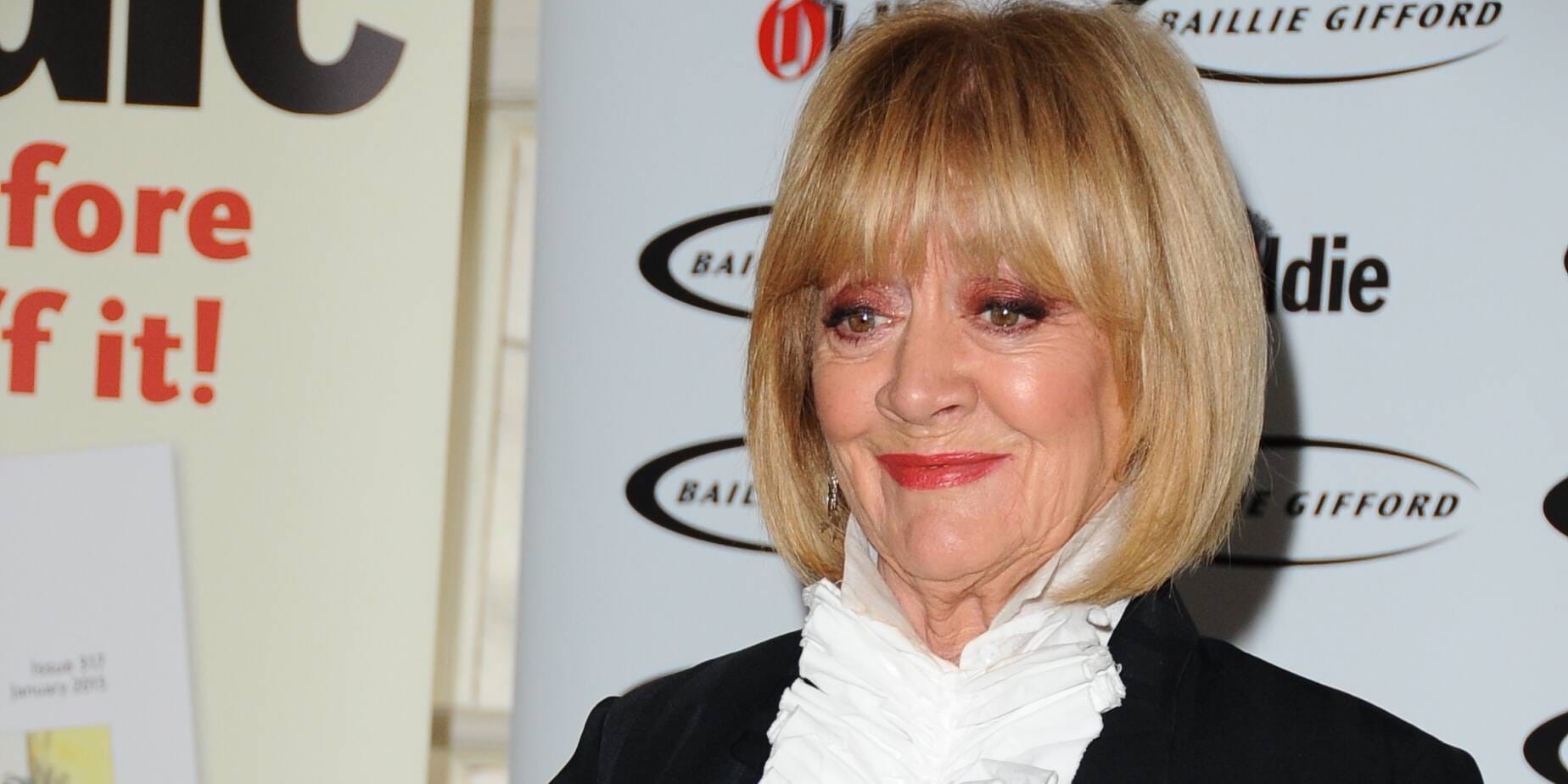
A former Coronation Street star has revealed she believed she would have been sacked if her sexuality became public, as she reflects on decades spent hiding her identity and says she is still “learning how to be free” at the age of 90.
Writing in The i Paper, actor Amanda Barrie, who played Alma Halliwell on the ITV soap, said she was convinced during her time on the show in the 1980s that coming out would have ended her career.
“Even as an actress… it was not always possible to be open,” she wrote. “I firmly believed during my time in Coronation Street in the 1980s that I would be sacked if my sexuality became public knowledge.”
She added that the close association between actors and their characters meant producers would have feared backlash from audiences, writing that “it would almost certainly have been felt that our viewers would not accept a gay Alma”.
Barrie described how those fears shaped her life for decades, saying she became accustomed to “living in the shadows” after years of concealing her sexuality.
She said the culture she grew up in made openness impossible, recalling: “Homosexuality wasn’t a word you even heard mentioned. I, like so many, lived a life of denial.”
At school, she said she tried to conform despite recognising her feelings for other girls. “I even invented boyfriends so that I would fit in,” she wrote, adding that she had in reality been “deeply in love with the head girl”.
Barrie later married actor Robin Hunter in 1967, saying the relationship was genuine, but she continued to suppress her identity for many years.
Her article also reflects on how markedly attitudes have changed since then. She noted that Coronation Street now features numerous LGBTQ+ characters, remarking: “Now Coronation Street abounds with gay characters, to the extent that I have wondered if it should be renamed Canal Street.”
She added wryly: “So it has occurred to me that maybe I was wrong. Maybe it is catching…”
Barrie said she still finds it difficult to adjust to modern acceptance, writing: “I still half expect people to disapprove of me having a wife rather than a husband. And I doubt I will ever stop being surprised that, nowadays, at last, nobody seems to care.”
She married her long-term partner, novelist Hilary Bonner, in 2014, after same-sex marriage was legalised in the UK. But she admitted the legacy of years spent hiding her identity continued to weigh on her, even on her wedding day.
“Old fears die slowly,” she wrote, explaining that “after so many years of hiding my real self… a little part of me did wonder if we might be arrested on the way out.”
Looking back on her life, Barrie said she had recognised her feelings from a young age, recalling how traditional stories never quite fit her experience. As a child, she said she would lie awake thinking “the story should be set in a time when women can marry women”.
Her reflections highlight both the pressures faced by LGBTQ+ people in previous decades and the extent of social change in Britain, with Barrie describing a journey from secrecy and fear to a later-life sense of openness.
Scene was founded in Brighton in 1993, at a time when news stories about Pride protests were considered radical.
Since then, Scene has remained proudly independent, building a platform for queer voices. Every subscription helps us to report on the stories that matter to LGBTQ+ people across the UK and beyond.
Your support funds our journalists and contributes to Pride Community Foundation’s grant-making and policy work.
Member discussion