

They said we were finished. They were wrong
A landmark global report confirms what LGBTQ+ people already knew: the backlash is real, coordinated, and funded. But so is the fightback and it's winning more than anyone is being told.


A landmark global report confirms what LGBTQ+ people already knew: the backlash is real, coordinated, and funded. But so is the fightback, and it's winning more than anyone is being told.
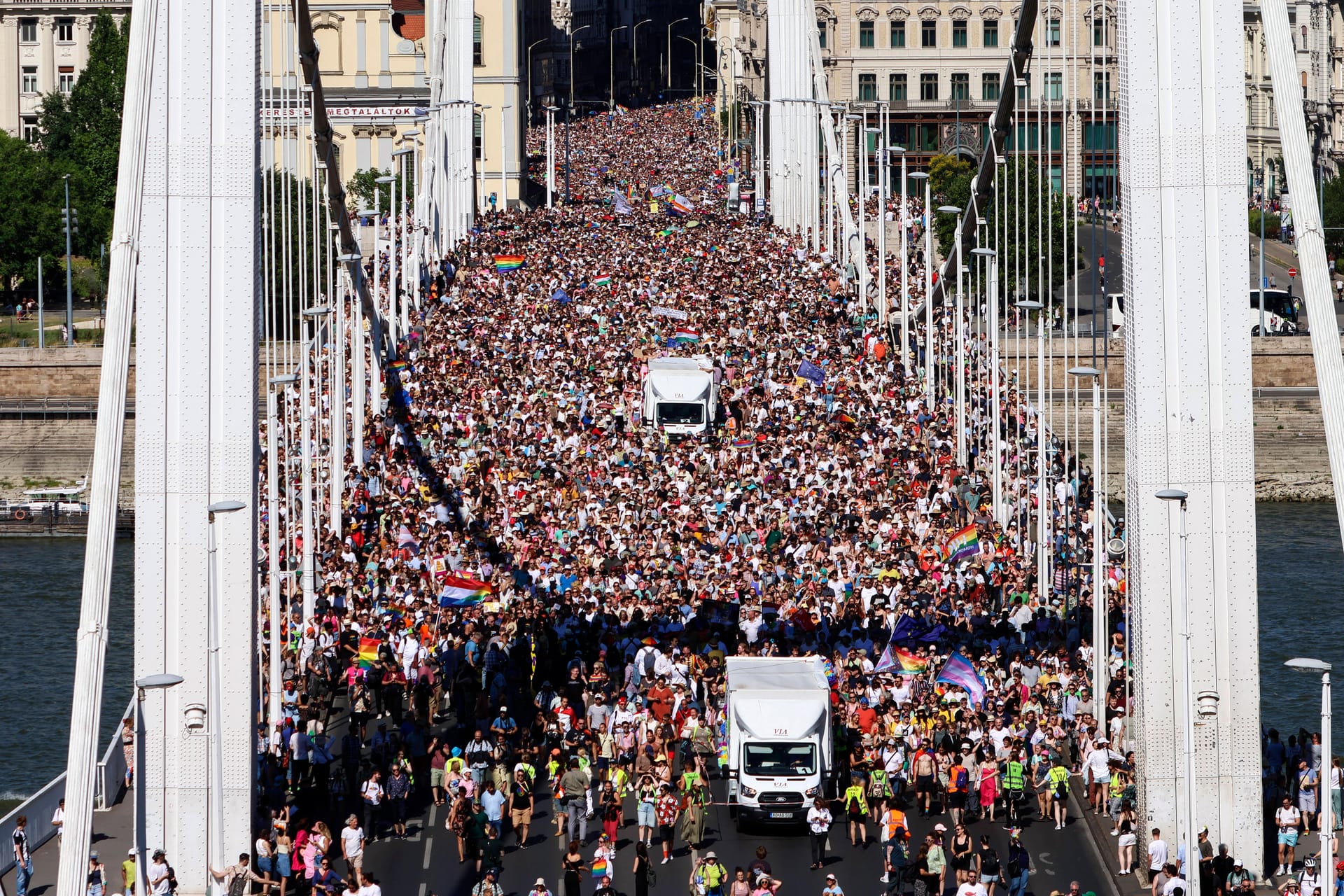
There is a number that should stop you in your tracks. At Budapest Pride in June 2025, tens of thousands of people filled the streets of the Hungarian capital in direct defiance of a government law that had banned LGBTQ+ public events and authorised state surveillance to enforce it. Not hundreds. Not a few thousand brave souls. Tens of thousands, making it the largest crowd in the parade's 30 year history. Read that again. A government criminalised Pride. And the response was a record turnout.
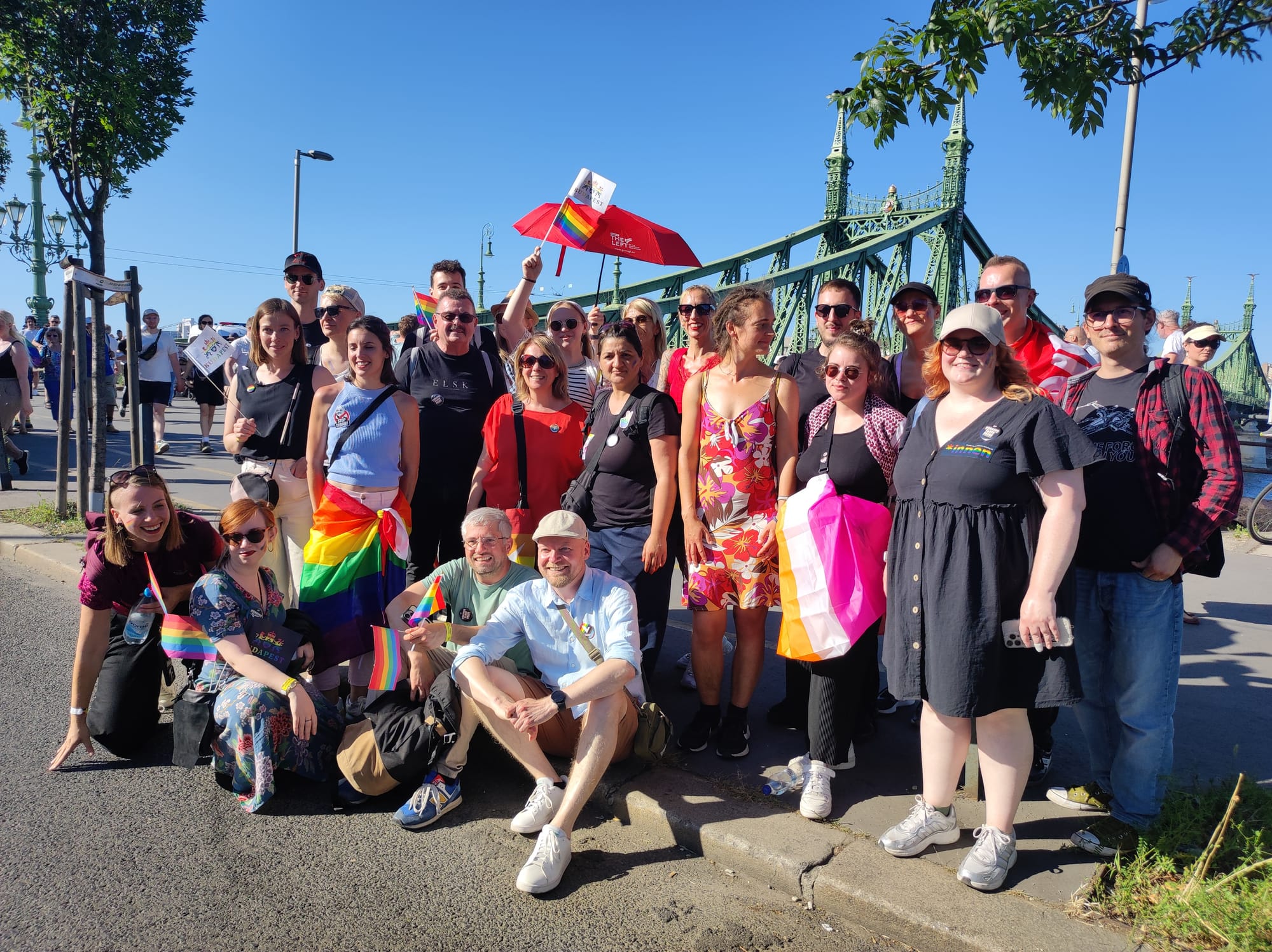
That image, of a city overflowing with people who refused to be made invisible, is the one that stays with me after reading the 2026 State of Civil Society Report by CIVICUS, the global civil society alliance. Now in its 15th year, the report draws on over 250 interviews with activists, lawyers, community organisers and human rights defenders across approximately 100 countries and territories. It is the most comprehensive survey of global civil society produced anywhere, and this year, for the first time, it has dedicated a full chapter to gender rights: rollback and resistance. What it finds should be read by every LGBTQ+ person who has spent the past year feeling like the walls are closing in.
Yes, the walls are closing in. But they are not closing fast enough to keep us out.
The playbook and how to read it
Let's start with what the report calls the bad news, because understanding the strategy being used against us is the first step to defeating it.
The CIVICUS report is unambiguous: what we are witnessing is not a series of unconnected local culture wars. It is a coordinated, cross border political strategy with a recognisable playbook. The method is to frame gender equality and LGBTQ+ rights as dangerous foreign ideologies, position queer and trans people as threats to children and family values, and deploy cultural anxiety as a smokescreen for economic failure. When a government cannot fix the cost of living, it finds a scapegoat. We are that scapegoat, and we have been before.
When Donald Trump signed executive orders in January 2025 imposing a strict biological definition of sex, stripping non discrimination protections from LGBTQ+ people and banning diversity and inclusion policies, the effects rippled outward almost immediately. The report documents what it calls a "copycat effect" that moved with remarkable speed. Hungary's Pride ban, Slovakia's sweeping constitutional amendments defining sex as exclusively biological, Kazakhstan's Russian style "gay propaganda" law, the recriminalisation of same sex relations in Trinidad and Tobago, and a new law in Burkina Faso criminalising same sex relations and their "promotion" — all of this happened in 2025 alone.
For those of us who cover politics, none of this is accidental. These governments are not independently arriving at the same conclusions. They are sharing a template, and the collapse of US foreign aid under USAID has removed one of the few financial counterweights that gave governments in the Global South pause before enacting anti LGBTQ+ legislation.
This is where the statistics come in, and where we need to be alert to what is being done with them.

The numbers you are not supposed to see
The CIVICUS report contains a finding about data that deserves far more attention than it is receiving. Around 70% of national statistical offices worldwide have seen their gender specific data collection funding slashed, not by their own governments, but as a direct consequence of the gutting of US foreign aid. Think about what that means in practice. Governments that want to show the world that women and girls are thriving, or more cynically, that they cannot be held accountable for failing them, now have fewer independent datasets measuring their progress or lack thereof.
This is a deliberate use of statistical silence to make suffering invisible. You cannot challenge a policy you cannot measure. You cannot lobby for change using data that has stopped being collected. The UN's own Gender Snapshot 2025 already projects that 351 million women and girls will remain in extreme poverty by 2030. But if the data infrastructure is being dismantled, the real number becomes unknowable, and that unknowability suits some governments very well indeed.
As a journalist who spends a lot of time interrogating how statistics can be weaponised, I want to name this clearly: the defunding of data collection is itself a political act. It is a way of winning an argument by making the argument impossible to have.
But here is what they cannot erase
Here is what I find genuinely thrilling about the CIVICUS report, and why I think it matters so much for our community to read it carefully rather than skim the headlines.
The same methodology that documents the rollback also documents the resistance, in granular, country by country, case by case detail. And the resistance, the report concludes, is proving just as contagious and just as coordinated as the backlash.
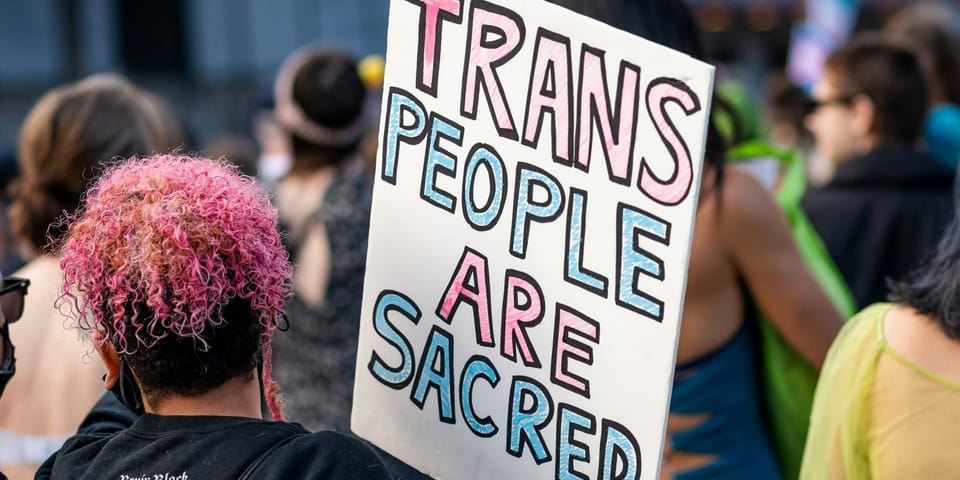
Over 100,000 people attended London's Trans+ Pride. Marriage equality came into effect in both Thailand and Liechtenstein. Courts in St Lucia decriminalised homosexuality, making it the fifth Caribbean country to take that step in recent years, a regional momentum that tends to get almost no coverage in British LGBTQ+ media. Denmark and Norway both expanded abortion rights, raising legal limits from 12 to 18 weeks. The Court of Justice of the Economic Community of West African States delivered a landmark ruling against Sierra Leone on female genital mutilation, finding it constitutes torture under international law.
And then there are the victories that never make headlines at all, the ones that the CIVICUS report is particularly valuable for surfacing: legislation that was stalled, bills that were softened, laws that were never passed. Civil society groups blocked an attempt to repeal The Gambia's ban on female genital mutilation. Campaigners paused Latvia's withdrawal from the Istanbul Convention on violence against women. In Kenya, the Family Protection Bill, which would have introduced the death penalty in some circumstances, was stalled by sustained civil society pressure. These are wins. They just do not look like wins unless you understand what nearly happened.

Resistance as infrastructure
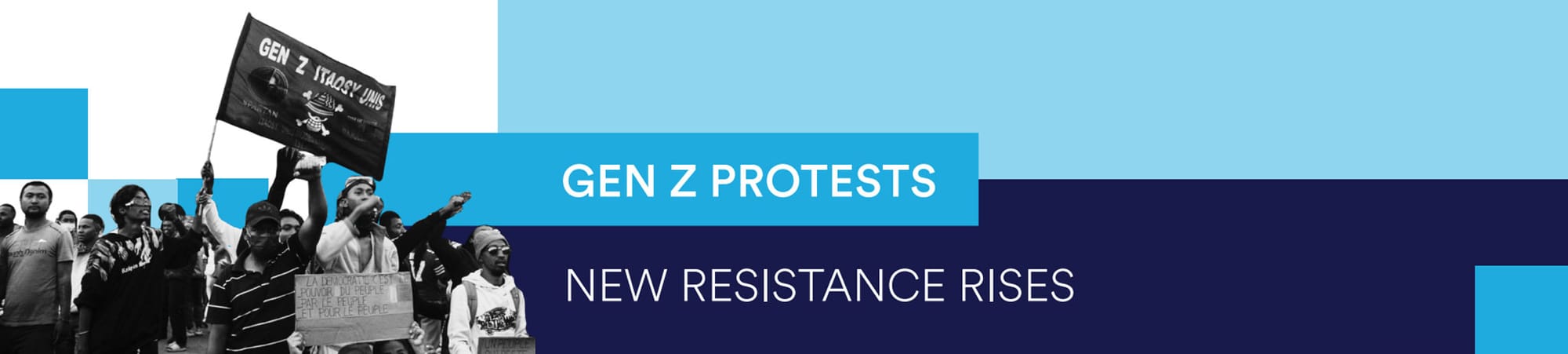
One of the most important analytical moves the CIVICUS report makes is to insist that we understand resistance as infrastructure, not just as heroic spontaneity. The tens of thousands who marched in Budapest did not materialise from nowhere. The Afghan women running underground schools under Taliban rule, continuing to document abuses and maintain solidarity networks after the Taliban shut down nationwide internet access in September 2025, did not simply find courage from thin air. They built networks. They made plans. They sustained relationships across years of difficulty.
This matters because one of the most powerful tools the anti rights movement uses is the narrative that progress is reversible and activism is futile. If you can convince LGBTQ+ people that every gain can be taken away, that every government can turn hostile overnight, that no victory is ever secure, you produce exactly the exhaustion and despair that makes organising harder.
The data in this report is a corrective to that story. Decriminalisation in the Caribbean is not reversing. Marriage equality in Thailand is law. South Africa has declared gender based violence a national disaster, a direct result of years of campaigning by civil society groups who refused to accept the status quo.
CIVICUS Secretary General Mandeep Tiwana puts it with careful precision in the report: victory is not assured, but neither is defeat. The path forward, he says, is being actively forged by those who refuse to accept the unacceptable.

What the report means for us
Reading the 2026 State of Civil Society Report as a British LGBTQ+ journalist, a few things strike me particularly hard.
The first is the extraordinary scale of the research base. This is not opinion dressed up as analysis. Over 250 interviews across around 100 countries, drawn from CIVICUS's rolling analysis initiative, CIVICUS Lens, this is the kind of longitudinal, multi country research that governments and international institutions routinely commission at great expense. When it tells us the resistance is organised, it is not offering comfort; it is reporting a finding.
The second is that the UK, while not a focus of the report, is not exempt from the dynamics it describes. The cultural playbook being used in Hungary, Slovakia and Kazakhstan has enthusiastic advocates in British politics. The deliberate blurring of trans rights with the protection of children; the framing of gender equality as ideological imposition rather than basic justice; the use of culture war debates to avoid accountability on economic policy, none of this is foreign to the British political conversation. We should read this report not as a dispatch from elsewhere, but as a description of forces that are already operating here.
The third is the point about data. In the UK, we have our own debates about how equalities data is collected and who gets counted. The lesson from the CIVICUS report is that the fight to be counted, to exist in statistics, to be measured, to be made visible to policymakers, is not a technocratic footnote to the real struggle. It is part of the real struggle. Invisibility is a policy choice, and it is enforced through budget decisions and data collection frameworks, not only through legislation.
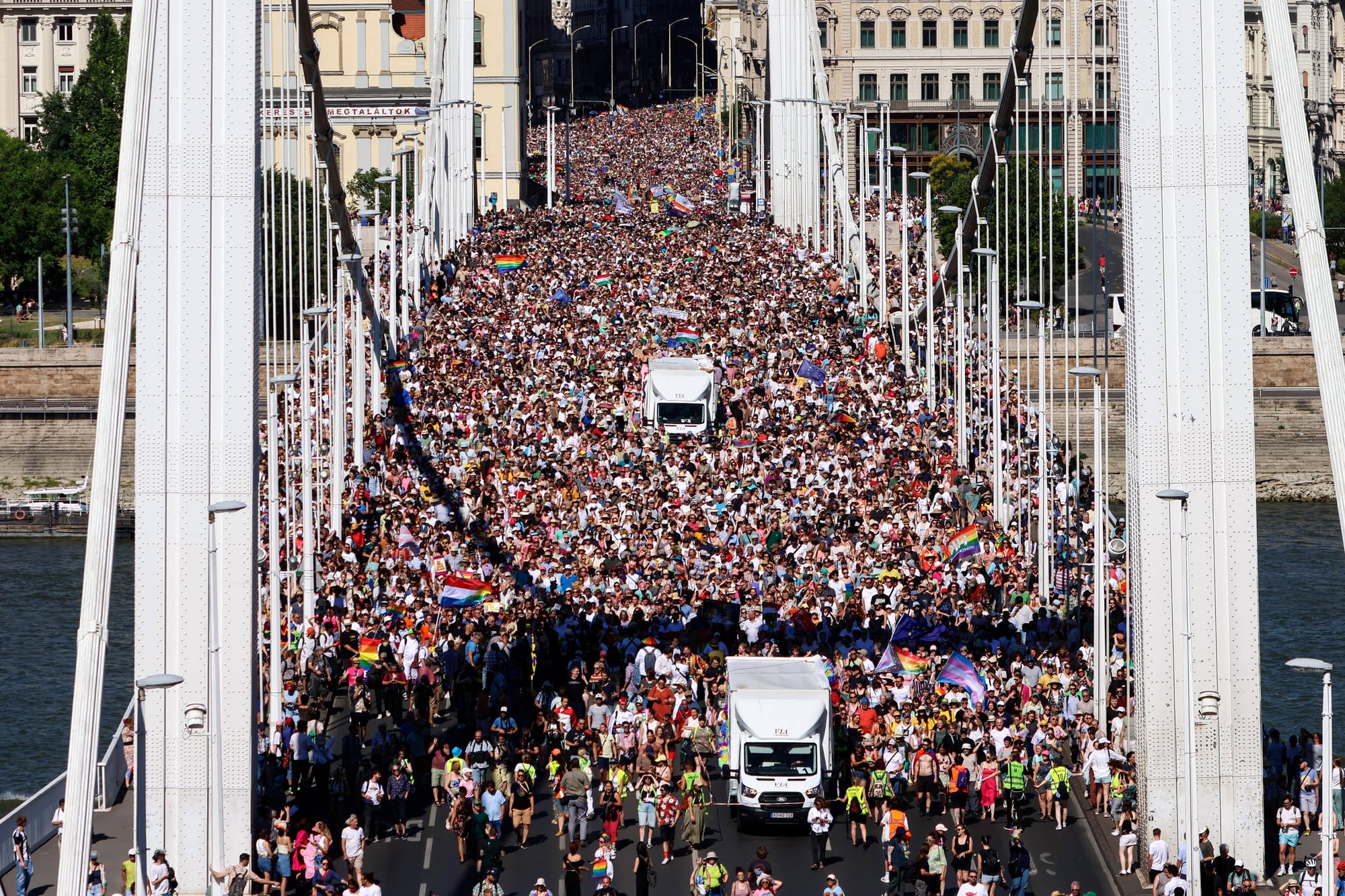
I want to come back to Budapest. Because in a news cycle dominated by images of harm, bans, prosecutions, criminalisation, erasure, the image of a record breaking Pride march in a city whose government has tried to end Pride entirely is genuinely important.
It is not naive. The report is very clear eyed about the suffering being caused by the global anti rights movement. The harm to LGBTQ+ people in conflict zones who have lost access to health services, the trauma of recriminalisation, the slow grinding fear of living under surveillance, none of this is glossed over.
But the report insists, with evidence, that the people doing this harm have not won. They are trying to win. They are using every tool available. They are spending money, passing laws, building transnational networks and cultivating political allies. And they are being met, every time, by people who turn up anyway.
Tens of thousands of people turned up in Budapest. Over 100,000 people attended Trans+ Pride in London. Campaigners in The Gambia, Latvia and Kenya blocked legislation that would have caused serious harm.
The backlash is organised. So is the resistance. And the resistance, the report tells us, is proving harder to extinguish than anyone expected.
That is not a small thing. In a year that has felt relentlessly dark, it is worth sitting with for a moment.
Postscript: Budapest, one more time
As this piece was being finalised, news arrived that gave the Budapest story a remarkable new dimension.
On 21 April 2026, the European Court of Justice delivered a judgment described in news reports as historic, landmark and unprecedented. The full court, sitting with all 27 judges, found that Hungary had so seriously and systematically violated the fundamental rights of LGBTQ+ people through its 2021 law that the legislation breaches the very identity of the European Union itself. It is the first time the court has found that an EU member state violated the fundamental values set out in the EU Charter of Fundamental Rights.
The timing could not be more loaded. The ruling arrived just nine days after Viktor Orbán's 16 year grip on power was ended by a landslide election victory for opposition leader Peter Magyar. ILGA Europe's deputy director Katrin Hugendubel responded directly: "There is now no excuse for the Commission not to require Hungary to quickly withdraw the law. Hungary cannot enter a post Orbán era without repealing this legislation, including the Pride ban. If Magyar truly aims to be pro EU, he must place this at the top of his agenda for his first 100 days in office."
Think about what has happened in Hungary in the space of a single year. A government banned Pride. Hundreds of thousands marched anyway. That same government lost a national election. And now the highest court in Europe has ruled that the law underpinning that ban is incompatible with the foundational values of the European Union itself.
The court observed that the law had effectively and falsely conflated LGBTQ+ people with paedophiles, finding that this stigmatises and marginalises LGBTQ+ people and encourages hostility and hatred against them. This is not a technical infringement finding about broadcasting regulations. It is the European legal order saying, in the plainest possible terms, that what Orbán did to LGBTQ+ people in Hungary was an attack on human dignity at the most fundamental level the law recognises.
The CIVICUS report was right. The backlash is coordinated. But it is not invincible. It can be marched against, voted out, and as Budapest has now shown the world twice over, ruled unlawful by the highest courts in the land.
That is the story the numbers tell, if you know how to read them.
The 2026 State of Civil Society Report is available in full at publications.civicus.org. It is the 15th annual report from CIVICUS, the global civil society alliance, which has over 17,000 members in more than 175 countries.
Scene was founded in Brighton in 1993, at a time when news stories about Pride protests were considered radical.
Since then, Scene has remained proudly independent, building a platform for queer voices. Every subscription helps us to report on the stories that matter to LGBTQ+ people across the UK and beyond.
Your support funds our journalists and contributes to Pride Community Foundation’s grant-making and policy work.





Member discussion