




Europe’s highest court has delivered a landmark ruling against Hungary’s 2021 “anti‑LGBTI propaganda” law, intensifying pressure on opposition leader Péter Magyar to show that his pro‑EU stance includes concrete action on fundamental rights.
On 21 April, the Court of Justice of the European Union (CJEU) ruled that the Hungarian law breaches EU treaties, multiple EU directives and the EU Charter of Fundamental Rights, finding for the first time that a member state has independently violated Article 2 of the Treaty on the European Union by systematically undermining the rights of a minority group.
The court concluded that the legislation dehumanises LGBTQ+ people and is incompatible with the EU’s core values of human dignity, equality, pluralism and respect for human rights.
The CJEU held that Hungary’s law infringes the freedom to provide and receive services under EU treaties, as well as provisions of the e‑Commerce Directive, Services Directive and Audiovisual Media Services Directive. The court also said the law represents a particularly serious interference with fundamental rights, including the prohibition of discrimination based on sexual orientation or sex, respect for private and family life, freedom of expression and information, and the right to human dignity.
In a significant first, the court recognised gender identity as a protected ground under Article 21 of the Charter, concluding that the law stigmatises and marginalises LGBTQ+ people.
Crucially, judges also found a standalone breach of Article 2 TEU, saying the legislation is contrary to “the very identity of the Union as a common legal order in a society in which pluralism prevails”. The court ruled that Hungary cannot rely on national identity to justify such discriminatory measures.
The law was also found to breach the General Data Protection Regulation (GDPR) and the Charter’s guarantees on data protection.
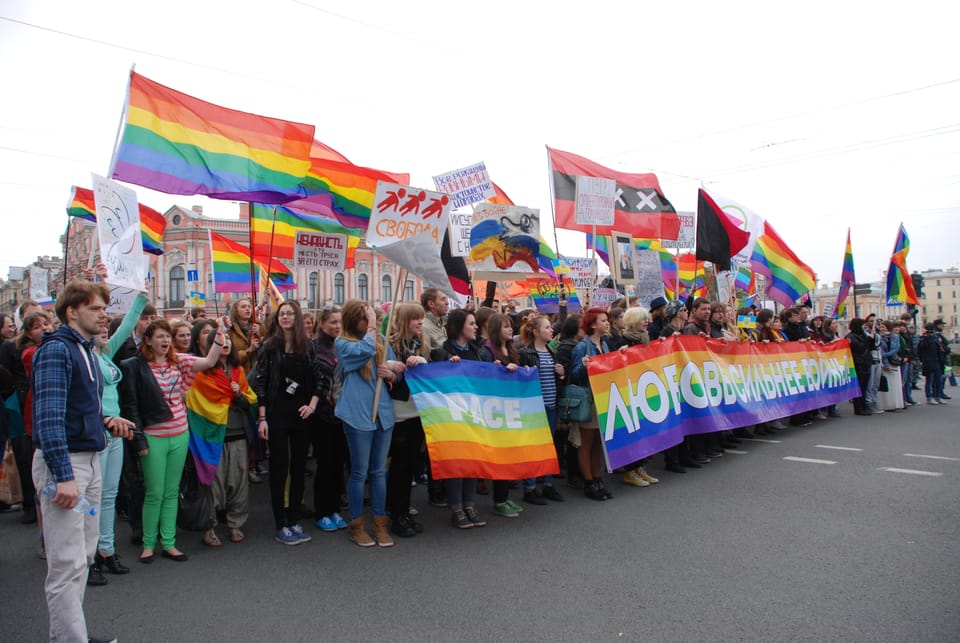
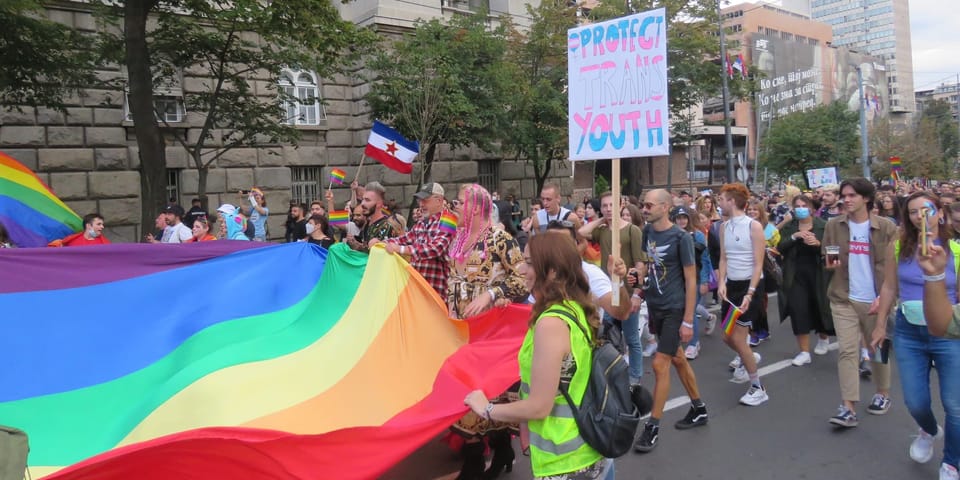
The same legal framework underpinning the law has since been used in Hungary to justify the banning and criminalisation of Pride marches, adding urgency to calls for repeal.
Europe’s leading LGBTQ+ organisation, ILGA‑Europe, said the ruling leaves no room for ambiguity – and directly challenges Magyar’s credibility as a pro‑EU reformer.
“With this ruling, the CJEU is confirming what we have been saying for six years,” said Katrin Hugendubel, ILGA‑Europe’s deputy director. “There is now no excuse for the Commission not to require Hungary to quickly withdraw the law. Hungary cannot enter a post‑Orbán era without repealing this legislation, including the Pride ban.”
She added that Magyar’s pro‑EU positioning “is only credible with a clear commitment to withdraw the law”, warning that such a commitment has yet to be seen. “If Péter Magyar truly aims to be pro‑EU, he must place this at the top of his agenda for his first 100 days in office,” she said.
ILGA‑Europe and Hungary’s Háttér Society urged the European Commission to move quickly to ensure compliance, warning against further delays.
“If, despite today’s ruling, Hungary still does not comply,” Hugendubel said, “the Commission should not hesitate to refer Hungary back to the Court.”
Háttér Society described the judgment as historic. “This marks a milestone for protecting human rights in the EU and a victory for LGBTQ+ people in Hungary,” said Eszter Polgári. “For the first time, the CJEU found an independent violation of Article 2 TEU for systematically undermining the rights of sexual and gender minorities and portraying them as a threat.”
The case stems from an infringement procedure launched by the Commission in July 2021, shortly after Hungary adopted the law under the banner of “child protection”. Hungary was referred to the CJEU in 2022, with 16 EU member states and the European Parliament intervening in support of the Commission.
In June 2025, Advocate General Tamara Ćapeta had already advised the court to find Hungary in breach on all grounds – a position now fully upheld.
Scene was founded in Brighton in 1993, at a time when news stories about Pride protests were considered radical.
Since then, Scene has remained proudly independent, building a platform for queer voices. Every subscription helps us to report on the stories that matter to LGBTQ+ people across the UK and beyond.
Your support funds our journalists and contributes to Pride Community Foundation’s grant-making and policy work.




Member discussion