

Nuuk Pride and Beyond: Greenland’s growing LGBTQ+ movement
Greenland - a vast, icy expanse with fewer than 60,000 inhabitants - has quietly become one of the most progressive places in the Arctic for LGBTQ+ rights. Its journey towards equality reflects not only legislative milestones but also cultural shifts that resonate deeply within its Inuit heritage.
Greenland’s commitment to LGBTQ+ rights is rooted in its close ties with Denmark, which decriminalised same-sex relations in 1933. By 1977, Greenland had equalised the age of consent, setting the stage for further reforms. In 1996, registered partnerships were introduced, and by April 2016, same-sex marriage became law with unanimous parliamentary support - a symbolic moment for a territory often perceived as remote and traditional.
Adoption rights followed suit. Stepchild adoption was permitted in 2009, and by mid-2016, same-sex couples gained full joint adoption rights. Trans rights also advanced significantly: since 2016, individuals can change their legal gender without invasive medical requirements, a move hailed as progressive even by European standards.
Legal equality is only part of the story. In 2024, Sipineq+, a volunteer-led advocacy group, partnered with Greenland’s Language Board to introduce over 190 Greenlandic terms for diverse sexual orientations and gender identities. Ten of these were officially adopted in 2025, giving queer Inuit communities the vocabulary to express themselves authentically in their mother tongue—a cultural breakthrough that goes beyond policy.
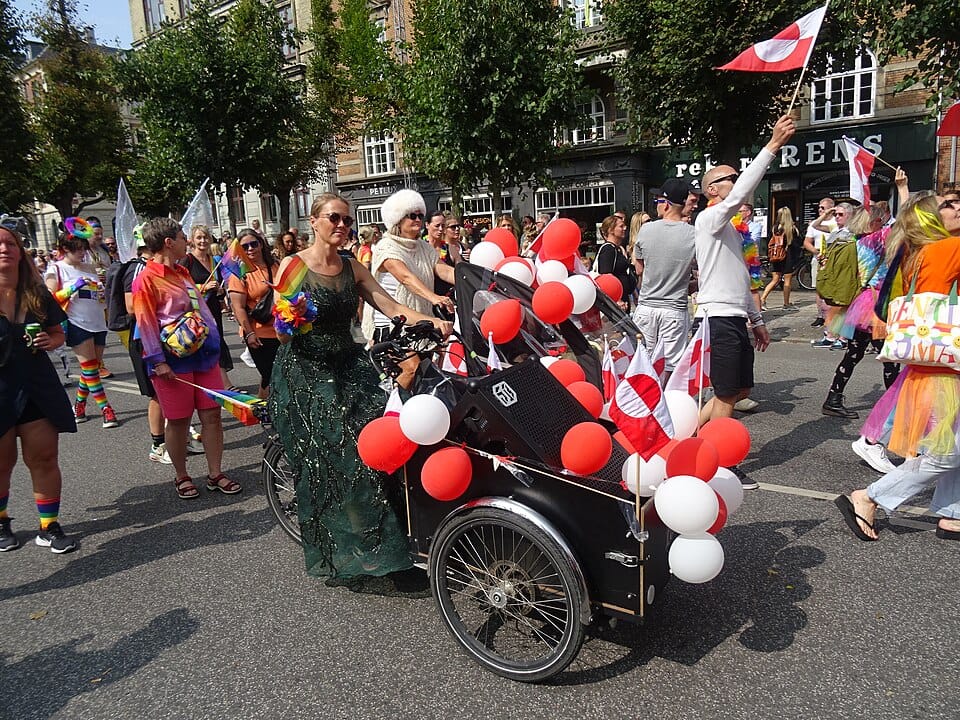
Nuuk Pride, launched in 2010, has become a vibrant annual celebration every June. Though modest in size - around 1,000 participants - it is a powerful statement in a land where isolation can often silence minority voices.
Despite progressive laws, Greenland faces unique challenges. Its scattered settlements and limited healthcare infrastructure mean that gender-affirming care often requires relocation to Denmark. Community networks are sparse, and visibility remains a work in progress. Yet, reports of discrimination are rare, and social attitudes lean towards acceptance, making Greenland a safe haven compared to many regions worldwide.
Support independent LGBTQ+ journalism
Scene was founded in Brighton in 1993, at a time when news stories about Pride protests were considered radical. Since then, Scene has remained proudly independent, building a platform for queer voices. Every subscription helps us to report on the stories that matter to LGBTQ+ people across the UK and beyond.
Your support funds our journalists and contributes to Pride Community Foundation’s grant-making and policy work.
Subscribe today
Comments ()