

The Cut Up: Louise Welsh
The Cut Up works perfectly. Welsh delivers a thriller that honors character over contrivance, that understands queerness as texture rather than plot device, that knows chosen family means presence during precisely the moments things fall spectacularly apart.
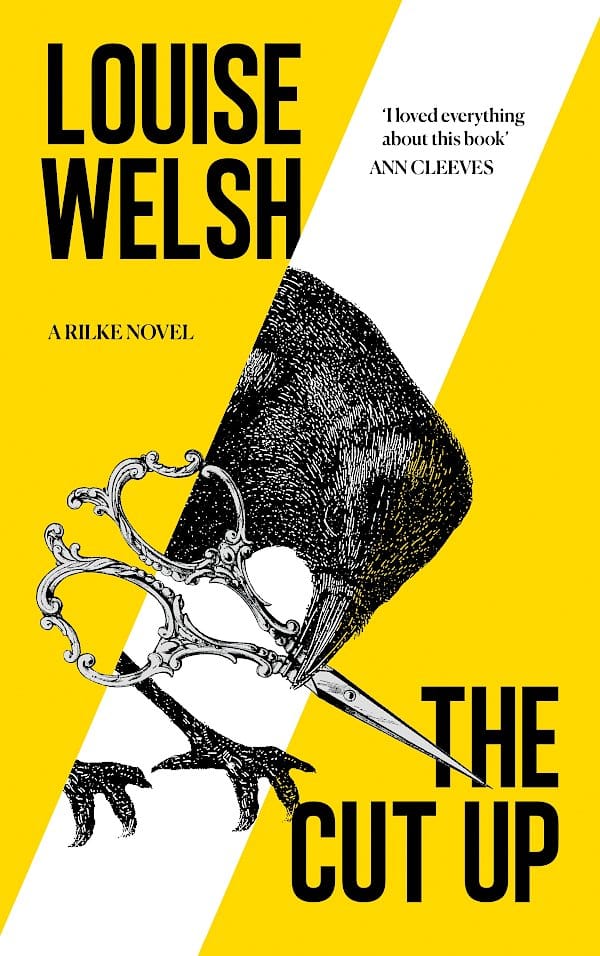
Queer Glasgow Noir Gleams Like Broken Glass
There's something intoxicating about a protagonist who moves through the world with the weariness of someone who's seen too much and the wit of someone who refuses to look away. Rilke—our gay Glaswegian auctioneer—returns in Louise Welsh's latest installment, and he's as weathered and unbreakable as the city that shaped him.
Welsh handles Glasgow with the tender brutality of someone inventorying a beloved's contradictions. The metropolis performs its grandeur, flexing those imposing stone facades, while the narrative quietly insists we acknowledge the blood money that built them. There's something profoundly queer in this dual vision—this capacity to adore something fiercely while refusing to let it off the hook. Queer folx know how to cradle devotion and accountability in the same palm, how to cherish what simultaneously disappoints us.
When ex-con Les resurfaces and a body appears on business property, Rilke finds himself pulled into murder's orbit despite his better instincts. Enter the chosen family—that glorious disaster of well-meaning friends whose help tends toward combustion rather than cleanup.
The writing snaps with caustic intelligence, Rilke's internal commentary delivering observations that land like well-aimed darts. His late-night digital cruising feels refreshingly matter-of-fact—neither exploited for shock value nor airbrushed into palatability. Desire and danger coexist naturally in his world, his hunger for intimacy running parallel to his professional gambles.
Welsh never loses track of the beating hearts beneath morally murky choices. These are people navigating systems designed without them in mind, selecting from menus offering only grades of difficulty. The informal economies Rilke moves through echo queer culture's historic territories—those liminal spaces where conventional authority loosens its grip and alternative arrangements flourish.
What electrifies here is Welsh's refusal to justify or soften. Rilke simply is: complicated, compromised, fully human. His queerness threads through everything without becoming everything, neither ignored nor spotlit. While typical Glasgow crime drowns in performative violence, Welsh prioritizes cunning over carnage, offering noir filtered through sensibilities that value intelligence and community over toxic masculinity.
The Cut Up works perfectly as standalone territory for newcomers. Welsh delivers a thriller that honors character over contrivance, that understands queerness as texture rather than plot device, that knows chosen family means presence during precisely the moments things fall spectacularly apart.
Read it for the mystery. Stay for Rilke, who proves that surviving intact—humanity bruised but breathing—remains our most subversive inheritance.
Out 29th Jan 2026 £16:99
For more info or to order the book see the publishers website here:
Support independent LGBTQ+ journalism
Scene was founded in Brighton in 1993, at a time when news stories about Pride protests were considered radical. Since then, Scene has remained proudly independent, building a platform for queer voices. Every subscription helps us to report on the stories that matter to LGBTQ+ people across the UK and beyond.
Your support funds our journalists and contributes to Pride Community Foundation’s grant-making and policy work.
Subscribe today
Comments ()