

Rights groups warn of “alarming escalation” in crackdown on LGBTQ+ activists in Turkey
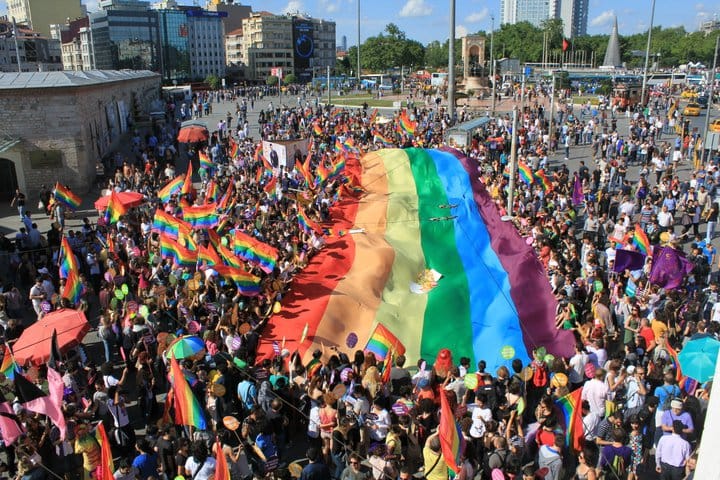
A coalition of European and national human rights organisations has raised the alarm over what it describes as a sharp escalation in the repression of LGBTQ+ activists and organisations in Turkey, pointing to a series of court cases, prosecutions and proposed legislation.
At the centre of the concern is a December court ruling ordering the closure of Genç LGBTI+, a youth group based in İzmir. The court found the organisation guilty of “obscenity” over drawings shared on social media between 2019 and 2022, created by LGBTI+ artists during online Pride events.
Judges argued the images could “encourage” people to become lesbian, gay, bisexual or trans, and said they violated public morality and constitutional protections of the family. Rights groups say the decision breaches fundamental freedoms, including expression, association and non-discrimination.
A parallel criminal case has also been brought against 11 individuals linked to the organisation, including board members, under Turkey’s law on associations. They face potential prison sentences of between one and three years, as well as fines. The first hearing is scheduled for 8 April.
In a separate case, a lawsuit filed in February targets Defne Güzel, chair of the May 17 Association. She is accused of breaching the same law over a book and exhibition catalogue deemed “contrary to public morality”. If convicted, she could face similar penalties.
Campaigners warn that convictions in both cases could also strip those involved of certain civil rights, including the ability to serve on the boards of civil society organisations, further restricting LGBTQ+ advocacy.
The legal actions follow a wave of audits of LGBTQ+ organisations in 2024, which critics say went far beyond standard oversight. In both cases, rights groups have questioned due process, citing the speed of proceedings and decisions to prosecute despite expert reports finding no wrongdoing.
The cases come amid a broader deterioration in human rights protections in Turkey in recent years, particularly affecting LGBTQ+ people. Activists point to repeated bans on Pride events, mass detentions, and increased targeting of artistic and journalistic expression.
Concerns have also been raised about proposed legislation that could criminalise LGBTQ+ identities and advocacy under so-called “anti-propaganda” measures. Although not yet enacted, discussions about reintroducing such laws resumed earlier this year.
Within the government’s designation of 2025 as the “Year of the Family”, officials have also issued guidance criticised for targeting gender and LGBTQ+ equality, while new regulations have tightened access to gender-affirming healthcare.
Human rights organisations say the closure of Genç LGBTI+ is not an isolated case but part of a wider pattern. Since 2021, at least six associations have faced dissolution proceedings, with four already shut down and others still ongoing.
They also highlight a growing trend of targeting individual activists, citing recent cases against movement leaders alongside that of Defne Güzel.
In a joint statement, the organisations called on the Turkish government to halt what they describe as discriminatory practices, drop proposed legislation targeting LGBTQ+ people, and ensure fair trials. They also urged the European Union and the Council of Europe to take a stronger stance, including condemning proposed laws and raising concerns in diplomatic engagements.
“The current crackdown… is symptomatic of democratic decline,” the statement said, warning it poses a “serious threat to rights and equality” for Turkey’s LGBTQ+ community.
The coalition has also encouraged media outlets to report on the cases and amplify the voices of those affected.
Support independent LGBTQ+ journalism
Scene was founded in Brighton in 1993, at a time when news stories about Pride protests were considered radical. Since then, Scene has remained proudly independent, building a platform for queer voices. Every subscription helps us to report on the stories that matter to LGBTQ+ people across the UK and beyond.
Your support funds our journalists and contributes to Pride Community Foundation’s grant-making and policy work.
Subscribe today

Comments ()