

Plaque linked to Brighton’s gay bikers club discovered at Sussex Beacon
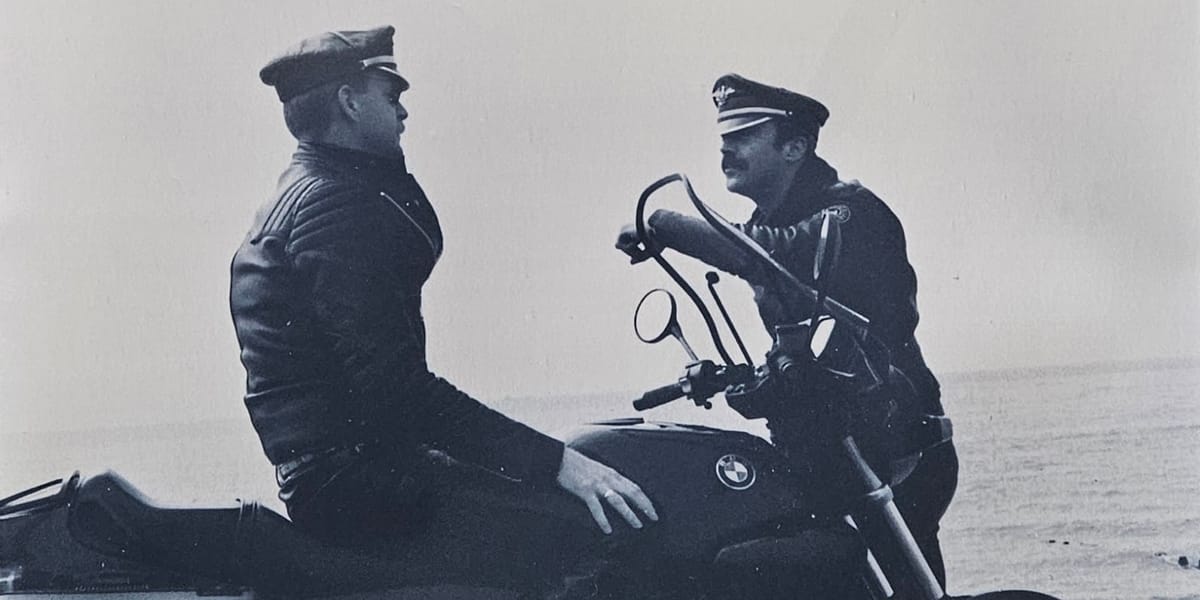
A long‑forgotten plaque connected to Brighton’s historic gay bikers club, the Sussex Lancers, has unexpectedly resurfaced during garden repair works at the Sussex Beacon - and is believed to be the city’s earliest surviving AIDS‑related memorial.
The discovery comes shortly after the opening of Sussex Lancers: Tailor-made Leather Lovers, the new exhibition at Brighton Museum exploring the history of the club, whose archive was largely destroyed around 2016. Hopes that new material might emerge have now been realised in an entirely accidental way.
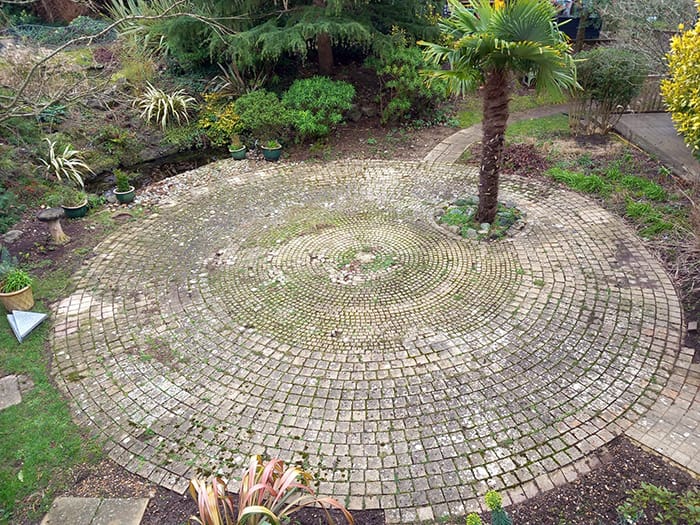
In February, contractors began repairing the paved garden area at the Sussex Beacon - the HIV charity that for more than 30 years has provided vital support and respite care for people living with HIV.
At the centre of the garden stands a handsome trachycarpus fortunei, better known as a windmill palm. Hidden beside it, partly obscured by undergrowth, was a small weathered metal plaque. It was spotted by Alan Spink, Community Services Team Manager at the Beacon, who immediately realised its significance and contacted the exhibition’s curator.
While another plaque on the site marks the official opening of the Beacon by HRH The Duchess of Kent in 1994, this newly rediscovered one predates it by more than a year.
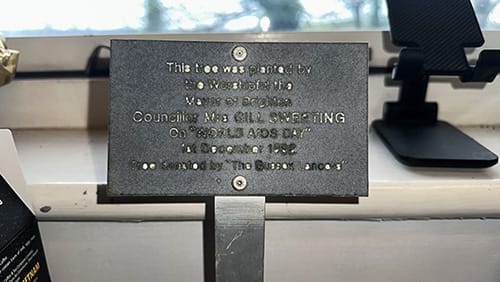
It reads: “This tree was planted by the Worshipful the Mayor of Brighton Councillor Mrs Gill Sweeting on ‘World AIDS Day’ 1st December 1992
Tree donated by ‘The Sussex Lancers’.”
The plaque’s date places it at a critical moment in the local HIV timeline. The first AIDS‑related death in Brighton occurred in 1984. Effective combination therapy would not arrive until 1996. In 1992, stigma and fear surrounding HIV and AIDS remained widespread.
Brighton’s mayor at the time, Councillor Gill Sweeting, is remembered for her compassion and commitment to supporting marginalised communities. Speaking at her memorial service in 2015, Andy Winter, then chief executive of Brighton Housing Trust, said: “The most important thing about Gill was her care and compassion for people on the margins of society”. Her decision to mark World AIDS Day by planting the tree at the Beacon underscores that legacy.
The connection between the palm tree and Brighton’s gay bikers club may seem unlikely at first glance. There is, for the avoidance of doubt, no symbolic link with lanceolate leaves. Instead, the plaque confirms that the tree itself was donated by the Sussex Lancers, whose members were active in local fundraising and community support during the AIDS crisis.
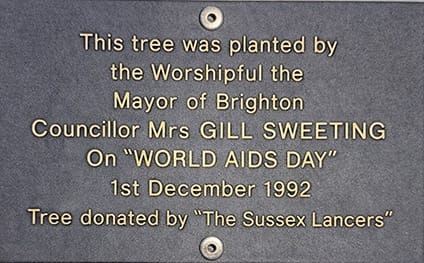
The plaque has endured more than three decades of weathering, leaving the text difficult to read. Attempts to clarify the lettering in Photoshop proved challenging, but an AI enhancement was finally able to reveal the inscription with far greater clarity.
Research into LGBTQ+ monuments and memorials in the city suggests this newly uncovered plaque is likely the earliest AIDS‑related plaque in Brighton - an important fragment of community history that had been quietly waiting to be rediscovered.
The story comes with a final twist of serendipity. The man who spotted the plaque, Alan Spink, not only visited the Sussex Lancers exhibition - he also appears in one of its photographs, astride a motorbike as a member of the club.
His sharp eye has restored an overlooked piece of Brighton’s queer heritage to public memory.
Support independent LGBTQ+ journalism
Scene was founded in Brighton in 1993, at a time when news stories about Pride protests were considered radical. Since then, Scene has remained proudly independent, building a platform for queer voices. Every subscription helps us to report on the stories that matter to LGBTQ+ people across the UK and beyond.
Your support funds our journalists and contributes to Pride Community Foundation’s grant-making and policy work.
Subscribe today


Comments ()