



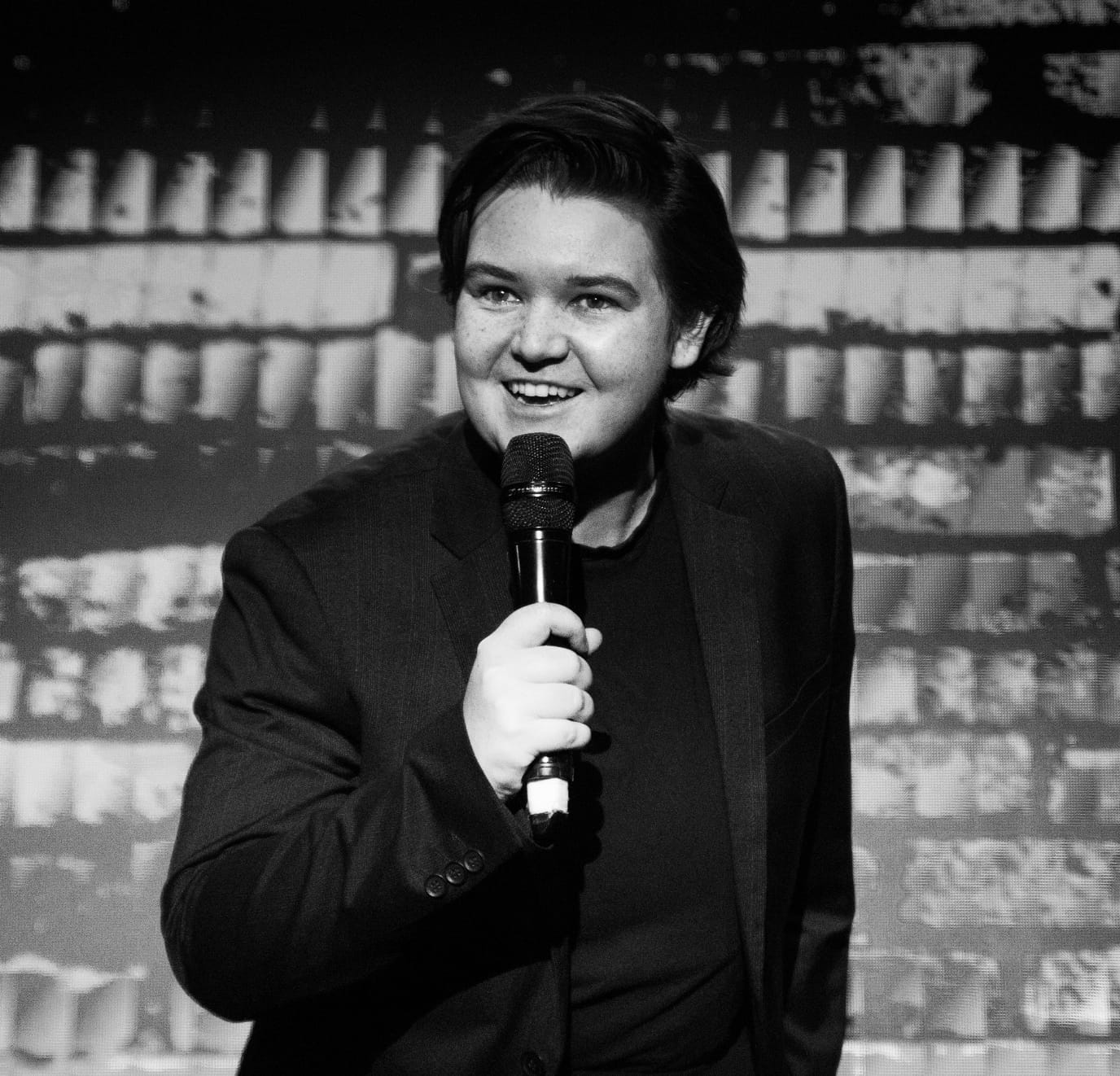
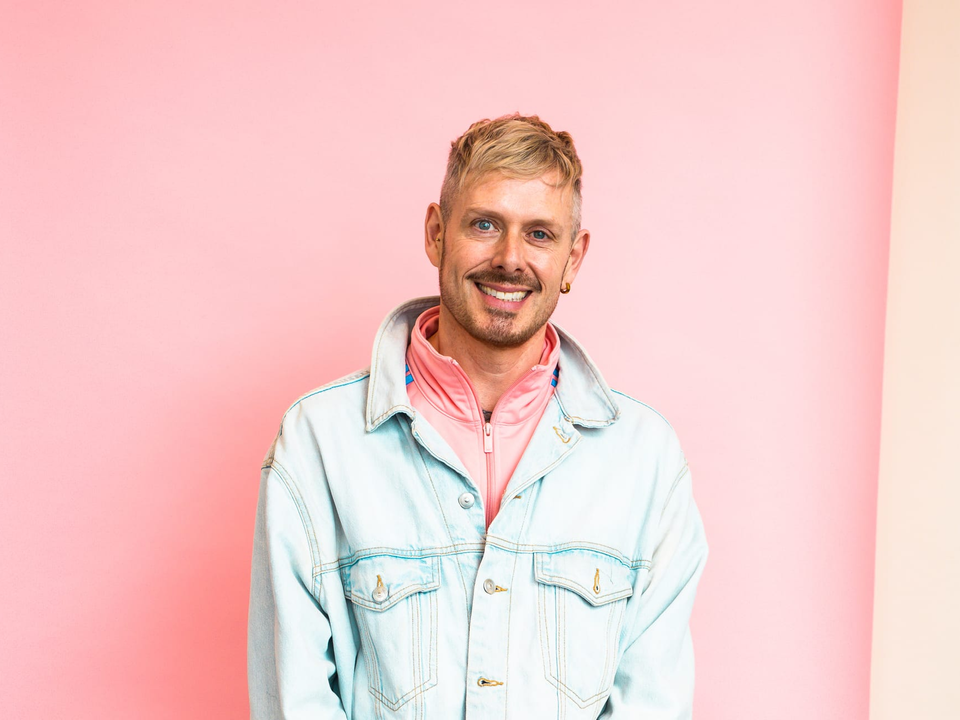
Dian Cathal did not move to Britain because he loves it here. He moved because he cannot eat corn. This is not a metaphor.
Diagnosed in childhood with an autoimmune condition triggered by corn syrup and cornstarch, and told at 18 that he had to leave the United States or get seriously ill, he had a narrow set of options. He had an Irish passport. He spoke English. He wanted to work in entertainment. "It had to be the UK," he says, with the resigned practicality of someone who has made peace with a situation long ago. "That is the only reason I live in this country."
He says it without bitterness. That matter-of-fact quality, a kind of refusal to be precious about things that could easily be turned into tragedy, turns out to be a fairly good summary of his entire approach to comedy.
"Every part of me was up for debate in this country. And it has been, since Brexit."
Cathal is a trans comedian, writer, and performer whose current show, Trans*Atlantic, asks one sharply efficient question: if you are a trans man and a US expat living in Britain, which identity makes you the bigger villain? Reviews Hub awarded it five stars and suggested it should be required viewing for Starmer's cabinet, JK Rowling, and assorted Guardian columnists. He has since personally invited every major political party in every city on the tour. Labour wrote back. Their response, he notes with some delight, was: "We don't hate all Americans."
"Bit of a slip of the tongue there," he says.
Corn, exile, and the comedy of necessity
Before Trans*Atlantic, there was Deadnamed, a show that reframed the trans coming-out experience as a funeral, complete with Cathal emerging from a real coffin in a top hat. The show grew out of time he spent during COVID monitoring transphobic online spaces for a different project: reading them every day, going undercover, absorbing the language that parents used to describe their trans children.
"One woman literally said she wished her child was actually dead, because that would be easier than living with a monster," he says. "They've basically recreated the Irish changeling myth. The idea that my child's been stolen from me." The changeling myth, for those unfamiliar, ends badly for the child. He puts this in the show alongside the origin of the word deadname, which he finds philosophically grating. "Nobody is dead. You changed your name. Past you didn't do anything wrong and doesn't deserve the death penalty."
The show will next be performed at the Wild Stages Festival in Dublin. He flies there directly from Brighton on the morning of 3 May, coffin in luggage. "If you come to the Brighton show," he says, "you'll see me with a coffin in a suitcase."
The refined hatred
Trans*Atlantic works because its central tension is real rather than constructed. British people, Cathal argues, hold a genuine and deep-seated antipathy towards Americans, but they have learned to manage it in the way they manage most things they find distasteful: with wit and plausible deniability.
"It's a refined hatred. It's not sloppy. They know where the line is. They know how not to go too far in the outward hatred, but it's there." He compares it to the way Britain handles racism: insidious, expressible as banter, always distanceable with "it was just a joke."
The show asks which of his two identities attracts more active hostility. His conclusion is not that Britain hates Americans more than trans people, but that the hatred operates differently: the anti-Americanism is absorbed into cultural background noise, while transphobia is codified, debated, and acted upon by governments. "The UK's not making any laws about Americans," he says. "It's only about the trans people."
What the Supreme Court ruling felt like
Cathal was in the stalls of the Diorama Theatre in London, doing final edits on an essay about making trans art in Britain, when the Supreme Court ruling on the definition of woman in the Equality Act came through. The timing was not coincidental in any meaningful sense, but it felt like it was.
"There was just a surreal thing," he says. "It's harder than ever to make art, but it is the most important moment of our lifetimes to do it. If this isn't what we've been training for, what's been the point?"
He connects this to something he believes Brits misunderstand about free speech: that it refers to state suppression, not audience preferences. Donald Trump having CBS pull late-night shows is a free speech violation, he argues. Someone not buying a ticket to your comedy show is not. "This country doesn't have free speech as a right, technically, because there isn't a codified constitution. There's freedom of expression." The distinction matters, and the conflation of the two, he suggests, is partly a product of American cultural soft power arriving without the legal architecture that underpins it.
Comedy as the thing they can't ignore
Cathal is consistently precise about what comedy can and cannot do politically. He is not, he makes clear, here to deliver gender 101. "I'm here to talk about and make room for queer joy. If that isn't enough to get you on board, this isn't for you."
At the same time, he has a serious argument about art as a political force. He uses the example of Marvel and Harry Potter, two enormous intellectual properties that had the leverage to include queer characters in markets hostile to LGBTQ+ people and chose instead to cut those scenes for revenue. The alternative, he argues, is possible: "It is possible to make art so good and so demanded that you will change government policy. People are just unwilling to do it."
He says this without romanticism. He also says that some people will never be changed, and that resources spent trying to change them are wasted. What he would actually do with five minutes in front of the people making decisions on trans rights is, he concludes, probably not much. "The people making the decisions I kind of think of as lost causes at the moment. I'd rather have five minutes with queer people who stand against the trans community." What would he say? "You're next. I don't know why you think they'll stop with us. They never do."
On stage when it isn't working
One of the more unexpectedly practical corners of the conversation involves what he actually does when a room turns. The answer is methodical: check whether everyone bombed that night, or just you. If just you, check the joke, the intonation, the framing. Work out whether the audience misread your intent.
"I've yet to run into a crowd which is just fully transphobic and I say I'm trans and they're out of this." He has performed in places where you would expect more resistance, and his method for bringing those rooms back is telling: start with the bathroom debate jokes, which are ridiculous enough to get anyone. Or deploy what he calls the sex analogy: his comedy is like sex. If you're straight, you'll still enjoy it. It is better if you're queer.
"The straight women in the room get that. They're having bad sex. They're not unaware."
And if none of that works? "I look at the clock and go, well, I've got seven more minutes and I'm getting paid two hundred quid. This is now I'm not an artist. This is the job. I'm here to do my fifteen and then go home.
What's next
After Trans*Atlantic wraps, Cathal is developing Time Bomb: How to Live When You Know You're Getting Cancer, which he describes as being about the history of cancer, society's relationship with illness, and his own family history. Everyone in his family gets cancer, he says. It kills them. He is certain he will too.
"A very uplifting show," he adds, deadpan.
There are also two short films in production, one in Ireland and one in New York. He is not bored.
Trans*Atlantic: spring 2026 tour dates
- Brighton: 2 May, Komedia Studio (Brighton Fringe)
- London: 18 May, Queer Comedy Club
- Cambridge: 29 May, Blue Moon
- Dublin: 4 to 9 May, Wild Stages Festival (Deadnamed)
Scene was founded in Brighton in 1993, at a time when news stories about Pride protests were considered radical.
Since then, Scene has remained proudly independent, building a platform for queer voices. Every subscription helps us to report on the stories that matter to LGBTQ+ people across the UK and beyond.
Your support funds our journalists and contributes to Pride Community Foundation’s grant-making and policy work.


Member discussion