

INTERVIEW: Dan Fulham on queer legacy, inclusivity, and why the future of Musical Theatre must be for everyone
From Noël Coward to Layton Williams-their school on widening access in theatre training and LGBTQ+ legacy

Italia Conti was founded in 1911 by actress and teacher Italia Emily Stella Conti and has been a launching pad for some of the United Kingdom's most iconic performers, many of them LGBTQ+ trailblazers and allies. Italia Conti is a drama school offering courses in acting, musical theatre, and dance. From the legendary wit of Noël Coward to contemporary stars like Layton Williams, the school has long provided a space where queer artists can explore, create, and shine, many of whom have gone on to shape the worlds of theatre, television, film and popular music. With a legacy spanning more than a century, Italia Conti continues to combine professional conservatoire training with a strong commitment to artistic excellence, inclusivity and industry relevance. Its alumni include internationally recognised artists across stage and screen, as well as creative leaders working throughout the global entertainment industry.
In 2026, Italia Conti marks its 115th anniversary while launching the brand new Noël Coward Scholarship, which is basically a major access initiative aimed at removing financial barriers for talented students from all backgrounds! With leadership committed to inclusion, representation and opportunity, the school is shaping the next generation of performers who will continue to transform the British stage and screen! I had a yap with Dan Fulham, the Vice Principal and Director of the School of Musical Theatre and Dance at Italia Conti and discussed how a historic institution both honours its queer legacy and helps build a more accessible future so let's dive in head first!

Wait before we do though, Dan is a trained singer and educator and studied Vocal Studies at the Royal Welsh College of Music and Drama before completing postgraduate training in vocal pedagogy and education. In his role, Dan works closely with students as they transition from training into the professional industry and is committed to widening access to performing arts education and fostering inclusive training environments. As an openly gay leader within the sector, he champions EDI (Equality, Diversity and Inclusion) and representation across all areas of conservatoire training.
DALEYPOP: Hiiii Dan! Firstly I just need to say that I can't get over that Italia Conti has trained LGBTQ+ performers for over a century, that's wild! Why do you personally think performing arts schools have historically been such important and safe spaces for queer artists to grow and express themselves all this time?
DAN FULHAM: Hiya! Well I think it's well known that the performing and creative arts have long had a strong connection to the queer community. The arts allow us to tell stories that reflect identity, challenge social norms and celebrate difference. For many LGBTQ+ people, theatre, music and dance have offered a place where those stories can be explored openly.
Creative spaces have always allowed people to explore identity in ways that might not have felt possible elsewhere.
Performing arts environments have historically acted as places where people can explore gender, sexuality and identity in ways that might not always have been accepted in wider society. When individuals find those spaces, they often discover community as well. People who may have felt isolated in other parts of their lives suddenly find themselves surrounded by others who share similar experiences or values. As a young gay man growing up in South Wales, the spaces and school systems I encountered were not always the most welcoming environments. But I always found acceptance and commonality in performing arts spaces such as youth theatre, music schools and amateur theatre groups.
The theatre community was where I first met other queer people and realised I wasn’t alone.
So it feels like a natural extension that performing arts schools and conservatoires become those same spaces for the next generation. These institutions are not only places where LGBTQ+ students feel safe, they are often places led and shaped by members of that community.
In my role as Vice Principal at Italia Conti, I feel privileged to be an openly gay leader who can put equality, diversity and inclusion at the centre of the work we do. I often think about our students today, but I also think about my younger self.
DALEYPOP: Can you share with our readers more about the new Noël Coward Scholarship?
DAN FULHAM: Of course, the Noël Coward Scholarship honours one of Italia Conti’s most celebrated alumni in our 115th year. Noël Coward studied at the school as a child before becoming one of Britain’s most influential playwrights and performers, so it felt appropriate to celebrate his legacy by supporting the next generation of talent.

Through the scholarship we will offer four full tuition awards for students training across our four principal disciplines: Acting, Dance, Musical Theatre and Acting (Musical Theatre). Talent should be the gateway to training, not financial circumstance. Many students today can access Higher Education training through the Student Loans Company, which has opened doors for people who may not previously have been able to consider conservatoire training. However, the reality of professional performing arts training is that students are often in class for thirty hours a week, alongside rehearsals, independent practice and preparation for projects and performances. That level of intensity makes it extremely difficult to sustain part time work alongside study.
Our students train at a level that mirrors the professional industry. That commitment makes it very difficult to balance with outside employment.
Our aim with initiatives such as the Noël Coward Scholarship is to ensure that talented students are not prevented from training simply because of financial circumstances. When a student is able to focus fully on their training, without constant concern about rent, food or bills, they are able to thrive creatively and academically.
DALEYPOP: Why is access initiatives like the Noël Coward Scholarship so important in 2026?
DAN FULHAM: In 2026 we are having important conversations about who gets to access training and whose stories are told on our stages and screens.
If the pathway into training becomes limited only to those who can afford it, we risk narrowing the voices that shape the future of the industry.
Access initiatives such as the Noël Coward Scholarship help ensure that talent remains the defining factor. The performing arts thrive when there is representation from a wide and inclusive demographic who are able to bring their perspectives into the rehearsal room.
When the training pipeline includes people from underrepresented and marginalised backgrounds, the richer and more representative our stages and screens become.
DALEYPOP: If Noël Coward and Italia Conti, the founder of Italia Conti herself were visiting the school today, what do you think they’d be most excited to see?
DAN FULHAM: I think they would be astonished by how the school has grown and evolved. Today we train actors, dancers and musical theatre performers from across the United Kingdom and beyond, each specialising in disciplines that have developed enormously over the past century.
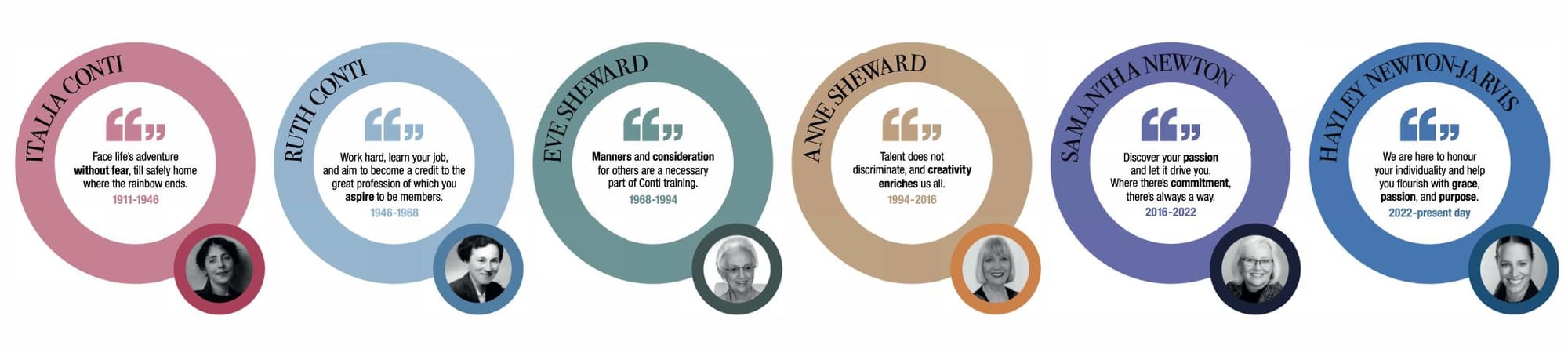
They would see an extraordinary community of young artists working incredibly hard to master their craft. They might also be surprised that performing arts training now exists within a university level academic framework. The idea that students can achieve recognised Higher Education qualifications while pursuing professional artistic training represents a significant step forward for the status of the performing arts as an academic discipline.
Perhaps most strikingly, I think they would recognise the open and inclusive culture of a modern drama school.
Today our students create work that explores contemporary identities and perspectives in ways that simply would not have been possible a century ago. They might also notice small but meaningful signs of progress, such as a Vice Principal openly discussing his upcoming wedding to his male partner without anyone batting an eye.
That quiet normalisation of queer lives within the institution would probably feel like remarkable progress.
DALEYPOP: I love what you're saying about quiet normalisation of queer lives! Do you think increasing access for students from diverse backgrounds strengthen British theatre and screen in the long term and if so, how?
DAN FULHAM: Absolutely. The strength of British theatre and screen has always come from its ability to reflect society and tell stories that resonate with audiences. When the training pipeline includes people from underrepresented and marginalised backgrounds, the stories told on our stages and screens become more authentic. Writers, performers and creators who bring different perspectives into the industry expand the kinds of narratives audiences experience. That in turn keeps theatre and film culturally relevant and creatively vibrant. If we want British theatre and film to continue leading the world creatively, we must ensure the pathway into training remains open to the widest possible range of talent.
DALEYPOP: How does leadership actively foster belonging and inclusion for students across all areas of training, from auditions to rehearsals?
DAN FULHAM: Belonging begins with ensuring students can access the school in ways that feel authentic to them. That can be reflected in very practical ways. For example, our uniform policies are flexible. There are no gender rules about what students must wear in class. If someone wishes to sing a song traditionally performed by a female character, they are encouraged to do so.
Our approach is simple: we want students to bring their whole selves into the room.
In ballet training we do not expect a single standard colour of tights. Students wear tones that match their skin. But inclusion is also cultural. Students should feel confident that they can be open about their gender identity or sexuality with tutors and directors and still be considered for any role during training.
Artistic opportunities should never be limited by outdated assumptions about identity.
We also encourage students to shape the culture of the school themselves through initiatives such as the Equality, Diversity and Inclusion committee.
DALEYPOP: You also have an associate school in Brighton and Hove, right? Can you share with our readers where it’s located and whether they’re welcome to pop in for a tour or a chat or do you have any open days coming up?
DAN FULHAM: Yes, we do. Our Italia Conti Associate School in Brighton and Hove is based at Ralli Hall Studios, 81 Denmark Villas, Hove, BN3 3TH, just a short walk from Hove Station. We welcome everyone from across the community, but rather than informal drop‑ins, we encourage visitors to book a free trial class. It’s the best way to experience the atmosphere, meet the team, and get a real feel for our training environment. We hold special events throughout the year too. For example, themed workshop days and “Bring a Friend” events which offer great opportunities for prospective students to come along and see what we do. Anyone interested in visiting or arranging a trial just needs to contact us by emailing associatesbrightonhove@italiaconti.co.uk or visiting the Italia Conti website (HERE) and we’ll be delighted to help.
DALEYPOP: Italia Conti has trained queer trailblazers like Layton Williams and Noël Coward alongside pop culture icons like Lisa Scott-Lee, Pixie Lott, Louise Redknapp, Alice Chater, Naomi Campbell, Martine McCutcheon and Sharon Osbourne! How important do you think it is for students today to see that diverse talent has always had a place, and a voice, coming out of this school?
DAN FULHAM: It is incredibly important for incoming students to see themselves reflected in the history and culture of the school they are joining. When young performers see people like them succeeding, it sends a powerful message that they belong in this industry.
Layton Williams has been a powerful advocate for LGBTQ+ visibility, and we were enormously proud to see him performing in Strictly Come Dancing’s first all male partnership.That moment placed inclusion right at the centre of prime time television.
Representation works in many directions. We also see figures such as Derek Hough inspiring young men to pursue dance, challenging stereotypes that still exist in some communities. Role models matter enormously for young people who are just beginning their journey.
DALEYPOP: Looking ahead, what role do you hope Italia Conti will play in shaping the next generation of queer performers and creatives?
DAN FULHAM: Our responsibility is to ensure that the next generation of artists are trained in environments where they feel confident telling their own stories. We want our graduates to feel empowered to shape the future of the industry, not simply fit into it. As queer narratives continue to gain visibility across theatre, television and film, institutions such as Italia Conti must remain spaces where those voices are supported and celebrated.
The next century of the school will be about nurturing artists who continue pushing for equality, representation and creative freedom.
DALEYPOP: Last question! If you could sum up the school’s mission for LGBTQ+ students in just one sentence, what would it be?
DAN FULHAM: For this response we need only turn to the mission statement that guides the school every day. Italia Conti’s mission is to empower passionate individuals to excel in the performing and creative arts by fostering an inclusive environment that provides the necessary skills, confidence and training to shape their futures. Quite simply, we want every student who walks through our doors to feel that they belong, and that their voice matters.
Support independent LGBTQ+ journalism
Scene was founded in Brighton in 1993, at a time when news stories about Pride protests were considered radical. Since then, Scene has remained proudly independent, building a platform for queer voices. Every subscription helps us to report on the stories that matter to LGBTQ+ people across the UK and beyond.
Your support funds our journalists and contributes to Pride Community Foundation’s grant-making and policy work.
Subscribe today
Comments ()