Helmut Metzner on memory, visibility and the fragility of progress
“We are not here to preserve ashes. We are here to keep the fire alive.” Helmut Metzner reflects on memory, visibility and why progress on LGBTQ+ rights is never guaranteed, but must be defended again and again.

When Helmut Metzner speaks about LGBTQ+ rights, he does so with the calm assurance of someone who has seen history bend in both directions.
As Chair of the Magnus Hirschfeld Federal Foundation in Berlin, Metzner occupies a role that sits at the intersection of memory, education and politics. The foundation was established in 2011 by decision of the German Bundestag, partly as an act of historical repair: a response to the systematic destruction of queer life, knowledge and infrastructure under National Socialism. But Metzner is clear that the foundation is not a backward-looking institution.
“We are not here to preserve ashes,” he says. “We are here to keep the fire alive.
Rebuilding what was destroyed
The Magnus Hirschfeld Federal Foundation works across several levels. One of its central pillars is archival and memory work. Over the past years, the foundation has conducted more than 100 in-depth interviews with queer people born before 1965, resulting in over 360 hours of recorded testimony. These interviews document lived experiences across decades of repression, reform and social change, offering future generations a detailed record of queer life in Germany.
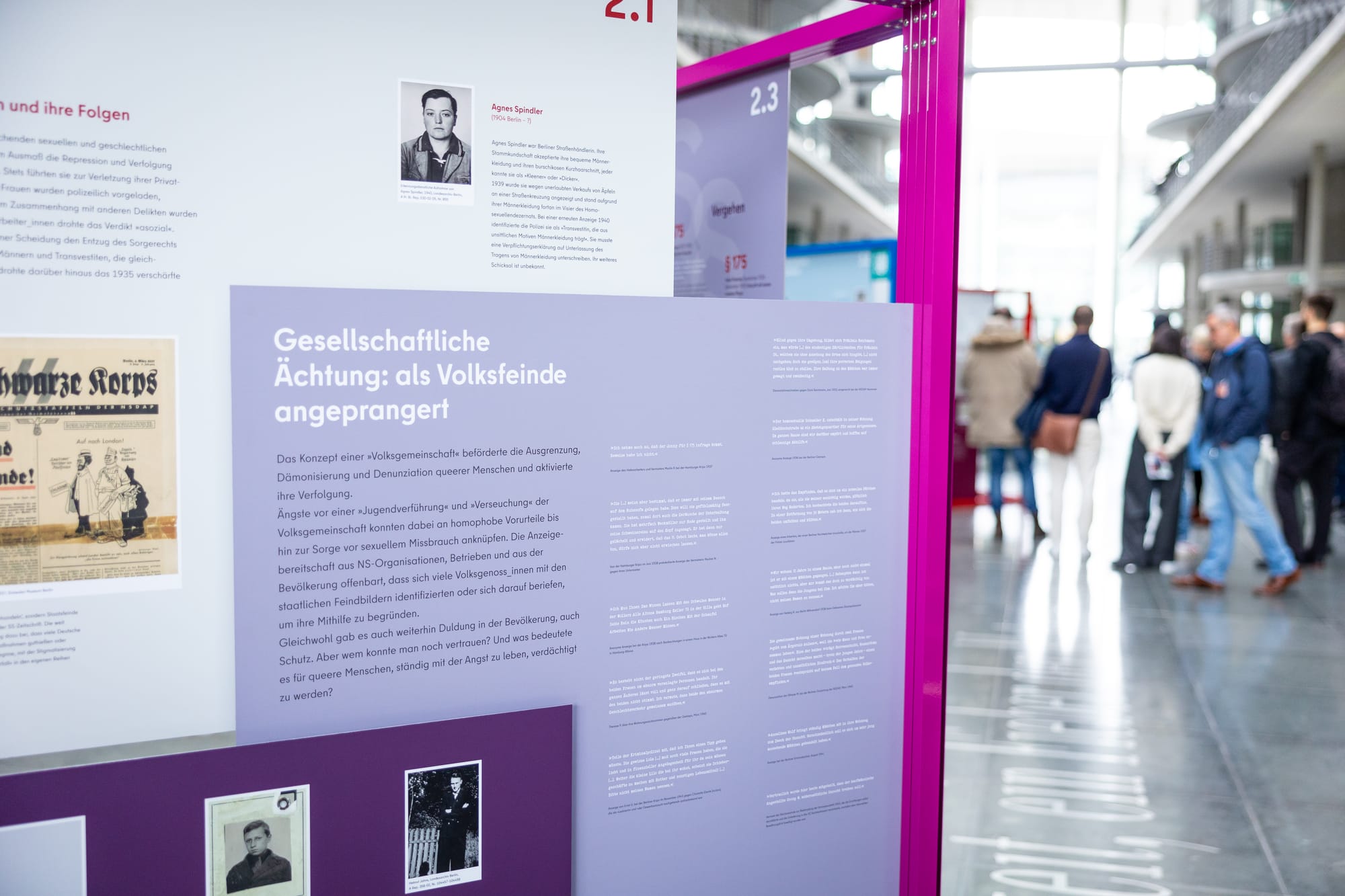
Another major strand of the foundation’s work is public education. Its touring exhibition “endangered living. Queer people 1933 – 1945” has travelled to more than twenty locations across Germany in just three years, reaching audiences in nearly every federal state. The exhibition traces the brutal persecution of queer people under National Socialism, while also asking a contemporary question: how secure is progress, really?
For Metzner, that question is not abstract. “History shows us how quickly things can turn,” he says. “In 1929, Germany was close to decriminalising male homosexuality. By 1935, repression had intensified dramatically. That distance between progress and collapse can be frighteningly short.”
Support independent LGBTQ+ journalism
Scene was founded in Brighton in 1993, at a time when news stories about Pride protests were considered radical. Since then, Scene has remained proudly independent, building a platform for queer voices. Every subscription helps us to report on the stories that matter to LGBTQ+ people across the UK and beyond.
Your support funds our journalists and contributes to Pride Community Foundation’s grant-making and policy work.
Subscribe today