

Amnesty intervenes in Supreme Court case on legal protections for trans people
Amnesty International UK has published its third-party intervention in the Supreme Court appeal of the case of For Women Scotland v Scottish Ministers, which will be heard on 26/27 November, with a judgment at a later date. The Supreme Court is called to answer the question of whether a person with
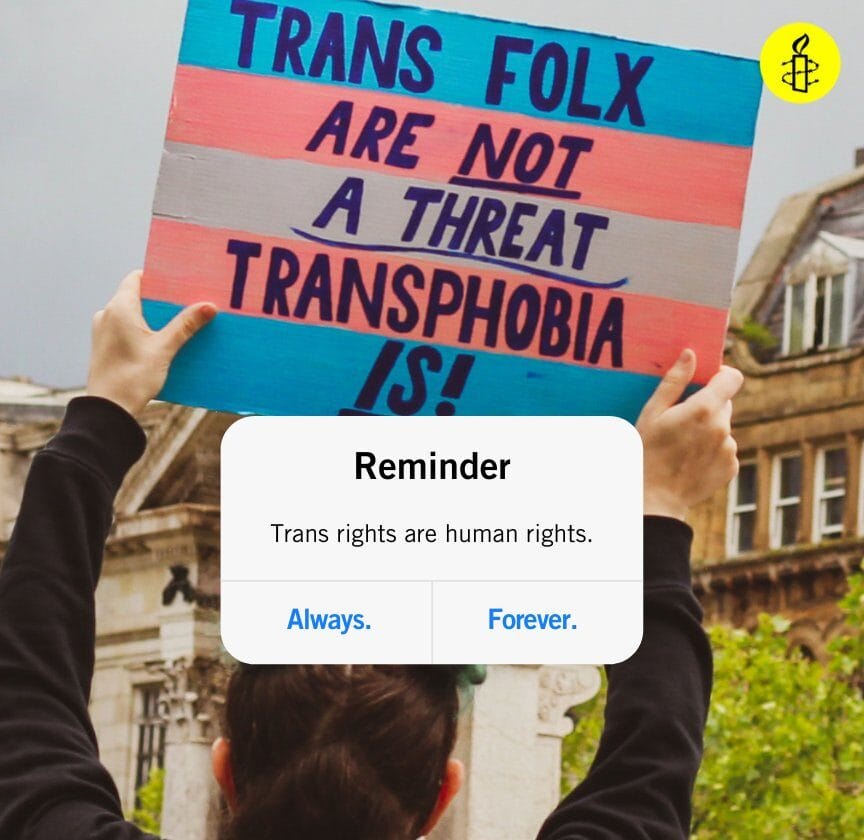
Amnesty International UK has published its third-party intervention in the Supreme Court appeal of the case of For Women Scotland v Scottish Ministers, which will be heard on 26/27 November, with a judgment at a later date.
The Supreme Court is called to answer the question of whether a person with a Gender Recognition Certificate that recognises her gender as female, is a woman for the purposes of the Equality Act and the protections against sex discrimination that the Act provides. The decision will address whether existing legislation which has been understood in this manner for many years should still be understood in this way.
Amnesty, which is increasingly concerned about the deterioration of rights and the quality of life for trans people in the UK and abroad, has intervened in this case to set out why legal gender recognition is a human rights issue and why existing protections are right and necessary.
An Amnesty spokesperson said: “Too many media outlets, politicians across parties and online commentators, continue to spend an eye-watering amount of time berating trans people – who make up just 1% of the population – and spreading dangerous misinformation.
“In many countries, groups that want to limit the autonomy of women and LGBTQ+ people are bringing legal challenges to erode human rights protections. Whether it is the right to legal gender recognition, the recognition of LGBTQ+ families or the right to access healthcare and abortion services the arguments tend to be very similar. This is one of those cases. While we fight to advance human rights, we need to be alert and ready to preserve what we have.
“Legal gender recognition as it works now is essential for trans people to enjoy the full spectrum of human rights each of us is entitled to, and live free from fear of discrimination.
“Regardless of what we look like, where we come from or how we express our gender identities, human rights apply to everyone, and we all deserve to be treated with dignity and respect.”
Support independent LGBTQ+ journalism
Scene was founded in Brighton in 1993, at a time when news stories about Pride protests were considered radical. Since then, Scene has remained proudly independent, building a platform for queer voices. Every subscription helps us to report on the stories that matter to LGBTQ+ people across the UK and beyond.
Your support funds our journalists and contributes to Pride Community Foundation’s grant-making and policy work.
Subscribe today


Comments ()