

US travel ban will affect LGBT+ people
The US Supreme Court has upheld President Donald Trump’s travel ban which in the name of national security and ‘counter-terrorism,’ strictly limits travel to the USA from five majority Muslim nations as well as North Korea and Venezuela.
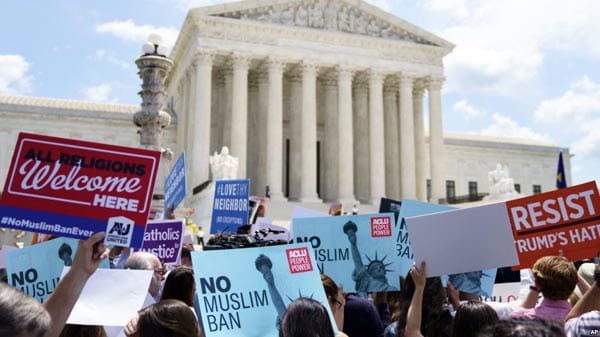
LGBT+ people will suffer from US Supreme Court’s decision to uphold travel ban.
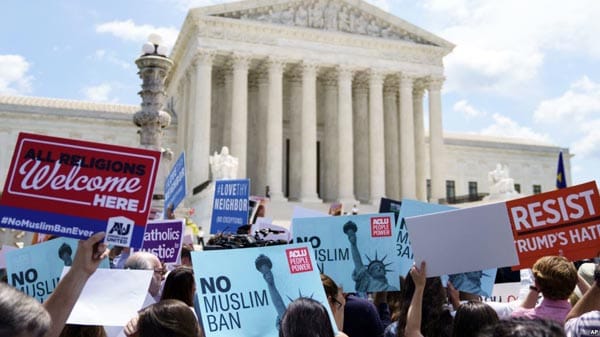
THE US Supreme Court has upheld President Donald Trump’s travel ban which in the name of national security and ‘counter-terrorism,’ strictly limits travel to the USA from five majority Muslim nations as well as North Korea and Venezuela.
The restricted majority-Muslim nations involved are Syria, Libya, Iran, Yemen, and Somalia. Although the ban has been contested on the grounds of religious discrimination, the US Supreme Court yesterday (June 27) ruled that such a decree, on the basis of national security, is within the President’s authority.
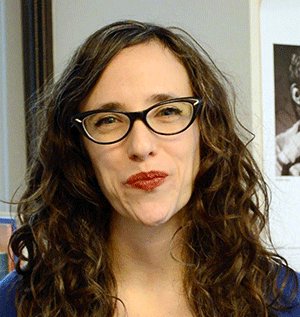
Commenting on the ban, Jessica Stern, Executive Director, OutRight Action International, the International LGBT Human Rights organisation, said: “It is deeply distressing that the Supreme Court has voted to uphold this ban that institutionalises xenophobia under the guise of ‘national security.’ As much as Judge Kennedy claims the ban is “neutral on its face,” we all know it is meant to target a specific group – Muslims.
Anyone seeking refuge from violence and persecution, including LGBT+ individuals who face criminalisation in five of the countries on the list, now has one more door closed in their face.”
Support independent LGBTQ+ journalism
Scene was founded in Brighton in 1993, at a time when news stories about Pride protests were considered radical. Since then, Scene has remained proudly independent, building a platform for queer voices. Every subscription helps us to report on the stories that matter to LGBTQ+ people across the UK and beyond.
Your support funds our journalists and contributes to Pride Community Foundation’s grant-making and policy work.
Subscribe today
Comments ()