

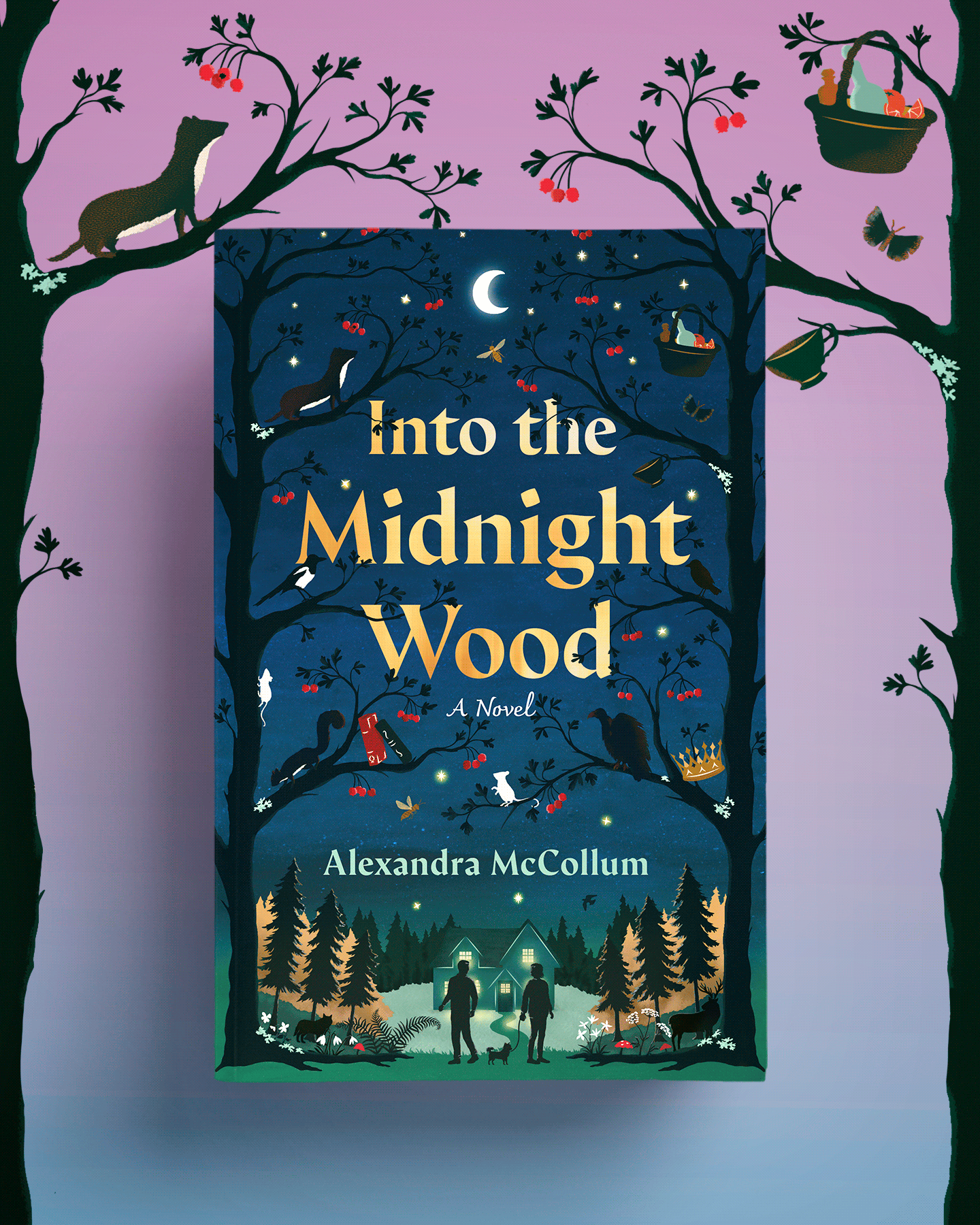
REVIEW: ‘The Midnight Wood’ by Alexandra McCollum
This is a story about love as both wound and remedy, about shattering the categories that make us legible but small. In slow-burning recognition, we find something radical: two queer people learning the real magic is in the terrifying act of being fully seen.
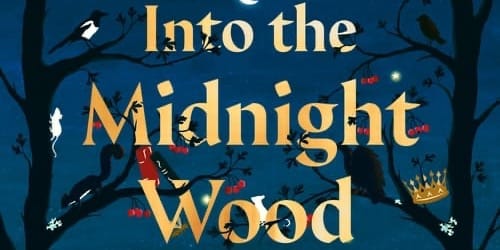
There's something distinctly queer about living at the edge of things - perched between the known and the unknowable, the mundane and the marvellous. The Midnight Wood understands how queerness itself is a kind of magic: unruly, inexplicable, and perpetually misunderstood by those who demand legible categories.
At Midnight Cottage, in an Ohio that feels dreamlike enough to be Britain, David Carew and Meredith Schwarzwelder share a cottage at the edge of the woods and inhabit that quintessentially queer precipice. David - Welsh, precise, an accountant who catalogues grievances obsessively. Meredith - nonbinary, a tattoo artist who wears eccentricity like armour. After five years together, David must choose: flee to safety, or risk everything by staying.
Author McCollum refuses the binary between realism and enchantment. David attends his ordinary job, meets with tentacled estate agents mentioned so casually you'll question your own reading. The magical infrastructure operates without explanation, much like queerness itself in a heteronormative world. Mrs. Jupiter, a witch of considerable charm, brings spellwork and humour, embodying that queer joy that insists on wonder even when the world offers cruelty.
But this is primarily an excavation of the heart, told through David's consciousness as it slowly cracks open. His interior monologue - judgmental, defensive, desperately attracted - reveals the architecture of internalised shame. Their journey toward found family, contrasted against the violence of biological family, traces that essential queer narrative arc: from rejection to self-creation to chosen kinship.
David's transformation from contempt to understanding to desire charts not just romantic development but a political awakening to how we internalise society's cruelty and redirect it at those most like ourselves. The novel confronts homophobia and family violence head-on, understanding that healing requires witnessing harm first.

The central romance operates in the register of yearning queer literature does best. David's hundred-item catalogue of Meredith's flaws reads like a love letter from someone who doesn't yet have permission to love. Meredith becomes a mirror for queer recognition - what the world calls "too much" is often exactly enough. Their journey from biological family violence to chosen kinship traces that essential queer arc: rejection to self-creation to belonging.
The fantastical elements don't always integrate fully with explorations of trauma and connection - sometimes the magic feels ornamental. But perhaps that's the point: queerness means inhabiting multiple states simultaneously, never resolving into a single coherent frequency.
This is a story about love as both wound and remedy, about shattering the categories that make us legible but small. In David and Meredith's slow-burning recognition, we find something radical: two queer people learning the real magic was never in the forest, but in the terrifying act of being fully seen. Alexandra McCollum gives us a charming novel, which although not perfect is certainly good enough to please.
Out today, hardback, £18.99
For more info or to order a copy see the publishers website here:
Support independent LGBTQ+ journalism
Scene was founded in Brighton in 1993, at a time when news stories about Pride protests were considered radical. Since then, Scene has remained proudly independent, building a platform for queer voices. Every subscription helps us to report on the stories that matter to LGBTQ+ people across the UK and beyond.
Your support funds our journalists and contributes to Pride Community Foundation’s grant-making and policy work.
Subscribe today

Comments ()