

REVIEW: 'Night Stage' (2025)
This Brazilian thriller from writers and directors Marcio Reolon and Filipe Matzembacher is confident, stylish, and very sexy. But it also has some issues that are hard to ignore.
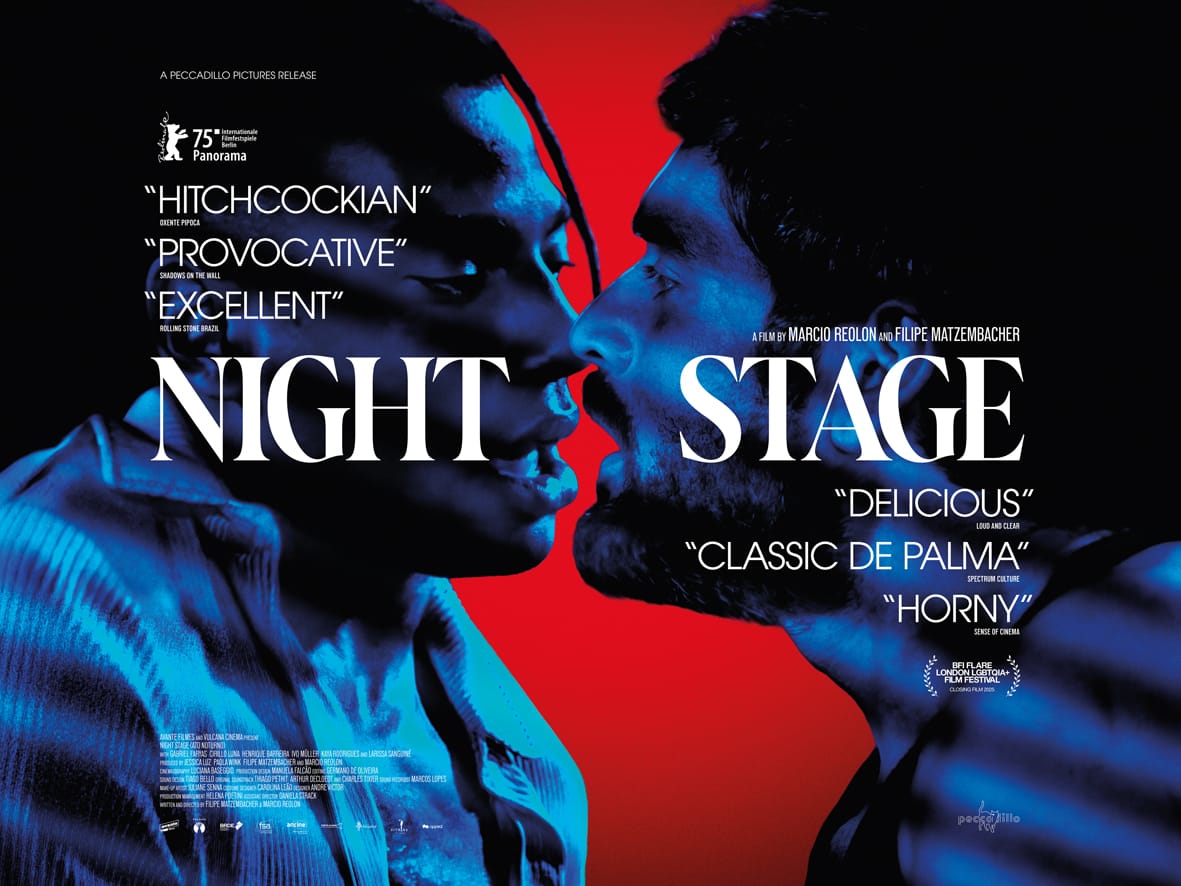
Hello cinema lovers. Night Stage came into BFI Flare 2025 with a lot of expectation riding on it. It closed out that festival, which suggests the programmers saw something special. This Brazilian thriller from writers and directors Marcio Reolon and Filipe Matzembacher is confident, stylish, and very sexy. But it also has some issues that are hard to ignore.

Matias (Gabriel Faryas) is a dancer and actor at a small theatre. He's ambitious and beautiful, but also naive and not that easy to root for. When his sexy colleague Fabio (Henrique Barreira) lands an audition for a high-profile TV show, Matias lets envy take over. Thus begins a scheme to get his own shot at the part. Meanwhile, a new man enters his life, Rafael (Cirillo Luna). Rafeal is guarded and secretive. A one-night stand between them slowly turns into something deeper and more complicated.
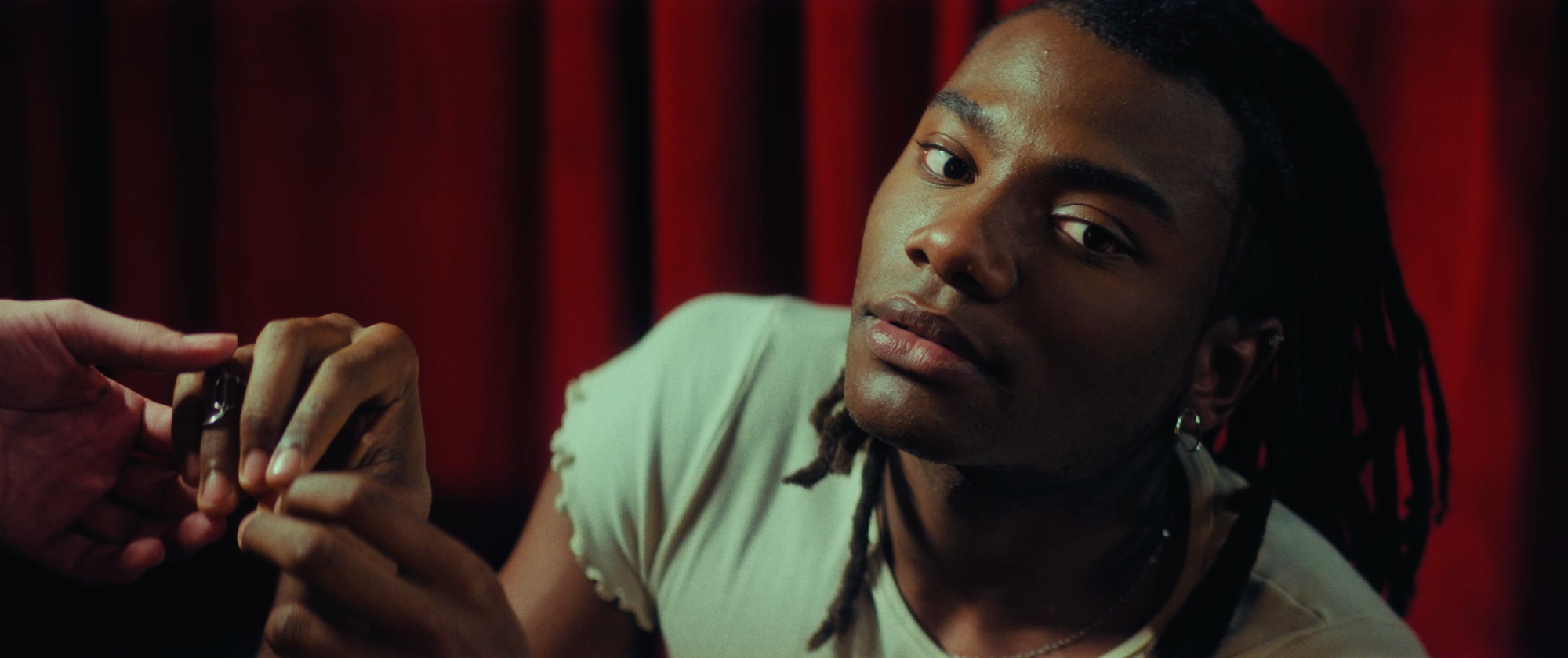
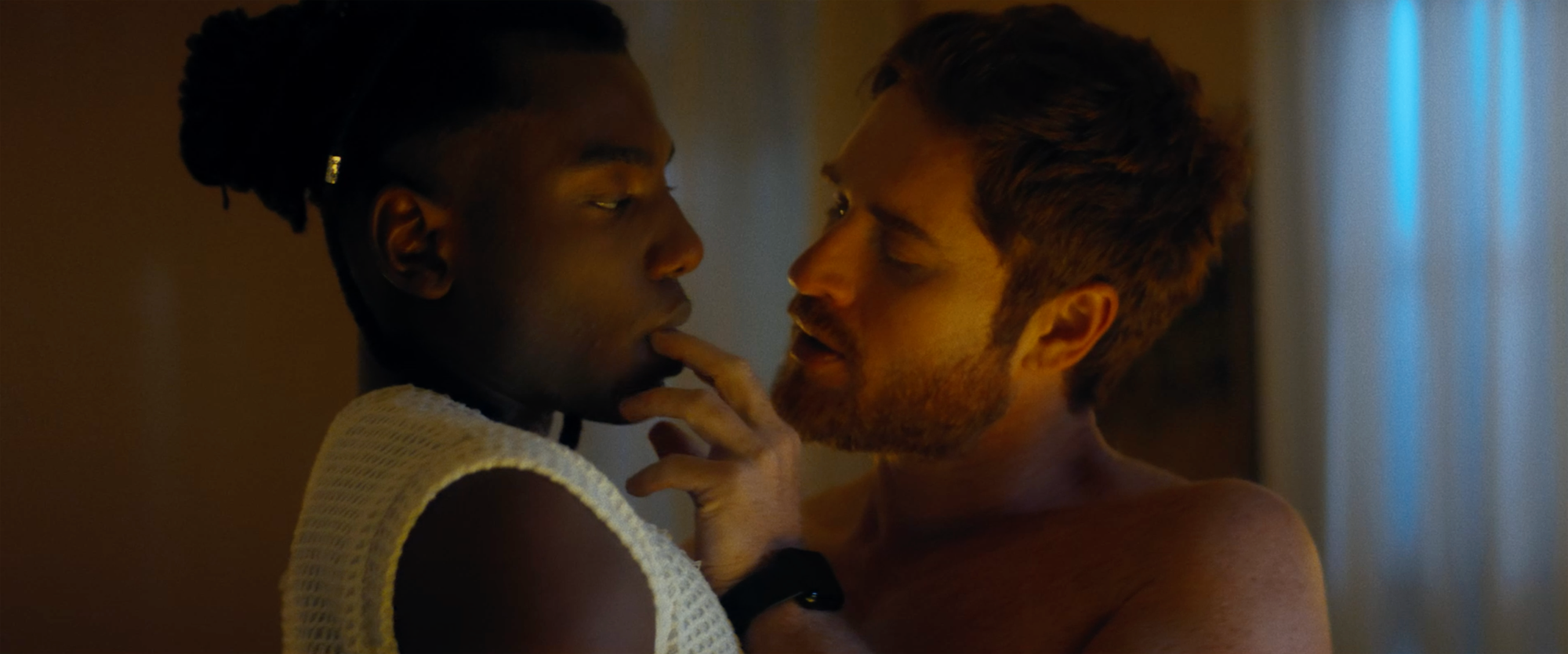
The chemistry between Faryas and Luna is the film's secret weapon and the main reason to watch it. Rafael is restrained and experienced. Matias is impulsive and in over his head. A shared kink for public sex develops between them, and to the film's credit, it tries to frame this as the product of repression rather than something the main characters get off on. The trouble is the script doesn't fully develop it, so it remains a clever idea rather than something you actually feel.
Visually, the directors Reolon and Matzembacher are working hard. The film is shot in reds and shadows, borrowing liberally from Dario Argento's giallo style, particularly Suspiria and Deep Red. The look is polished and moody. The theatre sequences are nicely shot. There are several hot sex scenes in the park with handsome men romping away, which is executed wonderfully. However, Night Stage leans on its strong visuals to cover for a lot of narrative gaps elsewhere.

The script is where this film struggles a little. A blackmail subplot feels tacked on. The friendship between Matias and Fabio is unconvincing and needs more depth. Rafael's politics are mentioned but not given enough screentime, which lowers the story's stakes. Several characters feel like they exist on screen but are too underdefined. This causes key scenes to lose their impact, which is frustrating
The sex scenes are a mixed bag. Some of the earlier ones are handled with a degree of care and are very erotic. But later in the film, the tone shifts in a way that feels reckless, possibly deliberately. Scenes that are presumably meant to feel dangerous or exciting tip into something closer to comedy. The final act asks the characters to make choices that beggar belief, and the film doesn't do enough work beforehand to make those choices seem logical.

Night Stage is similar in theme to movies like Babygirl (2024) and Stranger by the Lake (2013). Those films earn their tension by letting desire build slowly and taking the audience with them through every decision. Here, boundaries drop quickly and without much thought. The film moves fast where it should take its time, and the result is that nothing lands with the force it should.
There are things worth watching here. Honest depictions of gay sex in mainstream cinema remain scarce, and this film doesn't shy away from that. It also avoids the trap of making its story a cautionary tale. Faryas, in particular, gives his character some depth with limited available material. He knows exactly what he's doing, and that counts for something.
Night Stage is flawed, and that's really frustrating. But it's also bold, confident, and tries hard to engage its audience. Definitely worth seeing, but temper your expectations slightly. Another quality release from the good folks at Pecadillo Pictures.
Night Stage is available in cinemas and and on demand from 11 May 2026
Support independent LGBTQ+ journalism
Scene was founded in Brighton in 1993, at a time when news stories about Pride protests were considered radical. Since then, Scene has remained proudly independent, building a platform for queer voices. Every subscription helps us to report on the stories that matter to LGBTQ+ people across the UK and beyond.
Your support funds our journalists and contributes to Pride Community Foundation’s grant-making and policy work.
Subscribe today


Comments ()