

REVIEW: 'Death on the Nile' at Theatre Royal Brighton
Death on the Nile is imperfect but richly staged & enjoyable. It offers spectacle and intimacy in equal measure and remains a rewarding voyage into Christie’s world, even when the river runs a little too fast.
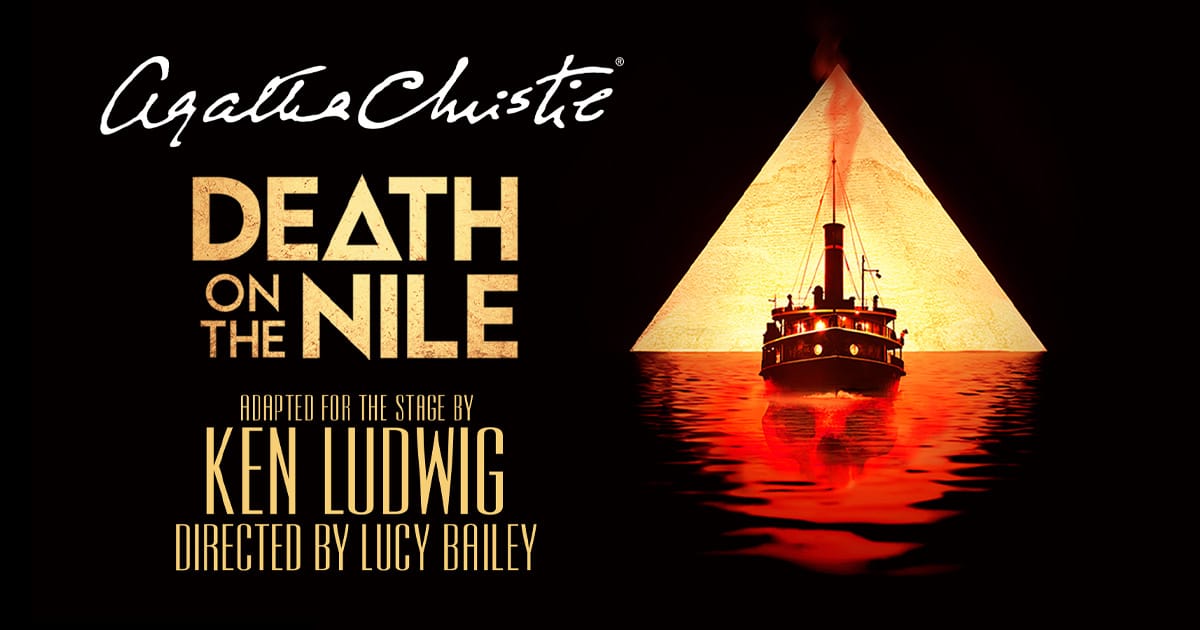
Lucy Bailey’s Death on the Nile begins with a flourish: a newly created British Museum prologue in which the ensemble is introduced amid artefacts and fragments of antiquity. Delivered with a level of historical detail and soft grandeur that immediately places the audience in Christie’s world of privilege and hints at the mythology and desire that shape the story.
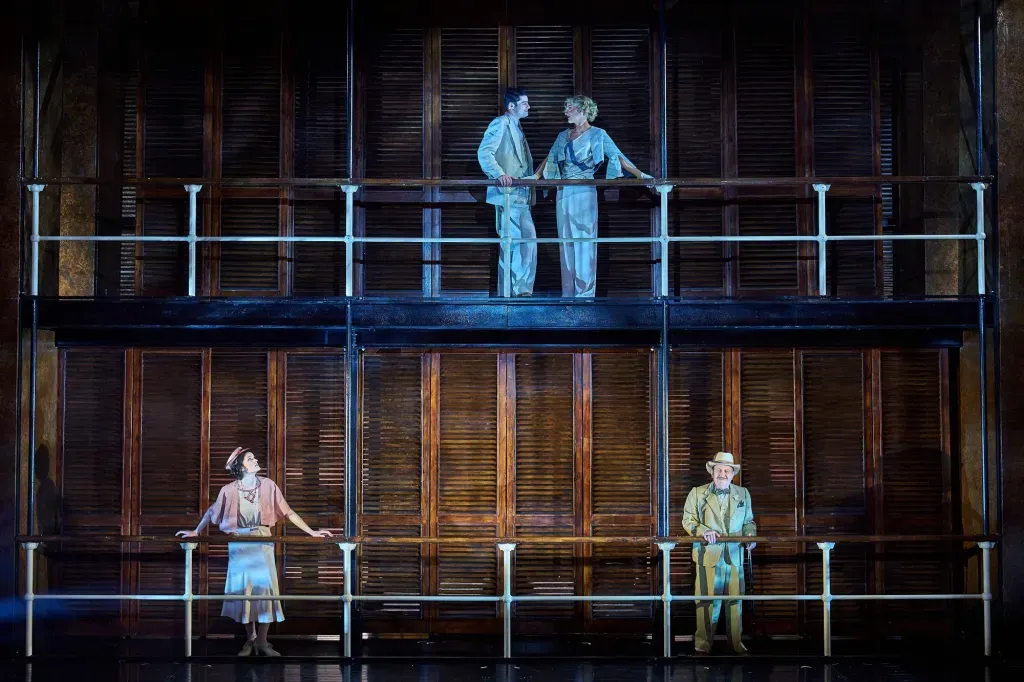
Once aboard the paddle steamer, the production’s visual ambition takes over. Sliding wooden panels reveal shadowed interiors, the deck glows with rippling light that evokes the Nile at dusk, and the costumes present a parade of glamour. The set’s upper tier can be difficult to view from the front rows, yet the overall effect remains striking and immersive.
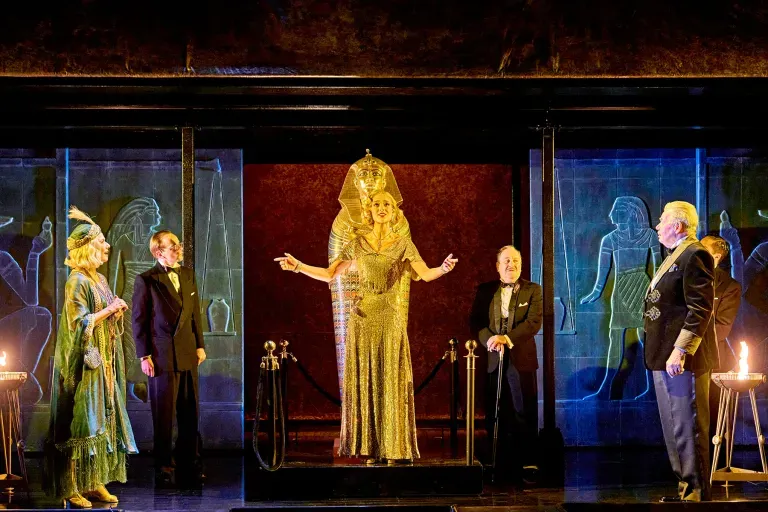
A new subplot involves an ancient sarcophagus from Pharoah Amun-Re transported alongside the passengers. It contributes an extra shiver of unease and culminates in a dramatically staged moment when a character becomes trapped inside it, prompting a wave of gasps and gleeful horror from the audience.
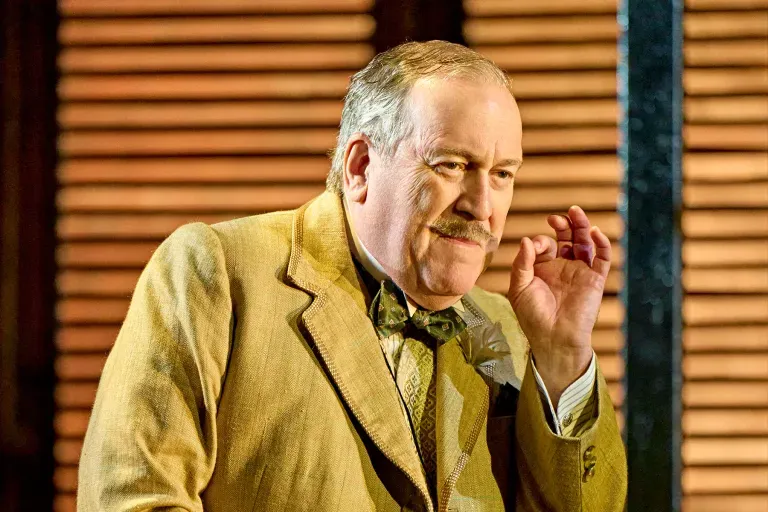
Mark Hadfield’s Poirot stands at the centre with gentle humour and a lightly self‑mocking charm. His accent wanders amiably, but his presence is steady and warmly received. Compared with the clipped formality of Suchet or the broader comedic interpretations seen in past touring adaptations, this Poirot feels distinctly personable. His meticulous presentation and quietly guarded emotional life also continue to invite queer readings of the character, and many LGBTQ audience members will recognise the subtle self fashioning he performs in every gesture.
The emotional core of the piece remains the knot of affection, obsession and envy binding Linnet, Simon and Jacqui. Their spiralling conflict touches on themes of the ache of unreciprocated desire, the volatility of hidden longing and the messy tangle of relationships where love and hurt overlap. This adaptation foregrounds those tensions with a clarity that gives the familiar plot renewed resonance.
This production is not without surprising structural choices. Poirot’s actual investigation passes with remarkable haste. After the initial murder, he barely spends a scene and a half examining clues before convening the suspects for his big reveal, and that's treated with a knowing wink and tongue in cheek humour which diminishes the dramatic tension. The speed is startling, the effect is that most of the genuine dramatic weight is pushed into the second half, leaving little time for the mystery to breathe.
Even so, the production’s technical design is strong. Lighting casts elegant shadows, the soundscape hums with a sense of encroaching danger and scene changes unfurl with near musical precision. The result is a visually sumptuous evening that holds attention even when the pacing compresses the narrative.
Full cast and creative on the UK tour site.
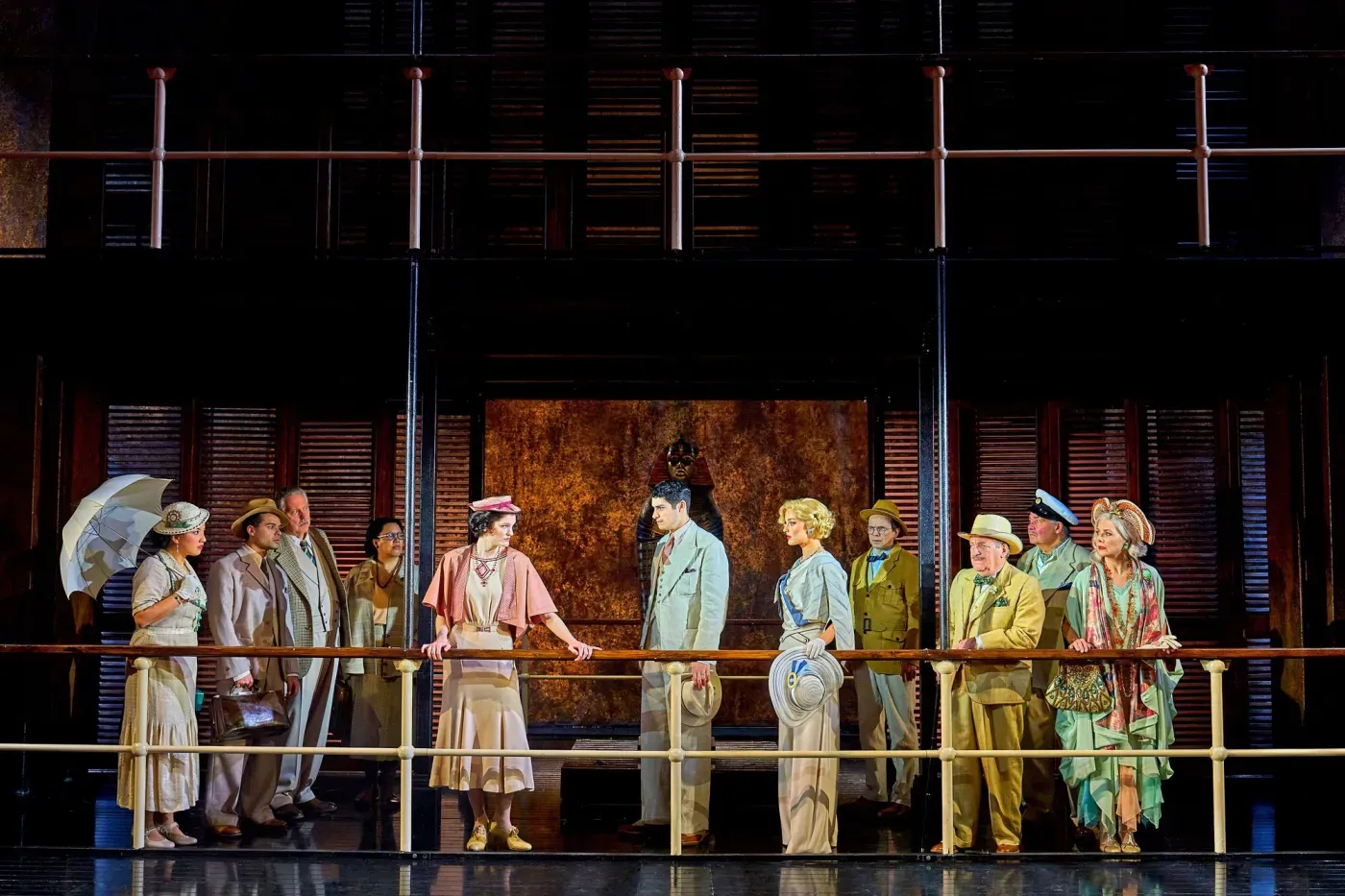
For queer audiences, the appeal lies not only in the glamour and melodrama but also in the story’s deeper preoccupations with identity, desire and the masks people must wear to survive their surroundings. The audience felt that undercurrent and embraced the production’s beauty, energy and theatrical boldness, responding with warmth from beginning to end.
This Death on the Nile is imperfect but richly staged, emotionally charged and undeniably enjoyable. It offers spectacle and intimacy in equal measure and remains a rewarding voyage into Christie’s world, even when the river runs a little too fast.
Until Saturday, for more info or to book tickets see the Theatre Royal website here
Support independent LGBTQ+ journalism
Scene was founded in Brighton in 1993, at a time when news stories about Pride protests were considered radical. Since then, Scene has remained proudly independent, building a platform for queer voices. Every subscription helps us to report on the stories that matter to LGBTQ+ people across the UK and beyond.
Your support funds our journalists and contributes to Pride Community Foundation’s grant-making and policy work.
Subscribe today
Comments ()