

REVIEW: Beautiful Thing - 30 Years On
In 1996, a film about two teenage boys falling in love on a South London council estate felt radical, now, what strikes you most is how little it talks down to its audience and how much it still holds up.
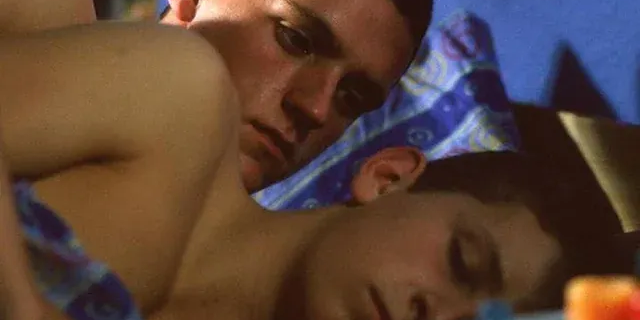
Hello cinema lovers, this is the first in my regular series of queer cinema reviews highlighting classic films that deserve rediscovery or introduced to a new audience. In 1996, a film about two teenage boys falling in love on a South London council estate felt radical. Watching it now, what strikes most is how little it talks down to its audience and how much it still holds up.
Based on Jonathan Harvey’s own stage play and shot on location in Thamesmead - a brutalist housing estate in southeast London - Beautiful Thing earns points immediately for not romanticising its setting. The architecture is filmed with affection. These are real flats, real balconies, real underpasses. The film knows where it lives and doesn’t apologise for it.
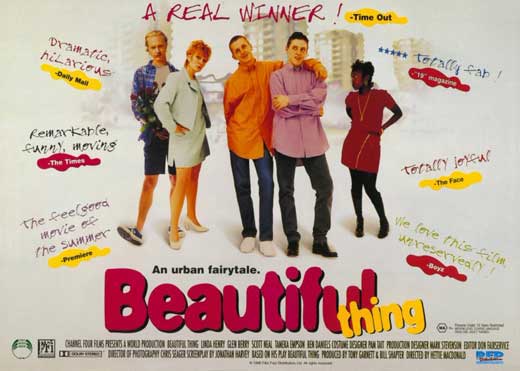
Jamie (Glen Berry) is a quiet, sensitive teenager who skips football and watches old movies. His mum, Sandra (Linda Henry), works at a local pub, is sharp-tongued, funny, and fiercely protective. Next door lives Steve (Scott Neal), Jamie’s classmate, whose home life is a different story; a violent father and brother make his flat a living hell. When Sandra takes Steve in after finding him outside crying in the dark, he and Jamie share a bed, and what begins there is the centre of the film.
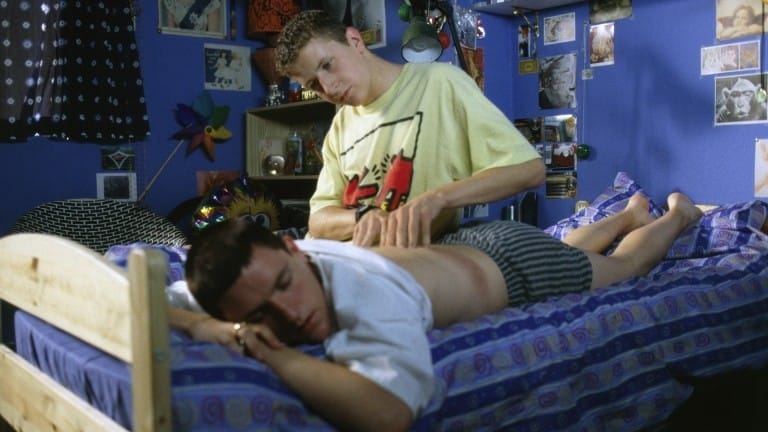
Harvey, who also wrote the screenplay, has the rare ability to write gay teenagers as full human beings rather than cautionary tales. Jamie and Steve's relationship develops slowly and honestly. There’s a back rub. There’s a tentative question. There’s real tenderness in how the camera treats them. For 1996, this was significant. For any year, it’s well done.
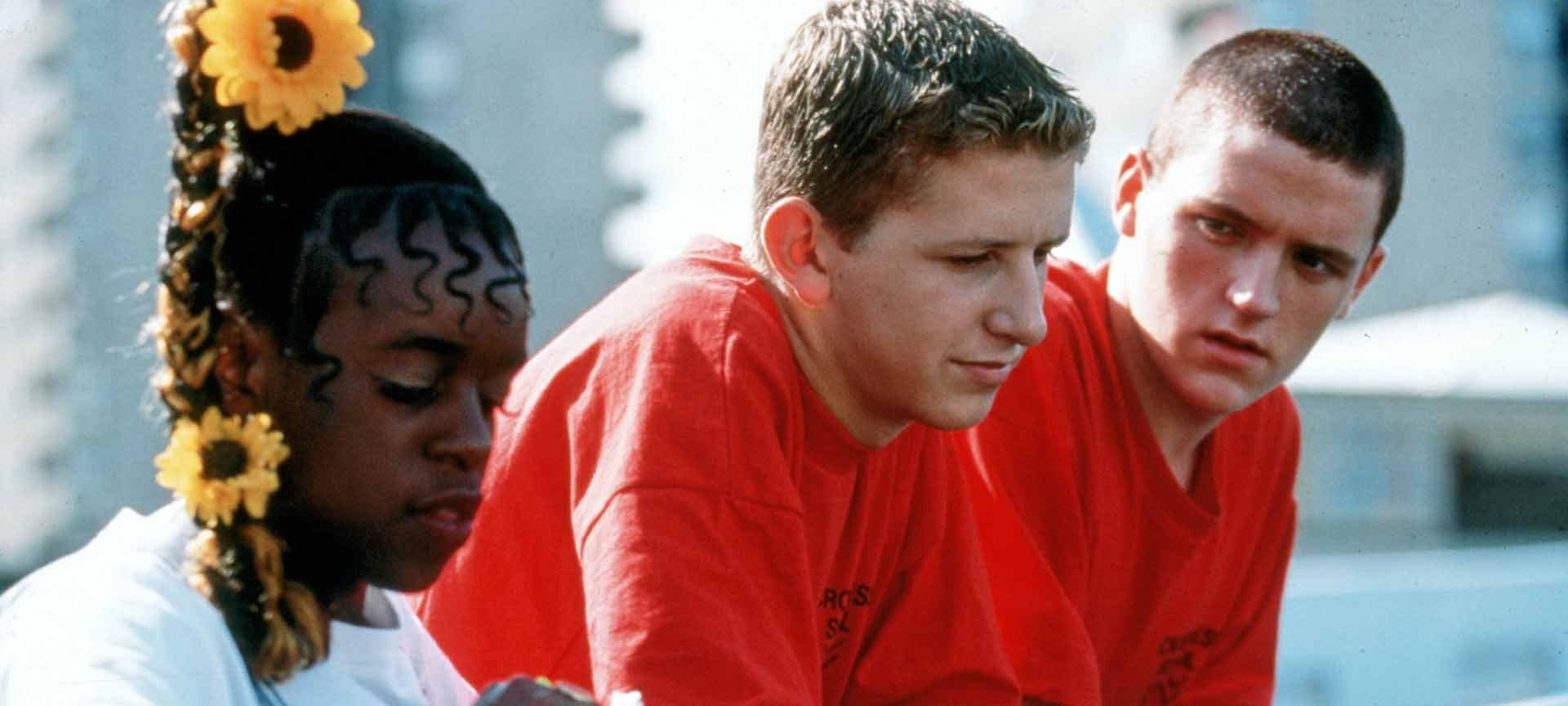
The supporting cast earns its keep. Leah (Tameka Empson), the Mama Cass-obsessed neighbour who knows everything about everyone, is the film’s funny bone and occasionally its touchstone. She’s messy, funny, and brighter than she first appears. Sandra’s boyfriend Tony (Ben Daniels) is decent and easy-going, a free spirit who slots into her life without trying to change it.
And there’s a Dave Lynn performance in a gay bar scene that remains genuinely joyful. Brighton-based Lynn, a cabaret drag legend, lights up the screen and gives the audience a moment of pure comedy. I’ve never watched a chicken sauce advert since then without thinking of Lynn’s quips. A standout moment from a talented performer.
The film doesn’t pretend that homophobia doesn’t exist. School books get defaced. Leah gossips about the boys' romance. Steve's shame over his orientation is handled carefully, his reaction when publicly exposed is ugly and sad. But Beautiful Thing is above all else optimistic, and it earns that optimism. Sandra’s arc from casually mocking Steve's abuse to standing protectively beside her son Jamie, is one of the better parental journeys in queer film. She’s not a saint. She just loves her kid.
The boys dancing together in the estate sunshine to a Mama Cass track, Sandra and Leah joining in, a crowd gathering and scowling judgmentally, is the kind of ending that should feel sentimental but doesn’t. It works because the film has been honest enough about the difficult path to its fairy tale moment. When Sandra tells Steve to imagine his dad’s reaction, you feel the weight of everything the boys have both been carrying.
It has dated, several jokes about lesbians land badly now. Some of the broader comedy around Sandra’s love life feels a little silly. But despite this, the movie is well worth a watch.
Beautiful Thing came out the same year as Trainspotting and Secrets and Lies. It didn’t make the same noise. It deserved to. This is a working-class British queer film made by a gay writer who knew what he was writing about, with performances that are still worth your time.
The Heartstopper of its era is not a bad shorthand. But it’s also its own thing entirely.
Beautiful Thing is available to watch on Amazon Prime, Apple TV and BFI Player
Support independent LGBTQ+ journalism
Scene was founded in Brighton in 1993, at a time when news stories about Pride protests were considered radical. Since then, Scene has remained proudly independent, building a platform for queer voices. Every subscription helps us to report on the stories that matter to LGBTQ+ people across the UK and beyond.
Your support funds our journalists and contributes to Pride Community Foundation’s grant-making and policy work.
Subscribe today
Comments ()