

Polish court orders recognition of same-sex marriages from other EU countries in landmark ruling
For same-sex couples in Poland , a country that still offers no legal recognition whatsoever for their relationships, this ruling represents the first crack in a long-standing legal wall

Poland's highest administrative court has ordered the country's civil registry to record same-sex marriages conducted elsewhere in the European Union — a significant legal development in a country where such unions remain prohibited under domestic law.
The ruling by the Supreme Administrative Court (NSA), issued on 20 March, followed a 2025 European Court of Justice decision requiring EU member states to recognise same-sex marriages lawfully performed in other member states, regardless of whether their own national law permits them. The ECJ grounded that ruling in Article 2 of the Lisbon Treaty, interpreting the right to marry a person of the same sex as a fundamental human rights value binding on all member states.
The immediate case concerned two men, one Polish, one a dual Polish-German national, who married in Berlin in 2018 and had subsequently been refused registration in Poland at every level, from the local registry office to the administrative courts. Poland's constitution explicitly defines marriage as a union between a man and a woman. The NSA overturned those earlier refusals and ordered the marriage to be entered into the national register within 30 days.
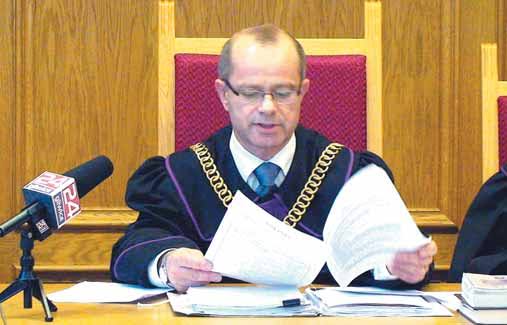
In justifying the decision, Justice Leszek Kiermaszek said the constitutional definition of marriage should not be read as an absolute bar to recognising unions lawfully performed abroad, and that doing so could amount to discrimination on the grounds of sexual orientation.
The ruling was welcomed by Poland's centre-left government. Equality minister Katarzyna Kotula said it demonstrated that legislative changes may not be necessary for registry offices to begin recognising foreign marriage certificates. Deputy Prime Minister Krzysztof Gawkowski described it as a landmark decision confirming that rainbow families are equal before the law. The government has already been working on civil registry reforms that would replace the categories of "man" and "woman" with "first spouse" and "second spouse."
However, significant opposition remains. The conservative PiS party announced it would challenge the ruling in Poland's constitutional court, an institution the Tusk government itself does not recognise due to a dispute over its composition. Opposition-aligned President Karol Nawrocki has already signalled he would veto any legislation that departs from the constitutional definition of marriage.
Tensions also exist within the ruling coalition itself, with the centre-right Polish People's Party divided from more liberal partners over how, and whether, the ECJ ruling can be implemented without new legislation.
For same-sex couples in Poland , a country that still offers no legal recognition whatsoever for their relationships, this ruling represents the first crack in a long-standing legal wall, and could set a precedent with implications across the EU's more socially conservative member states.
Support independent LGBTQ+ journalism
Scene was founded in Brighton in 1993, at a time when news stories about Pride protests were considered radical. Since then, Scene has remained proudly independent, building a platform for queer voices. Every subscription helps us to report on the stories that matter to LGBTQ+ people across the UK and beyond.
Your support funds our journalists and contributes to Pride Community Foundation’s grant-making and policy work.
Subscribe today

Comments ()