

Imagining queer lives in a time of war: Liz Flanagan on When We Were Divided
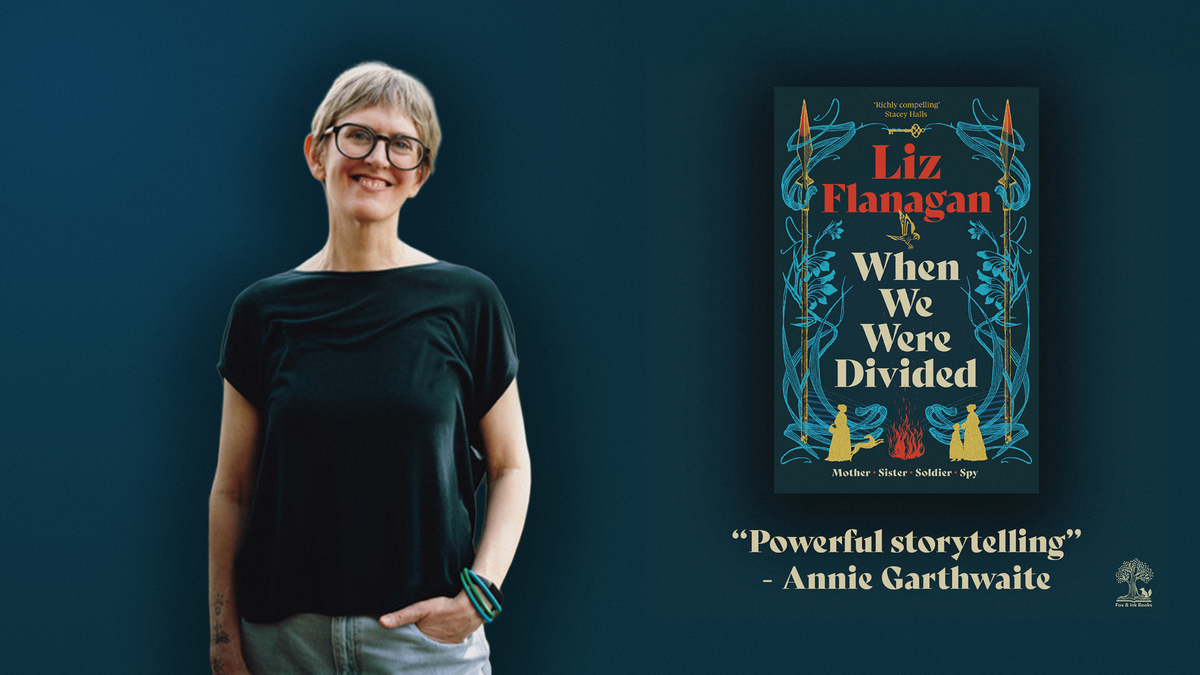
Set against the turmoil of the English Civil Wars, When We Were Divided marks Liz Flanagan’s historical novel for adult readers. Rooted in the landscapes of Yorkshire and shaped by questions of family, identity and survival, the novel follows three lives pulled apart and reshaped by conflict in 1643, at a moment when political fracture seeps into every corner of daily life.
In this interview, Flanagan reflects on how a pandemic walk close to home sparked the story, why the civil war still feels eerily relevant today, and how writing about division, reconciliation and queer lives in the 17th century became both a creative challenge and a quiet act of resistance. From the complexities of historical research to the emotional weight carried by her characters, she offers a thoughtful look behind the scenes of a novel that is as much about hope as it is about hardship.
A full review of When We Were Divided will be coming soon on Scene, alongside a book giveaway exclusively for our newsletter subscribers.
Scene Magazine: When We Were Divided is set during the English Civil Wars, a period often overshadowed by other moments in British history. What drew you to Yorkshire in 1643 as the setting for this novel?
Liz Flanagan: This was our own moment of revolution and it’s a shame that a lot of the progressive and even radical thinking of the time was later overshadowed and compromised by the years under Cromwell’s rule – power corrupted pretty quickly in that case.
The setting for the story is my own setting. When I began writing in 2020, I was trudging up a steep cobbled track behind my house with my dog, using that daily walk as a lifeline in the pandemic. I remembered there had been a civil war skirmish right there and the story began to take shape.
It was exciting to learn how much action happened right here in Yorkshire during the civil war. What would it have been like for the ordinary people of the town, hearing the attack coming closer? What would it feel like to know people in the attacking force? Living through our own challenging times that year was definitely also a factor in shaping the story, as I wondered how a person might survive turbulent times.
Scene: The book explores how conflict reshapes ordinary lives. Was there a particular question or idea you wanted to explore through the intersecting journeys of Jane, Isabel and Kit?
Liz: Yes, as you say, I wanted to explore how ordinary lives were transformed in sometimes unexpected ways through the conflict. Although horrific in so many ways, wars do also sometimes allow the suspension of certain norms and behaviours. As we have seen in other conflicts, sometimes this leads to women in particular having more agency and opportunities to take on work they might not otherwise be permitted. I wondered what that would be like to live through, and what kinds of sacrifices might be demanded of my characters.
Scene: The title suggests both personal and political fracture. What does “division” mean to you in the context of this story?
Liz: The most obvious division is the one caused by the civil war, so that the story begins with a call to arms, with every person having to choose a side in that conflict. However, the sisters Jane and Isabel are already estranged, divided by their contrasting experiences of a terrible plague outbreak in which several family members died. In an unexpected way, the worst moment of the war actually heals the division for the sisters, demanding reconciliation in the face of violence and loss. And yes, each character has their own personal arc and their own internal division to heal, as well as division in their family and community.
Scene: What first inspired you to write this novel, and how long had the idea been forming before you began writing?
Liz: As I described above, the inspiration came from the familiar landscape of my home town and its history. My previous books had been for children, but I’d always wanted to try writing a historical novel for adults. Although the idea took shape quite quickly, the research and execution took years! However, I think the initial spark must have happened decades ago, when I was a child. There used to be a man who dressed as a Roundhead soldier and who rode a big black horse along the valley, re-treading the route taken by the soldiers locally. I remember seeing him looming on the road ahead several times, looking very much like a ghost. I was too young to remember much else, but the impression obviously stayed with me, surfacing in 2020 when I recalled the battle on the cobbled track.
Scene: As someone who admires well-made book covers, I was immediately drawn to the artwork of When We Were Divided. Could you take us behind the scenes and share how you choose the right cover for your book? How many iterations does it take to get it right?
Liz: Thank you! I love the cover, which is designed by Ami Smithson, with art direction by Becky Chilcott. We went through a collaborative creative process to achieve this result. First, Becky read the manuscript, and pulled out the main themes of the story, about family, conflict and love. We talked about seventeenth-century woodcut art used in letterpress printing and I shared some of my research on the clothing of the era.
The story had once had a working title of ‘The Phoenix and the Wren’ before we arrived at its final title, so we discussed incorporating some of that bird imagery as well as hinting at the conflict of the period. Ami produced some stunning draft versions with different colours, art and typography. I would have been happy with any of them – she is so gifted a designer. Next, we sought out expert opinions from booksellers, librarians and readers. It was hard to choose but when we looked at the votes, this version was the frontrunner. Next, Ami went back and worked on the balance of the design, tweaking colour, image sizing and typography, and this is the result. I am so delighted. I especially love the way the sisters are separated by the fire, looking across at each other over all that divides them.
Scene: How did you approach researching the English Civil Wars, and were there any discoveries that significantly changed the direction of the story?
Liz: I don’t recommend my approach! Very conscious of not being a historian, I launched myself into months and months of research, trying to learn ‘everything’ about the civil wars and becoming quite overwhelmed as a result. I almost gave up on the project before I’d even started writing. Then I had some wise advice from some more experienced historical novelists, and so I narrowed my research focus, mainly looking at local events and how the civil war was experienced by women. Once I had my draft, it was easier to see where the gaps were and to go back and do extra specific research to solve those issues, instead of trying to learn everything – which could have taken the rest of my life. There were surprises at every step of the way, including some brilliant local anecdotes, and learning how many remarkable women were actively involved in the conflict in different ways.
 Wave of Nostalgia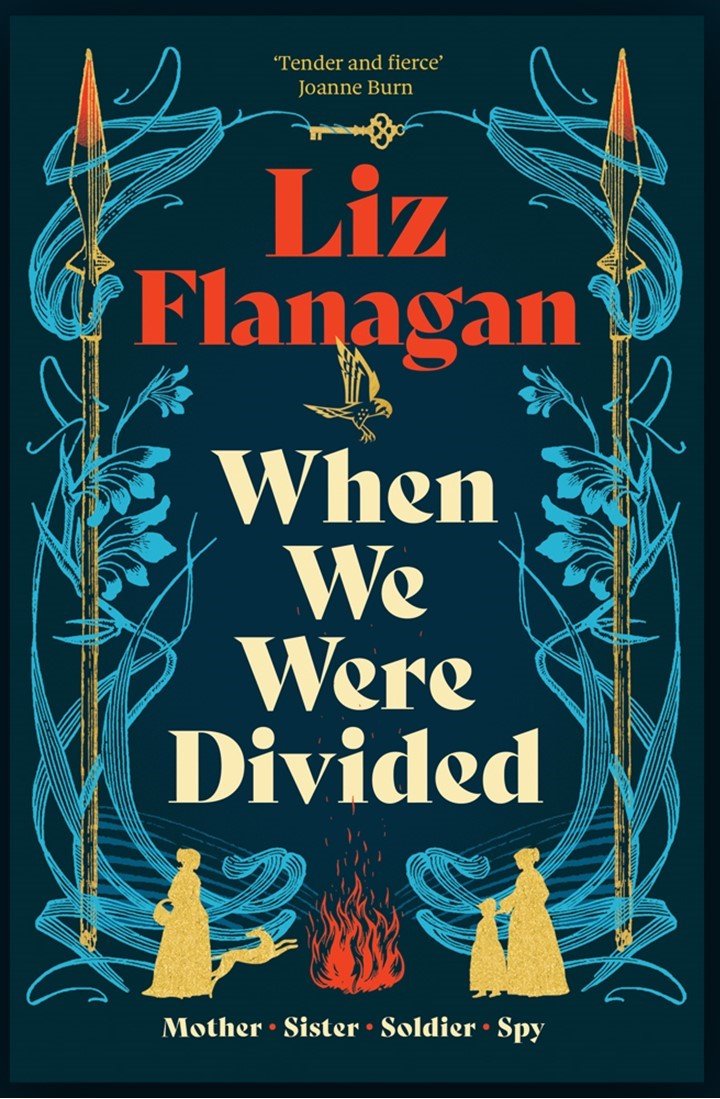
Scene: Historical fiction often involves balancing accuracy with imagination. How did you decide where to stay faithful to history and where to take creative liberties?
Liz: I thought a lot about this and began by setting out my ‘rules’. I didn’t change any recorded events, which meant I had many fixed points to work around. I saw those events a bit like a stable frame or lattice which I could weave my fictional story around. Again, I got really bogged down within those limits – a bit like one of those puzzles with a limited space to manoeuvre. My solution was to remember that my characters were fictional, and I could send them wherever I needed. Particularly with women’s history, there are many gaps in the record, and this can be a gift for historical novelists. However, I did seek out recorded examples of the main plot points of my story as ‘permission’ to include those in the narrative – as with Kit who takes on an assumed name to sign up in the king’s army.
Scene: Jane, Isabel and Kit each experience the war very differently. How did you develop their voices and perspectives, and did any of them surprise you as you wrote?
Liz: Right from the start, I knew I needed as much contrast as possible, to keep the story pacy and engaging. I began with the sisters Jane and Isabel, plotting out all their differences on a big piece of paper, contrasts in their experience and psychology and narrative arc. Then I realised that I needed another character who could be in the thick of the action. The narrative voices arose from their personality and story, so that Jane is in the third-person present tense which suits her slightly fussy tone with her thoughts unfolding in the moment. Isabel is more reflective, so she has the first-person past tense, which also suits her depression as the story opens. Whereas Kit had to be in the first-person present, both to avoid being gendered by the text, and for the immediacy of the action and violence of those battlefield sections. One of the joys of writing, for me, is that characters always surprise you as they develop over years, and this was no different. It sounds a bit odd, but I’m so fond of all three of these main characters who feel quite real to me after five years in my head! I hope they will be well received as they go off into the world.
Scene: Kit’s decision to assume a different identity is a powerful one. What interested you about themes of identity, reinvention and survival in this period?
Liz: Kit’s story arose partly from my personal concerns during the years I was writing, supporting a child of mine who had come out as non-binary and who was engaging with their own questions about identity. It also arose from the art and culture of the seventeenth century. In plays, pamphlets, songs and stories, there are many instances of characters taking on new identities, often through naming or apparel, and finding new lives and opportunities as a result. And when I researched women’s involvement in the war, many of the most memorable stories involved using disguise as a means of escape and survival. I’ve written more about some of those here.
Scene: Family bonds and secrets sit at the heart of the novel. Why was it important for you to explore these relationships alongside the wider political conflict?
Liz: Reflecting on my own experience of the past twelve years or so, it was clear to me that the political is always lived through personal and familial relationships. For example, for me, the Brexit vote led to some difficult family conversations and some ruptured friendships. This seemed like a parallel moment, like the civil war, in which each adult had to choose a side. This was one of the other key elements behind the genesis of the story – not speaking to a family member for a few months and taking his political choices very personally, asking ‘How can he believe that?’ and ‘How could he choose this?’ It didn’t take me too long to realise that family bonds have to come first, and that we have to find ways of relating, in spite of political differences – which is also played out in the story.
Scene: Without giving too much away, When We Were Divided touches on queer experience in a historical setting. Why was it important for you to include LGBTQ+ lives and relationships in this story?
Liz: It seems more important than ever today, when LGBTQ+ rights are being questioned and challenged, again, to reflect in my novel that queer lives and relationships have always existed and to try to imagine, even in this dramatic novelistic way, what that might have looked like. I wanted to do this in a way that felt authentic and convincing without being anachronistic, fully aware that it’s impossible for us today to ever really ‘know’ what those lives might have been like. Trying neither to idealise the past, nor to project today’s prejudices backwards is a tricky balancing act.
Scene: What challenges and opportunities come with writing queer characters into a 17th-century context, where language and visibility were very different from today?
Liz: Exactly that, the lack of visibility creates both challenge and opportunity. On the one hand, there are some famous examples of queer relationships and gender nonconformity among some of the most prominent (usually noble) English people of the seventeenth century. They were protected by their wealth and status, and we know more about them because of those factors. But what about ordinary queer people who were quietly living and enjoying their lives in a way that is not usually recorded – unless something went wrong in a medical or legal way? There’s a whole world of possibility in imagining those lives.
I’ve just been reading Kit Heyam’s excellent new book Before We Were Trans, which is a fascinating look at some of these ideas, delving into the detail and nuance in an accessible way.
Scene: Do you see any parallels between the pressures faced by your characters and the experiences of LGBTQ+ people navigating hostile or divided societies now?
Liz: I wish I didn’t! I feel strongly that we need to share history in engaging ways, for many reasons, but also so that these patterns of scapegoating and suspicion can be more easily highlighted, to say, ‘Look, it’s this thing happening again. Let’s not fall for it, eh?’ Maybe historical fiction is one way of doing this.
Scene: Although the novel is rooted in the past, it feels timely. What do you hope contemporary readers will take away from this story?
Liz: Although the story is about conflict and division, I wanted its message to be one of hope and resilience overall. My characters go through some difficult experiences, but the overall movement is towards reconciliation and forgiveness. As we live through our own version of unrest and division, I hope that readers will find comfort, as I did, in imagining people who survived those difficult times – because they pass, as everything always does.
Scene: Is there a particular moment, character arc or theme you’d encourage readers to pay close attention to as they read?
Liz: One of my favourite moments is right at the end of the book. The story begins and ends with a family meal. The first one is tense, full of unspoken undercurrents, grief and manipulation. The final one is much lighter, even though so much has been lost, and it includes a moment when a few characters get the giggles but are trying to hold it in. Like so much in writing, it was unconscious and unplanned, but I really like that this moment sums up the movement of my characters, from grief to irrepressible laughter, with joy as its own form of resistance.
Scene: Finally, for readers picking up When We Were Divided for the first time, how would you describe the emotional journey you hope they’ll go on?
Liz: I hope readers will find this an exciting and immersive story, which imagines hidden lives in our shared past. I hope the emotional journey will be satisfying, though I’ve been told that it has made a few early readers cry! Thank you so much for these thoughtful questions.
When We Were Divided is out in paperback and ebook from 12 February 2026 - online and in bookshops.
Support independent LGBTQ+ journalism
Scene was founded in Brighton in 1993, at a time when news stories about Pride protests were considered radical. Since then, Scene has remained proudly independent, building a platform for queer voices. Every subscription helps us to report on the stories that matter to LGBTQ+ people across the UK and beyond.
Your support funds our journalists and contributes to Pride Community Foundation’s grant-making and policy work.
Subscribe today
Comments ()