

A Queer Carol: Ghosts of Midwinter Past, Present, and Fabulously Future
Our Scrooge sits alone on this midwinter night, when the ghost appears. "I wear the chain I forged in life," moans Marley—but what chains do we forge when we deny our natures? When we perform propriety instead of embracing authenticity?
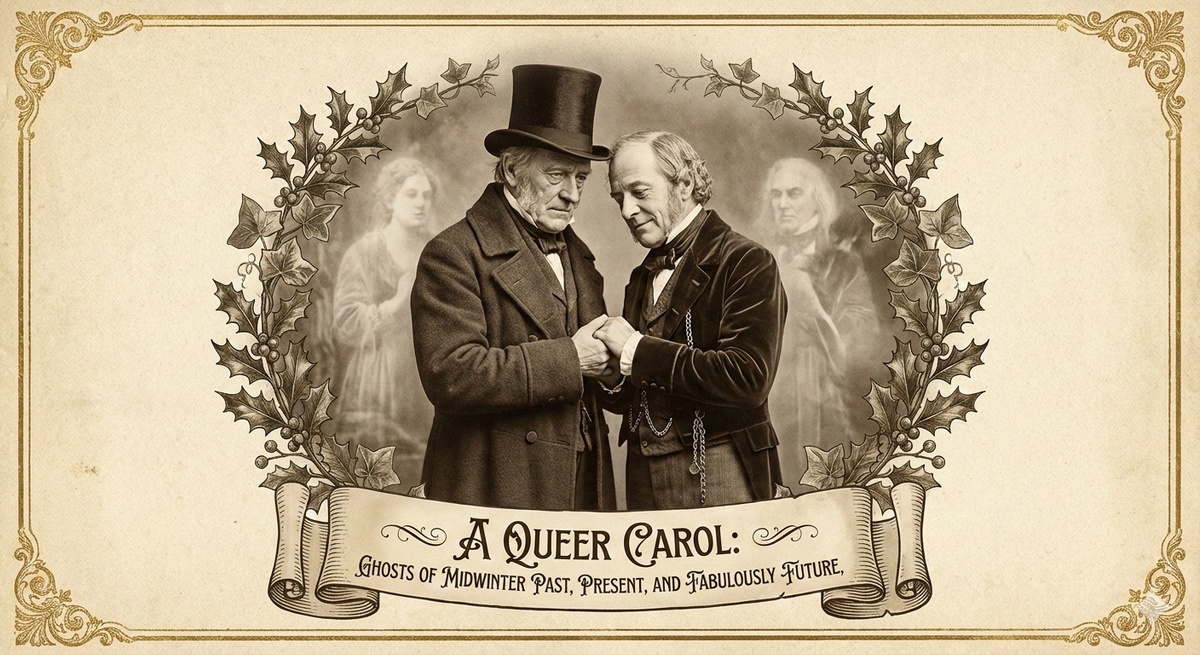
Or: How I Learned to Stop Worrying and Love the Solstice
{i}: Marley Was Dead, and Also Possibly Very Close Friends With Scrooge
Picture, if you will, our Ebenezer— Ebz - let's call him a spiritual ancestor to all of us who've ever felt like outsiders at the holiday table, counting down minutes until we can escape Aunt Judith's probing questions about "special friends." Dickens, that magnificent observer of Victorian hypocrisy, gave us a miser who hoarded guineas, but we might reimagine him as hoarding something far more precious: his authentic self.
The winter solstice has always been queer territory, Dear Reader. Long before the Church slapped a Jesus-shaped label on December 25th, our pagan forebears were throwing the most spectacular parties. The Romans had Saturnalia—a week-long bacchanal where social hierarchies dissolved like sugar in absinthe, slaves dined with masters, and gender norms took a holiday more thorough than anything the Puritans would later permit. Cross-dressing was practically mandatory. Catullus would have posted the most scandalous Instagram stories.
Our Scrooge sits alone on this midwinter night, wrapped in his counting-house respectability like a suffocating cravat, when the ghost of his old partner appears. "I wear the chain I forged in life," moans Marley—but what chains do we forge when we deny our natures? When we perform propriety instead of embracing authenticity?
Support independent LGBTQ+ journalism
Scene was founded in Brighton in 1993, at a time when news stories about Pride protests were considered radical. Since then, Scene has remained proudly independent, building a platform for queer voices. Every subscription helps us to report on the stories that matter to LGBTQ+ people across the UK and beyond.
Your support funds our journalists and contributes to Pride Community Foundation’s grant-making and policy work.
Subscribe today
Comments ()