

The Spy Who Came in from the Cold Theatre Royal Brighton
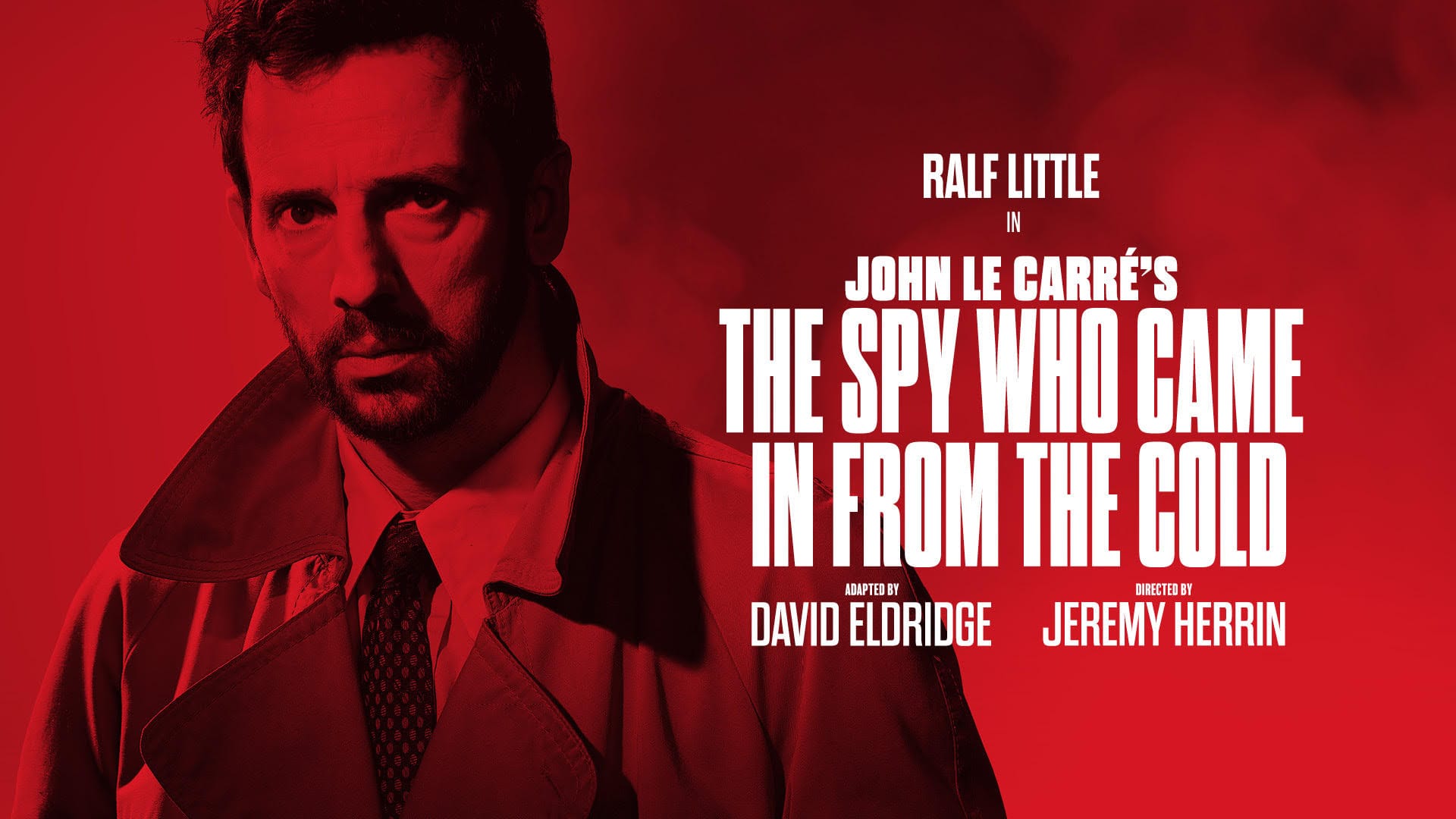
Ralf Little anchors the production with considered, controlled work as Alec Leamas, a man hollowed out by service and subterfuge.


Brighton knows a thing or two about double lives. About the performative and the hidden, the public face and the private truth. This quietly accomplished production of David Eldridge's adaptation of John le Carré's classic Cold War novel echo's here, in a city built on the idea that identity is layered, and that survival often demands concealment.
Le Carré's world is one where nobody is entirely who they claim to be, where allegiance is a costume and ideology a disguise. For queer audiences, that existential hall of mirrors carries its own particular resonance. To live in the shadows, to deploy a cover story, to serve a system that may not deserve your loyalty, these are not merely spy novel tropes. They are lived experiences. Eldridge's adaptation, while not trafficking in explicit queer subtext, creates a bleak moral landscape where questions of identity, betrayal and survival feel urgently personal.
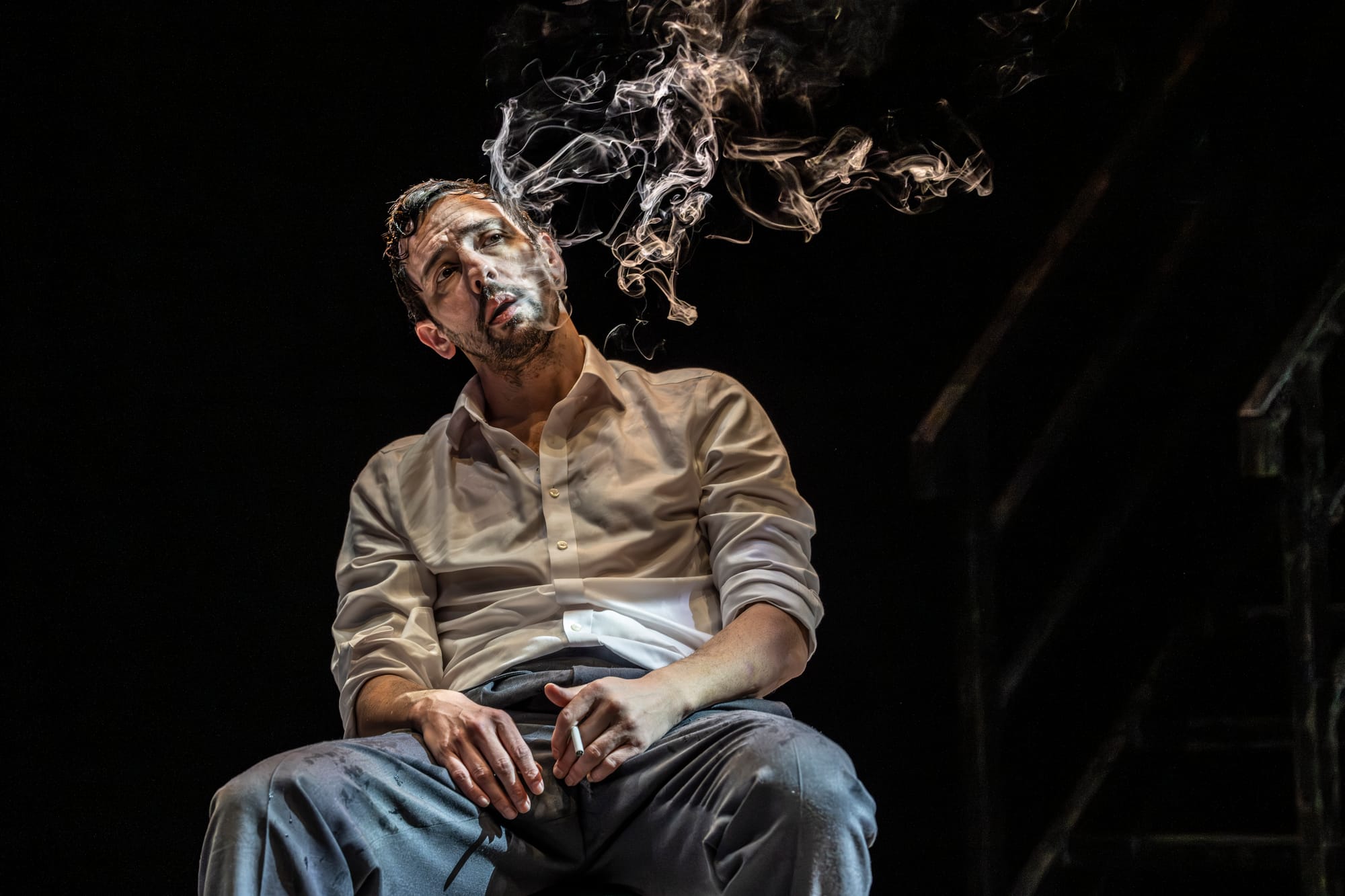
Ralf Little anchors the production with considered, controlled work as Alec Leamas, a man hollowed out by service and subterfuge. Little communicates the grinding tension of a character who has spent so long wearing his world-weariness as armour that he can barely locate what lies beneath it. The ensemble around him is solid and well-matched. a company that understands the rhythms of this story and resists the temptation to overplay in a text that demands restraint. But Little, who is rarely off stage, is compelling.
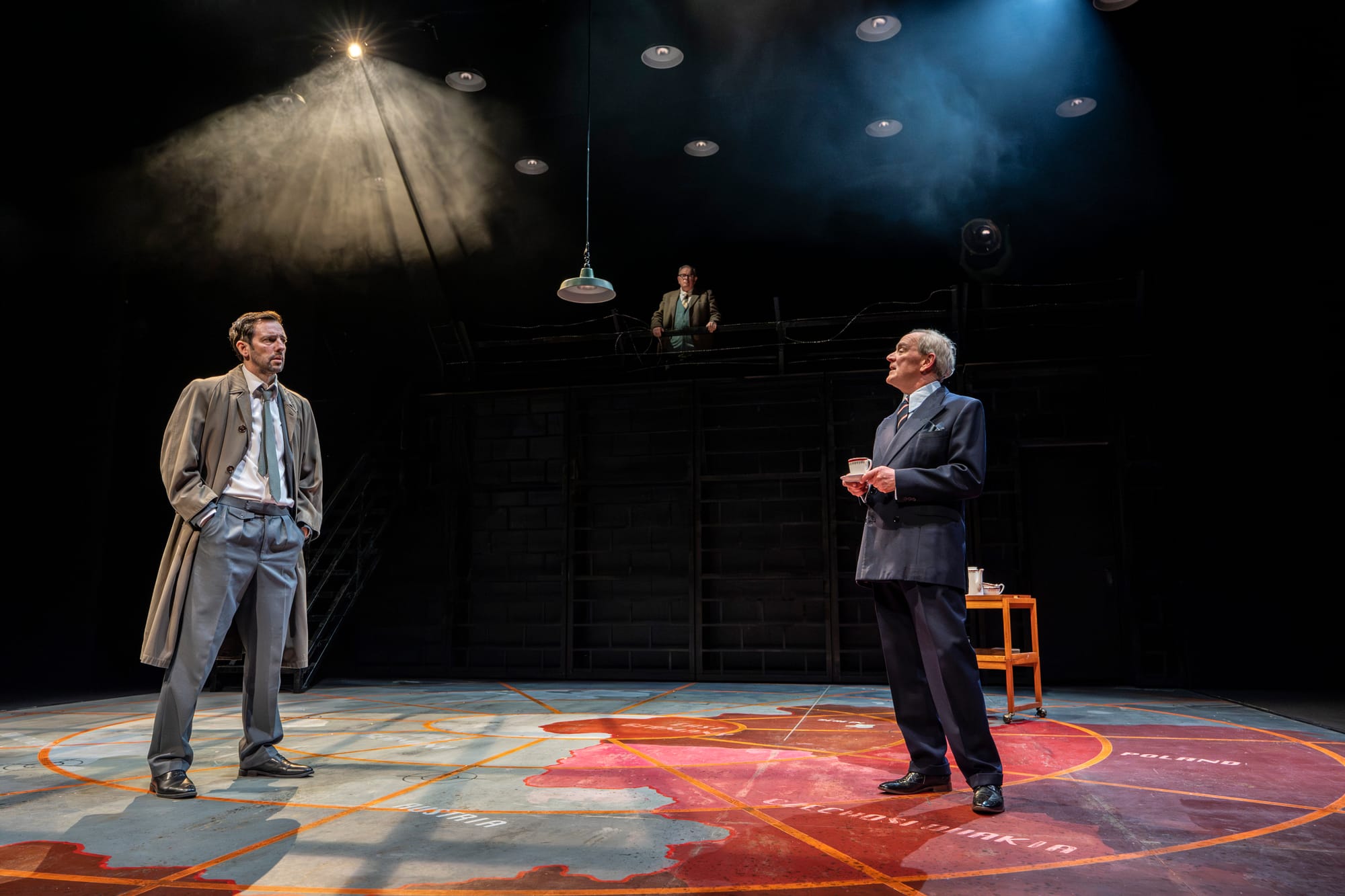
And restraint is very much the production's operating principle. The staging is spare, almost austere. a deliberate choice that pays dividends. The bare central space forces attention onto language and performance, but the design works best in transitions between scenes. Azusa Ono's lighting is atmospheric, filling the stage with the kind of sharp-edged shadows and bruised half-light that speak directly to the GDR's surveillance paranoia and the permanent psychological twilight of the Berlin Wall era. Coloured light bars flicker and pulse to externalise Leamas's inner world, with George Smiley looming through them as a haunting, near-omnipresent presence in his mind, an interesting, if occasionally opaque, directorial choice. The Wall itself looms at the rear of the stage throughout, enormous and unyielding, an effective piece of visual rhetoric.
Sound design from Elizabeth Purnell complements the lighting to create an atmosphere that is immersive, and for a moment during the evening when a brief technical interruption paused proceedings, I felt keenly how much that atmospheric envelope was doing. The spell broke, then was patiently rewoven. A minor stumble, handled professionally by company and audience alike.
The production's chief limitation is inherent to the material. Condensing le Carré's intricate plotting into roughly two hours inevitably produces passages of heavy expository dialogue; the story must be told, even when it might be better shown. The result is a production that is more frequently admired than viscerally gripped. The bleakness, which is entirely faithful to le Carré, is also occasionally exhausting.
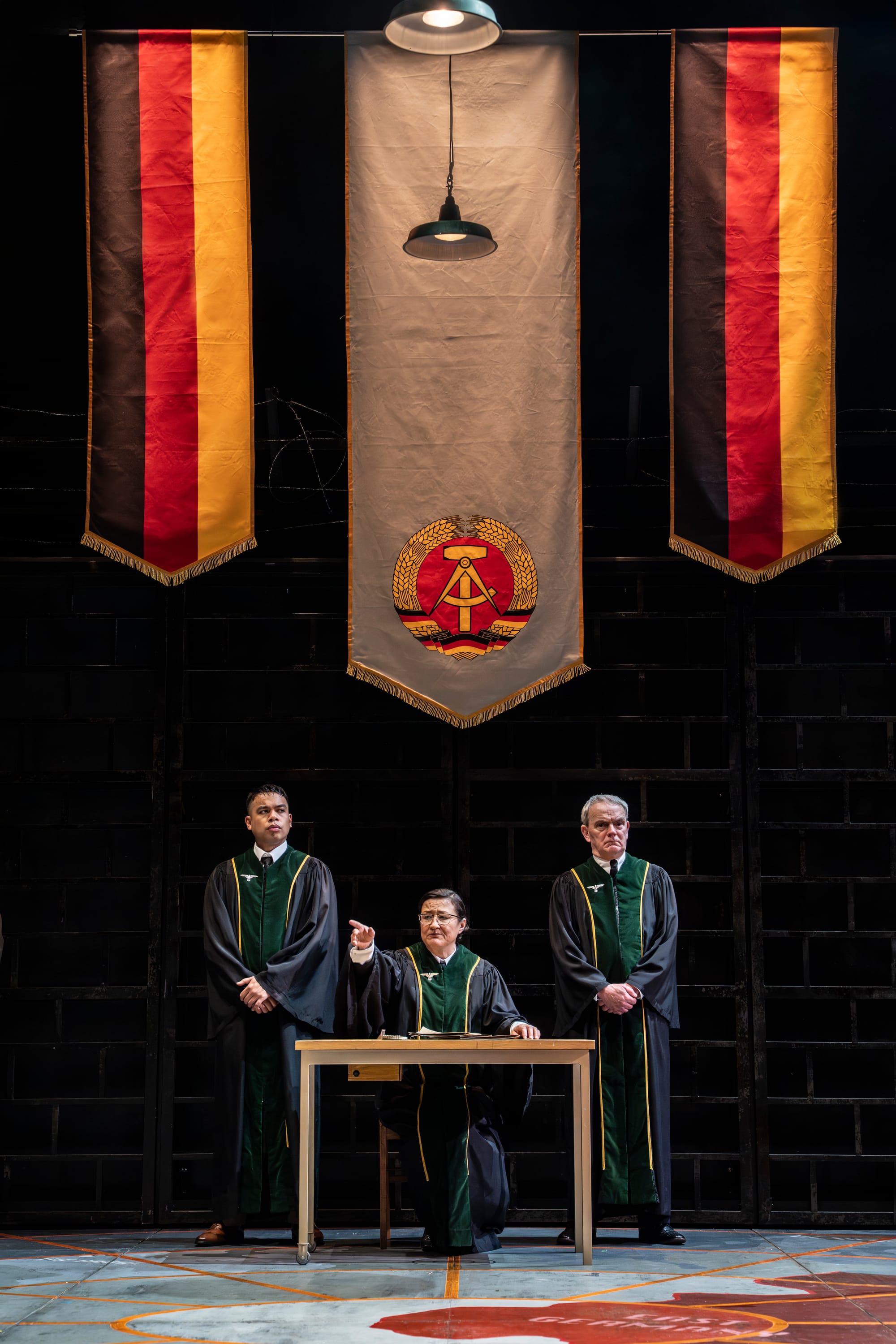
Yet the moral questions it raises never feel dusty. Homophobia, antisemitism, the grinding machinery of ideology, these are not period details here; they land with uncomfortable contemporary weight. Who are the good guys? Do ends justify means? Can pragmatism and principle occupy the same soul? Brighton, of all places, deserves to sit with those questions a while.
Crafted, atmospheric, and honourably serious, if not quite incendiary.
The Spy Who Came in from the Cold runs till Sat June 6th at Theatre Royal Brighton more info, full cast and creative and tickets here.
Scene was founded in Brighton in 1993, at a time when news stories about Pride protests were considered radical.
Since then, Scene has remained proudly independent, building a platform for queer voices. Every subscription helps us to report on the stories that matter to LGBTQ+ people across the UK and beyond.
Your support funds our journalists and contributes to Pride Community Foundation’s grant-making and policy work.



Member discussion